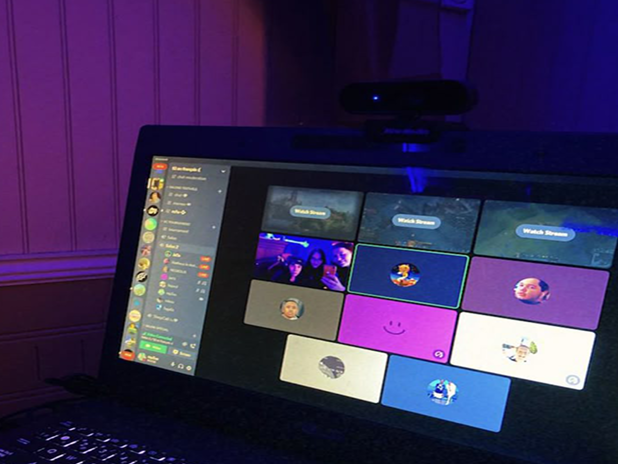
Somewhere right now a streamer is deep into a shadow that refuses to sit properly under a jawline. The chat is scrolling too fast to read. Someone types ‘lol same’. The streamer drags the opacity down, squints, deletes the whole layer and starts again, narrating none of it, because there is nothing useful to say out loud. Hundreds of people watch this happen. Plenty of them are learning things a timetabled life drawing class would take weeks to get round to.
That deserves to be stated flatly, because the usual hand-wringing about screens skips it. Livestreams are a superb way to learn technique. Finished work lies by omission. A portfolio shows the one image that survived and hides all the ones that died getting there, and an art school crit mostly shows you the same thing with worse lighting. A stream shows the dead ones. It shows the wobble, the muttering, the colour picked wrong and picked again. Old workshops had this too, but you had to be inside the building, ideally sweeping the floor. Now it plays at 2am in a bedroom in a remote town, for free, with the camera left on.
So the gain is enormous and should not be sneered at. The loss is real too, and it is stranger than people usually make it.
The word for the arrangement is parasocial, coined in 1956 by the sociologists Donald Horton and Richard Wohl, who were looking at how television viewers came to feel friendly with presenters who had no idea they existed. The viewer does all the relating. The presenter just keeps being warm at a lens. Decades later, the lens has a chat box attached, which makes the one-sidedness harder to notice. The streamer reads out a username and says, ‘good question’. Somebody feels seen for about four seconds. That feeling is easy to mistake for being taught, and it is a different thing entirely.
Because a mentor, stripped of the romance, has one main job which is looking at your work. Looking, and then saying ‘no, again’. A stream cannot do that. The streamer has never seen what you made. Months of drawing wrists that bend the wrong way can go by without a single correction, since nobody who could correct them knows the wrists exist. Worse, recommendation systems will happily serve up more tutorials in the same style, so the mistake gets reinforced with content. It feels like progress because the practice is constant and the tutorials are good.
Quantity is flattering that way.
Then there is the thing a camera cannot catch. A tutorial can film hands, brushes, layer settings, the order of operations. It is bad at filming judgement. Watch any experienced artist near the end of a piece and they will say, ‘yeah, I think that's done’. Viewers nod. Nobody can tell why it is done there and not ten minutes earlier or later. Knowing when to stop is most of what separates a confident piece from an overworked one, and it passes between people through countless small remarks over a long time, most of them rude. It does not compress into a clip.
The curriculum is also being set by the wrong people. Nobody designing an art course would put speed-painted rim lighting ahead of gesture drawing and value studies, but a live audience rewards the glow. Teaching on a stream is still a performance, and it drifts toward whatever keeps strangers from clicking away. Flashy beats foundational. A viewer can spend a year mastering the glow and never learn why the shape underneath it is wrong.
And the glow spreads. Scroll through a popular art tag on any given evening and the faces start to look related. Same lighting, same slight tilt, same way of rendering the eyes. When a lot of people learn from a small circle of famous teachers, the work starts to read like that circle. Apprenticeships had their own version of this, since students did end up painting like their master, but a master's house style came with a master's actual eyes on your canvas, which is a more honest trade.
Nostalgia is the cheap response here, so it is worth being plain about what the old system was like. Apprenticeship also meant studios that wanted unpaid labour dressed up as opportunity, teachers who confused cruelty with rigour, and access that depended on who you knew and where you lived. The gate was real and a lot of talented people never got through it. Streams knocked the gate down. Anyone who mourns that without mentioning who it kept out, is mourning something selectively.
What is worth keeping from the old arrangement is one small thing, and it is attainable without a master or a fee. Somebody needs to look at the work. Two or three people at roughly the same level, in a Discord server or a physical room above a pub, who will say the proportions are off and mean it. An occasional paid portfolio review from someone whose job is to be honest. It sounds unglamorous because it is. It is also the entire missing half.
The streamer deletes the shadow again and starts over. Nobody in the chat asks what was wrong with it, because nobody in the chat can tell. The streamer knows exactly what was wrong. That knowledge is the whole craft, and it is the one part that never makes it through the screen.
Written By: Pranamya Shetty
Edited By: Hazel Hunter
