For years, the loser has been a staple label in youth culture. High school teen films laid out the classic social groups: the jock/cheerleader, nerd, geek, loner, rebel, and so on. Despite the clear American influence on these films, these stereotypes can be seen in different manifestations around the world. Certain interests have long been associated with the loser or the nerd; people traditionally found at the bottom of the social food chain, while other more glamorous hobbies attract the ‘popular’ people.
Do people even have hobbies anymore? So much of our time is spent ‘doomscrolling’ aimlessly through app after app. We admit that we don’t actually want to be spending our time like this, yet we reflexively open apps to scroll. We’re addicted. We talk to friends and family about how awful it is that we spend so much time on our phones, how much time is lost doing nothing. Then, we unlock our phones. The answer to the question is yes, we do have hobbies. However, even our beloved pastimes are being affected by social media.
Among young people, popularity is a currency. The popular people choose hobbies associated with popularity, just as those who are monetarily wealthy generally take up typically ‘wealthy’ hobbies such as sailing or horse-riding. They will likely play sports or be into fashion; think the football player or queen bee fashionista in a classic teen movie. Their hobbies make them desirable to the masses.
Before social media, many hobbies were distinctly associated with loserdom. The ‘losers’, those with less social currency, were usually grouped in amongst the ‘geeks’ and ‘nerds.’ Some of these hobbies included comic books, robotics, anime, Dungeons and Dragons, and even reading books. Others may have included knitting or sewing, often considered ‘granny’ activities. However, many of these hobbies are no longer solely associated with the less popular. Due to the impact of social media on the trend cycle, some of these hobbies have even become mainstream in the last few years.
TikTok’s popularity skyrocketed during the COVID lockdowns, and established the short-form video format as a standard part of social media. This format had been popular before, in the form of apps such as Vine and Musical.ly, but TikTok quickly surpassed these in 2020. With all their newfound free time, and nothing better to do (before remote working systems were established), people began posting and scrolling on TikTok.
It soon became apparent that these social media platforms had an extreme influence on what became popular. Suddenly, those who had never before turned on an oven were baking sourdough from scratch. Hundreds of thousands of people danced to the same line in a Doja Cat song, and Joe Exotic became a household name. People began to watch new things, read new books, listen to new music, and, of course, try new hobbies. A new trend has recently gained traction in 2026 called ‘hobbymaxxing’. People on social media have begun to take up as many hobbies as possible, from knitting to roller skating and scrapbooking.
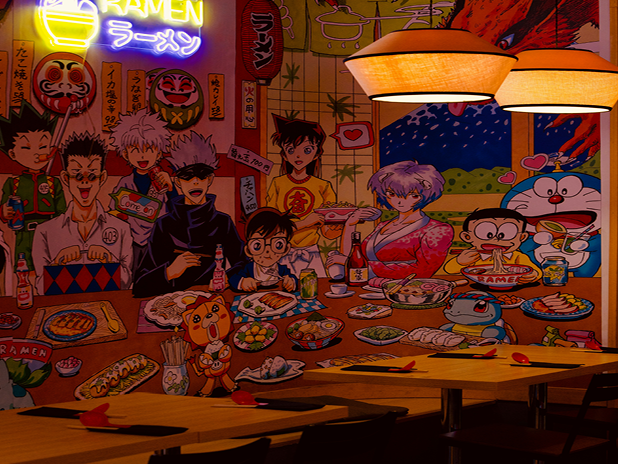
Anime, an interest which once had the potential to tank your social status, became a huge TikTok trend in the early 2020s, much to the chagrin of many long-term fans. Suddenly, the ‘popular’ crowd were dancing to songs from the shows or obsessing over anime characters. Anime merchandise, once hard to find and expensive to buy, began appearing in many major retailers. Where fans once had to trawl through the internet to find websites on which to watch their shows, you could now watch anime on majority of the popular streaming sites. Anime movies were being shown in major cinemas. Megan Thee Stallion dressed up as characters from ‘Demon Slayer’ and ‘My Hero Academia ’, and Netflix produced a live-action ‘One Piece’ and ‘Cowboy Bebop’.
Another pastime that has recently enjoyed a social media-induced increase in popularity is reading. Gone are the days when you might be bullied in school for being a bookworm. Reading is cool now; celebrities like Dua Lipa and Sarah Jessica Parker are seen across the internet setting up book clubs, speaking at literary festivals, and judging prestigious awards. There are now book influencers such as Jack Edwards, dubbed ‘the internet’s resident librarian,’ who interviews A-list celebrities, asking them about their reading habits.
While the ‘loser’ hobbies are, of course, not exclusive to their long-standing participants, the sheer speed and turnover of current trend cycles on social media is concerning. A large portion of the content surrounding these hobbies focuses on consumerism; how many wigs do I have for cosplays, how many special edition books can I buy, how much can I spend on Pokémon cards? This can be especially frustrating for fans who, for years, have been enjoying their hobby. It may now be more expensive to partake in the activities, or some items may be harder to find.
Another concerning aspect is the introduction of a competitive element to certain activities. With the recent online popularity, reading has now become a competition for many people. Creators post online that they’ve read over thirty, fifty, a hundred books a year, all tracked on various apps and platforms. Readers in these online communities are no longer reading for pleasure, but for metrics. It’s a numbers game. “How many books have you read?” “Oh, I’ve read more.” “You only read fiction?” “Romance doesn’t count.” “I only read classics.” With all these conflicting opinions coming from all directions, it can be easy to forget the ultimate aim of a hobby: pleasure and relaxation.
Perhaps this shift will mean that the concept of the loser gradually fades. It would be a positive change if all hobbies were viewed as equal in the social equation, especially for those in their school years. However, it is also important to preserve the essence of these pastimes, which have been important and formative for so many. These hobbies should be a way to introduce enrichment to your free time, rather than a vehicle for looking cool and clued in. Take up a hobby because you enjoy it, not just because everyone else is doing it.
Written By: Kate O’Connor Shivnan
Edited By: Freddie Kagino
