How Yuni Yoshida Turns Reality into Fantasy
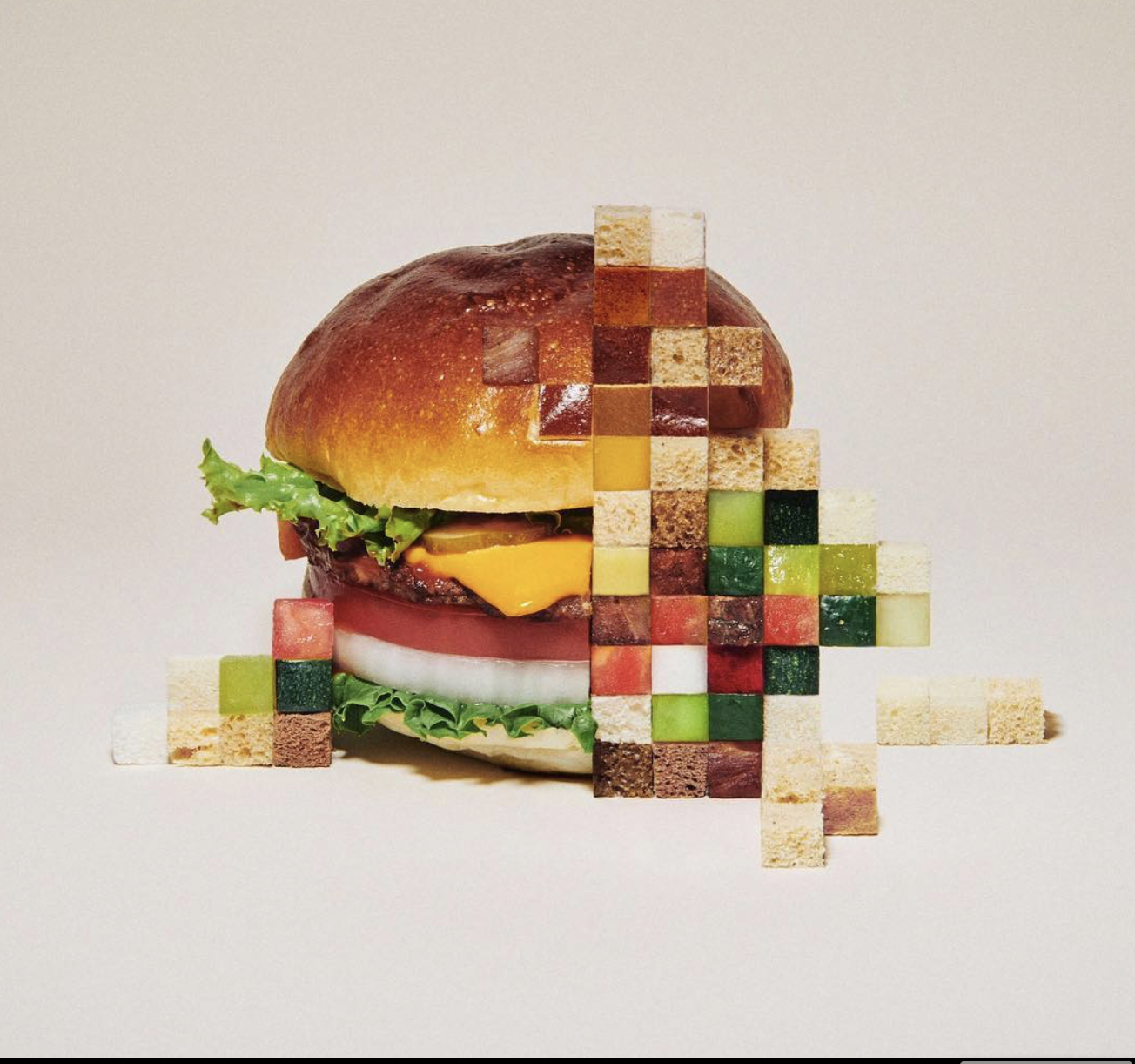
Yuni Yoshida is an art director and graphic designer who is known for her ability to manipulate images. She uses meticulously placed items to create a new reality out of already existing objects, blending different ideas together to create visually striking pieces.
Born in Tokyo in 1980, Yoshida expressed a creative streak early on, having always been drawn to optical illusions and the ability to create a piece of fantasy with real objects. She studied at Joshibi University of Art and Design and worked at multiple studios, including Onuki Design and Uchu Country, eventually establishing her own studio in 2007.
Growing up in Japan, Yoshida was surrounded by a culture of colour and vibrancy, which inevitably bled into her own style as an artist. She has a unique vision that manipulates reality and transforms it into something else. Yoshida uses real-life objects and arranges them by hand in order to be more directly involved with the creation of her pieces and maintain the human element of art, an aspect that undoubtedly explains why her works inspire so many. Her creations are paradoxical, combining the natural with the technological, for example, in her fruit pieces. At first glance, the image appears to be glitching or experiencing a technological error, but in reality, Yoshida has meticulously arranged tiny pieces of fruit to create this effect.
In her ‘Peel’ series, she carves fruit to transform them into visual masterpieces, some appearing like a peeled apple with a sticker of peel over the front, some with pieces of fruit shaped together to form gemstones. Each piece is incredibly striking and even more impressive when it is noted that everything is created by hand, even the peel remains attached to the apple, not edited on as an overlay.
The lasting impact of Yoshida’s work extends far beyond her fruit pieces, such as in her exhibition Alchemy in Seoul. This 2023 exhibition debuted her collection ‘Playing Cards’ to the public. For this piece, every card of a deck was displayed on a wall, made from sliced materials such as peppers or laundry arranged on a drying rack. Visitors were encouraged to take time to explore all the intricate details that make up the cards, demonstrating how the mundane can actually create something extraordinary. Even more remarkable is the fact that despite how easily such a piece could have been formulated using Photoshop, Yoshida created it all by hand, spending five years planning out the cards and three months crafting them.
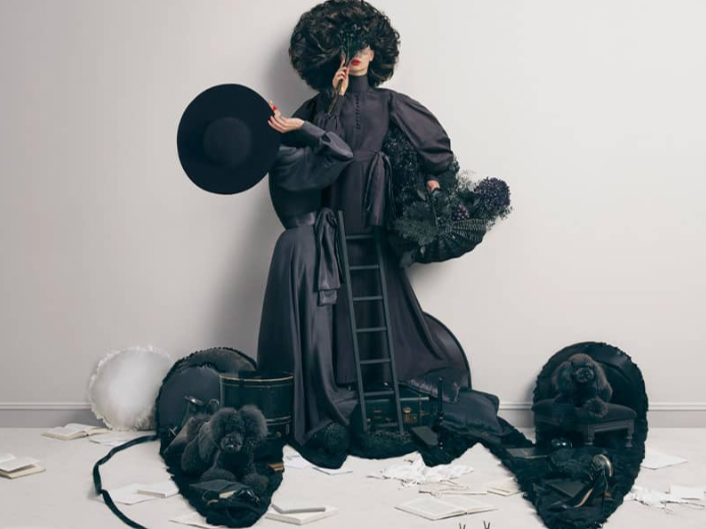
Alongside her work as an artist, Yoshida is a creative director and has worked on several marketing campaigns, creating eye-catching imagery for companies such as Sony. For Uniqlo, she has created two collections. In 2020, she created artwork with the image of Hello Kitty, using everyday objects like flowers and fruit to create striking graphics, pushing the boundaries of what would be recognised in passing, despite its unconventional makeup. Again in 2021, Yoshida created a collection featuring images of Mickey and Minnie Mouse, repeating her unique approach by using unconventional items to physically create these images instead of relying on graphics. For example, one piece features women, poodles, and ladders arranged perfectly to create Mickey’s silhouette. For Yoshida, the power of her work and the excitement as an artist lies in the ability to take recognisable images and completely reform them from unconventional materials. For example, one piece features women, poodles, and ladders to create Mickey’s silhouette.
Several themes seem to be intrinsic to Yoshida’s work, whatever its capacity may be. First, she frequently uses fragments as a medium for creativity. Not only do these fragments make it easier to reshape and create a form, but they also speak to a wider ideology that Yuni has mentioned in interviews about her pieces. For her, using these fragments allows her to find fantasy within reality. She finds fascination in the parts of things that you can’t see unless you cut them open yourself, enabling new perspectives and versions of reality.
The use of fragmentation in her work also invites the viewer to engage with it more than simply observing. Her art becomes a puzzle to solve, looking first at the bigger image and then the pieces that have been placed in position to make it up. The art becomes interactive and deeply engaging as the process of forming the piece is laid bare for the viewer to see, unlike a typical painted piece. For Yuni, culture is an exchange of information, an input and output, so for her to create pieces that someone can engage with, she is contributing to their input and, therefore, their consumption of culture.
Additionally, Yoshida mentions that she likes to find enjoyment in the everyday, and by using products such as fruit or shopping bags, she is able to find new ways of looking at common objects and finds new ways to enjoy them as art forms. Her use of familiar items also helps her work in advertising; the familiarity of her components makes it more easily accessible and convincing to consumers.
Yoshida has been credited as a creative director with the distinct ability to make commercial work look editorial, a skill she attributes to her affliction with the visual. She finds herself more inspired by imagery than words, and in turn, tries to communicate as much as possible through her work. She takes joy in knowing that her audience can return to her work again and again, each time uncovering new details.
Ultimately, Yuni Yoshida is an immensely talented artist who seamlessly blends reality with fantasy. Her use of everyday objects pushes the boundaries of what we might consider our reality, creating fresh things from the familiar. Her work is visually striking and engaging, encouraging her audience to find new perspectives and investigate its details, fostering an interactive relationship with the art.
Written by Freya Dunlop @freyadunlop
Edited by Shaunamay Martin Bohan @f4wnfatale
