How a self-care micro-purchase, became a whole visual language and dopamine economy on TikTok
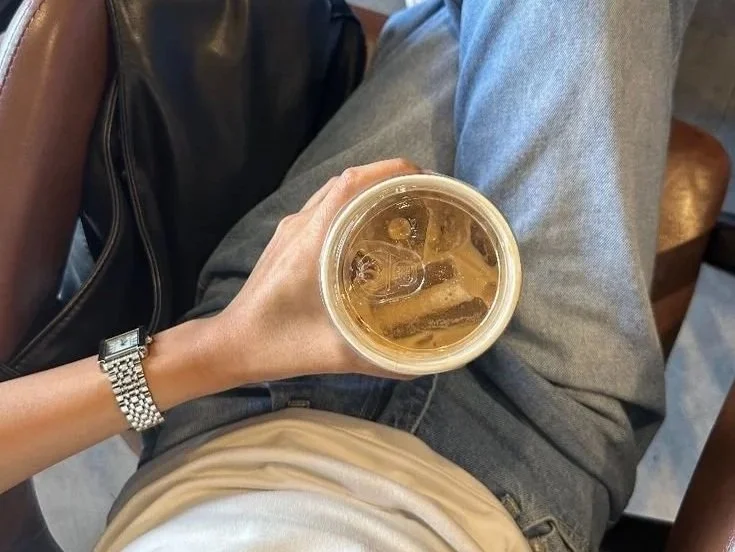
A woman holds a paper cup up to the camera. The lid sits slightly crooked and the drink inside is the pink of a highlighter pen. Across the top of the screen, in a soft white font:
A little treat for getting through Tuesday.
Thousands of people have liked it. Nobody in the comments asks what Tuesday did to her.
Some version of this video sits in nearly every feed. It is easy to scroll past and surprisingly hard to explain.
The phrase has a traceable ancestry. In 2011, Parks and Recreation gave Donna and Tom one day a year to ‘treat yo self’, and the joke was the excess: massages and fine leather goods, bought with total commitment. It was supposed to be ridiculous. TikTok kept the slogan, dropped the joke and shrank the budget to a coffee. The little treat can happen on any day, costs less than lunch, and needs no occasion beyond having been alive recently.
Economists have a name for something like this. Around 2001, Leonard Lauder of Estée Lauder noticed that lipstick sales held up while everything else fell, and this is when the ‘lipstick index’ was born. When a deposit on a flat is a fantasy, the part of life that can still be decorated is whatever fits in a cup holder. That is easy to understand. It is also a fairly bleak thing to build a culture on.
What TikTok added was a look. The treat has a house style by now: pastel packaging and a ringed hand in the frame, with the pop of a lid for sound. The caption is lowercase and mildly apologetic. Cuteness is doing a job here. A sticker with a little face on it can't be accused of anything, and neither can the person who bought it. Treats on this app are designed to look harmless, which is handy when the thing being hidden is the total.
The total is the clever part. Five euro never feels like money. Over twenty working days it is a hundred euro, and at no point in those twenty days did it feel like a decision. It is the same trick as the subscription, which is why the vocabulary matters so much. ‘Dopamine’ has become the favourite word, as in dopamine dressing and dopamine decor. It is rarely used with any pharmacology behind it, but it works as a permission slip. A want needs defending. A neurochemical need must only be met. The argument does not hold up, yet spending does feel easier once the sentence in a buyer's head contains the word.
There is a second purchase hiding in these videos. The treat has to be filmed, so part of what's being bought is a prop. Plenty of the clips are visibly second takes, with the lid pressed down again and the cup turned so the logo faces out. After that, nobody can say whether the treat was for the person or for the feed.
None of this calls for sniffiness, because small pleasures are real. A good coffee on a bad morning does something, and a sticker on a laptop will outlast every mood it was bought to fix. People with little money are entitled to enjoy the little they spend. The objection is to the narration, the way every treat is framed as wages for endurance, as if the day were a debt and the cup paid it off. Someone who needs a reward for getting through Tuesday should probably be asked about Tuesday.
The sticker is the most trustworthy version of the treat. It costs under two euro, it stays, and the only person who has to approve it is whoever owns the laptop.
The woman with the pink drink never says what happened. That is the video worth watching.
Written By: Pranamya Shetty
Edited By: Hazel Hunter
