Colombia didn't come to Paris for validation. At BAOBAB's Paris Fashion Week debut, the clothes were only part of the story.
Fashion has long treated Paris as the ultimate stage. A city where brands arrive seeking validation from the industry that still positions itself as the global authority on style. Historically, that validation often came with an unspoken condition: adapt, assimilate, become legible to a European gaze. At its Paris Fashion Week presentation, Colombian label BAOBAB chose a different route. Rather than editing out its identity in pursuit of international appeal, the brand expanded it. Paris was not the place where Colombia became more refined. It was the place where Colombia arrived exactly as it is: vibrant, sophisticated, cultural, emotional and undeniably fashionable. The presentation marked a significant milestone for the Bogotá-founded brand, bringing Colombian fashion into one of the world's most prestigious cultural settings. Reports surrounding the event highlighted BAOBAB's collaboration with the Paris Opera, making it the first Latin American fashion brand to do so in the institution's centuries-long history. But what made the evening memorable was not the historical achievement. It was the cultural confidence.
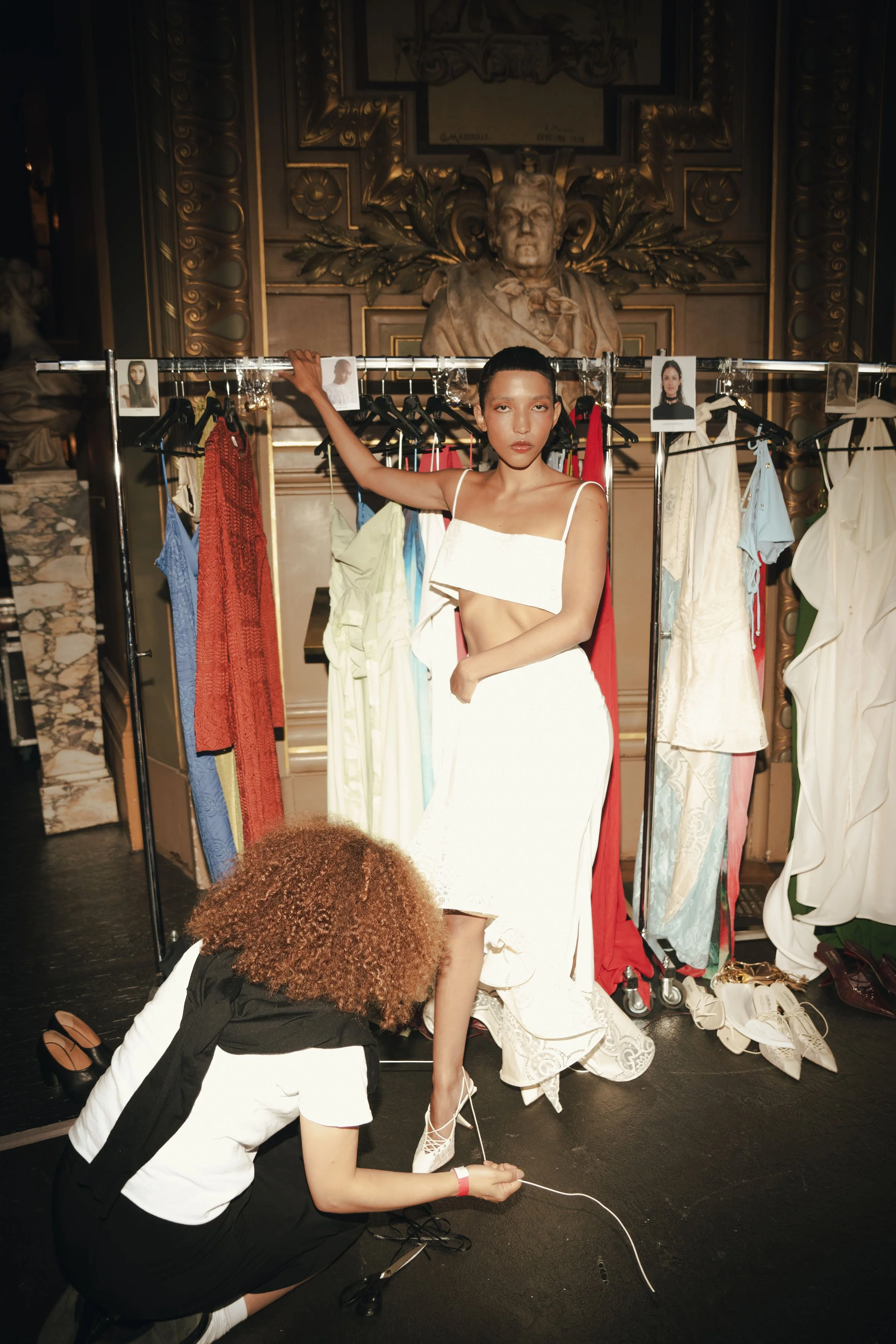
There was also something deeply personal about seeing this happen. As someone from La Guajira, and as a costeña, a term used for people from Colombia's Caribbean coast, I found myself feeling incredibly proud watching pieces of my culture take up space in a room like the Palais Garnier. There was something almost surreal about it: Colombian music, colors, movement and textures being presented inside one of Europe's most historic cultural institutions. Costeños are colorful, expressive, outgoing and very, very loud. We celebrate loudly. We dress with personality. We make music part of everyday life. We take up space. And even within Colombia, there can sometimes be this perception that the Caribbean side of the country is less poised or less refined, as though our warmth and exuberance somehow exist in opposition to sophistication. That is why seeing a Colombian brand bring those qualities into the Opera felt so meaningful to me. It wasn't asking Colombia to become quieter in order to be elegant. It was showing that our version of elegance can include everything that makes us, us. Seeing Colombian artist, singer and composer Lido Pimienta take part in the presentation felt particularly meaningful. Her work often draws from the sounds, traditions and histories of Colombia's Caribbean region, while exploring themes of identity, ancestry and belonging. Her presence brought a piece of the Caribbean coast to Paris, carrying with it the sounds, stories and complexities of a region that rarely receives this kind of global visibility.
Her performance transformed the presentation into something larger than fashion. It became a cultural conversation. Through music, movement and storytelling, it highlighted parts of Colombian culture that remain relatively unknown to many international audiences, particularly in Europe. It brought attention not only to our music and dance traditions, but also to the spirit that defines so much of life along the Caribbean coast: our joyfulness, warmth, resilience and celebration of community. In a fashion industry that often reduces cultures to visual references, moments like this allowed people to engage with the living culture behind the aesthetics.
There are parts of Colombia that are incredibly rich culturally, but are still not always given the same visibility on international stages. Watching someone who carries those sounds and histories walk into a space like this reminded me that our culture does not need to be translated into something more palatable before it deserves to be seen.
The show unfolded as a multidisciplinary celebration of Colombian creativity. Contemporary dancers moved through the space alongside the models, while Colombian talent from different regions contributed to the experience. As the evening continued, legendary salsa group Grupo Niche brought salsa music into the Palais Garnier, introducing one of Colombia's most beloved musical traditions to one of France's most iconic cultural institutions. There was something almost poetic about that contrast: salsa inside the Opera, Colombian rhythms filling a space so deeply associated with European high culture. The setting may have been Paris, but the sound of Colombia was unmistakably present. Furthermore, the presentation eschewed any singular expression of Colombian culture, and instead celebrated its many dimensions. The Colombia that arrived in Paris was not one region, one sound or one image. It was layered. There was something powerful about seeing figures who represent different dimensions of Colombian culture participating in the presentation. The inclusion of carnival royalty like Michelle Char, performers, models, and known Colombian actresses reinforced the idea that Colombian identity cannot be reduced to a single aesthetic. It exists in movement, music, celebration, regional traditions and contemporary fashion all at once.
For decades, luxury fashion has often looked to Latin America as a source of inspiration, while rarely handing the microphone to Latin Americans themselves. Tropical references have appeared on countless mood boards, yet the people and cultures behind them frequently remain absent from the conversation. BAOBAB challenged that dynamic. Instead of presenting a sanitized version of Colombia, the brand brought the country with it. Not as folklore, not as costume, or as an exotic fantasy curated for a European audience. But as culture. And perhaps that is what made the moment so emotional for me. Because sometimes the things we grow up around feel so ordinary that we forget how culturally significant they are. The vibrancy and depth we carry through our music, the way people move, the way we celebrate, these are just parts of home when you are a child. You don't necessarily understand that one day, seeing those same things represented on a global stage could make you feel so proud.
For a little girl from the Caribbean coast, there is something incredibly powerful about seeing the things you grew up with reflected somewhere that once felt very far away from home. To see Colombia represented not as a backdrop, not as an aesthetic borrowed for inspiration, but as a place full of creativity, sophistication and possibility, makes me wonder what else we are capable of when we stop feeling like we have to edit ourselves to be taken seriously and are given the resources to thrive and share our stories, creativity and culture. How much more could we become if we trusted the richness that already exists within our own culture? How many Colombian designers, artists, musicians, dancers, photographers and filmmakers are still waiting for their moment? That is what I hope moments like this create. Not just representation, but imagination. The possibility of seeing yourself somewhere you once thought you didn't belong.
Fashion often struggles to distinguish between cultural extraction and cultural representation. One takes inspiration from a place. The other allows that place to speak for itself. What happened in Paris felt much closer to the latter. The evening suggested something that many Colombians have known for years: elegance and cultural pride are not opposing forces. Sophistication does not require distance from one's roots. The most compelling thing about BAOBAB's debut was not that it proved Colombia could be chic. Colombia never needed to prove that. What felt important was seeing a Colombian brand occupy one of fashion's most prestigious stages without compromising its identity to get there.
Paris remained Paris, but for one evening, it also felt a little bit like Barranquilla. A little like Cartagena, a little like La Guajira, and perhaps that was the greatest achievement of all. This should not feel like the peak. It should feel like the beginning. And I can't wait to see what else we can become.
Written By: Valerin Vanegas
Edited By: Rose Curnyn
