MYKOLA BABIY
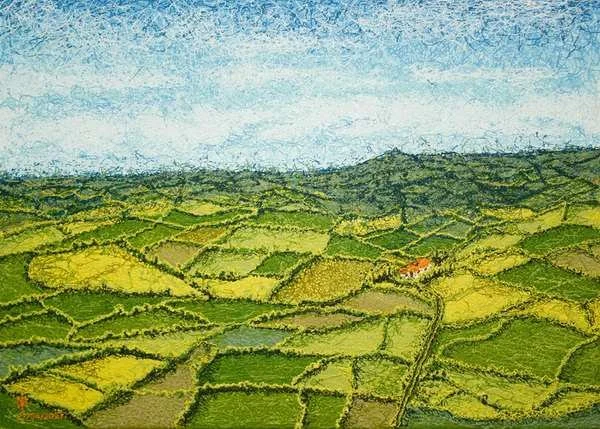
Mykola Babiy is a Ukrainian-Irish artist whose stunning paintings capture Ireland's landscapes, cities, and towns using a Ukrainian contemporary painting technique called Pliontanism. Pliontanism, meaning “to weave” or “intertwine,” was created by Ukrainian painter Ivan Marchuk. The technique involves applying thin lines of paint that layer and weave through each other, creating depth and character.
However, Mykola does not limit himself to one style. Many of his works are reminiscent of the 19th-century Impressionist movement such as Temple Bar. Dublin. Notable artists from the movement include Claude Monet, Pierre-Auguste Renoir and Berthe Morisot.
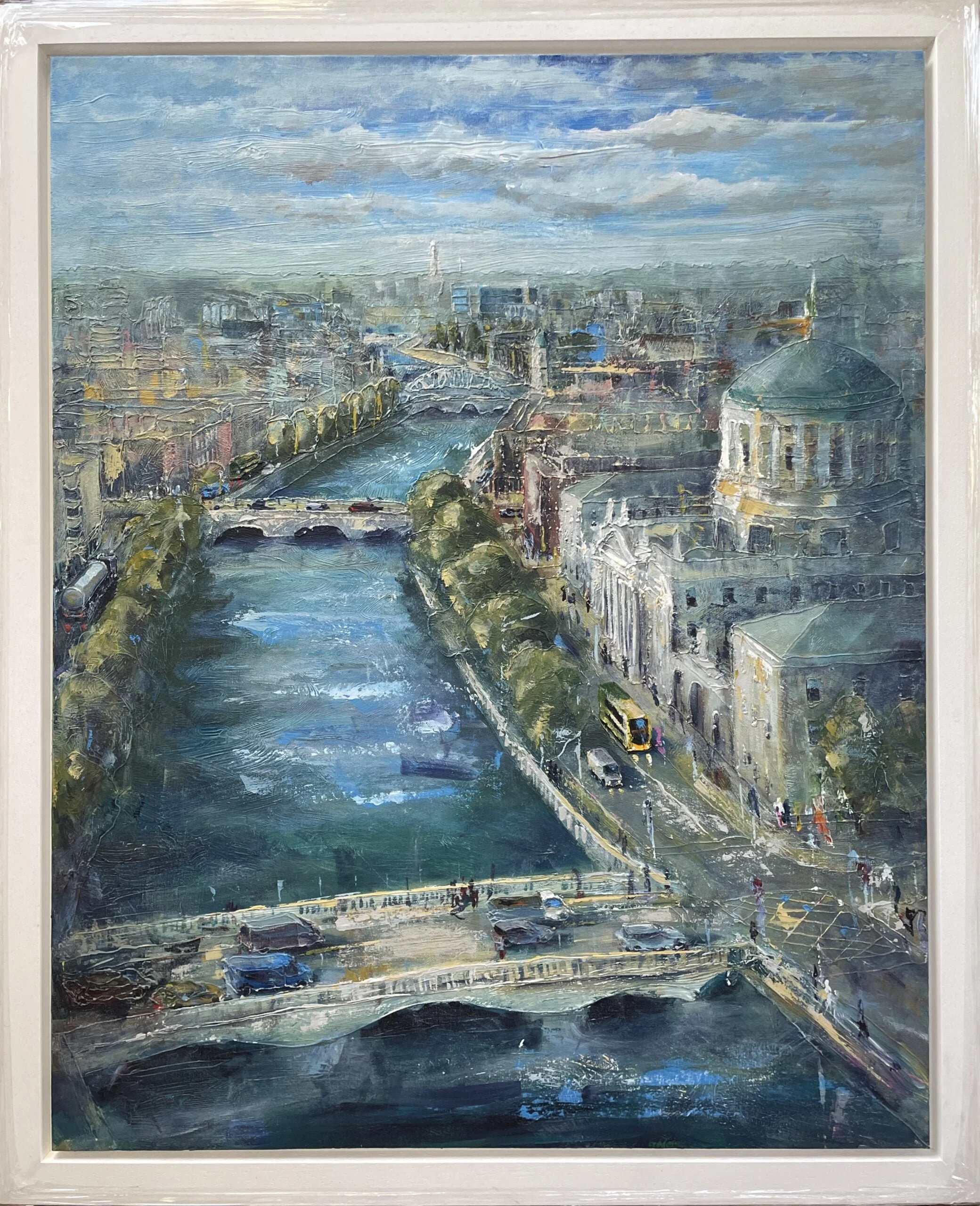
Having lived in Ireland for over twenty years, Mykola has masterfully blended two cultures—Irish and Ukrainian—into his art. Using the Pliontanism technique, he has created striking depictions of famous Irish landmarks such as the Rock of Cashel in Co. Tipperary, St. Declan’s Well in Ardmore, Co. Waterford, and the Samuel Beckett Bridge in Dublin city centre. In 2020, Mykola decided to pursue art full-time, and with his range of talents, it is no surprise why. In addition to painting, he also enjoys drawing, sculpting, and wood carving. Online, one can find his finely crafted copper depiction of Molly Malone at the Merchant Arch.
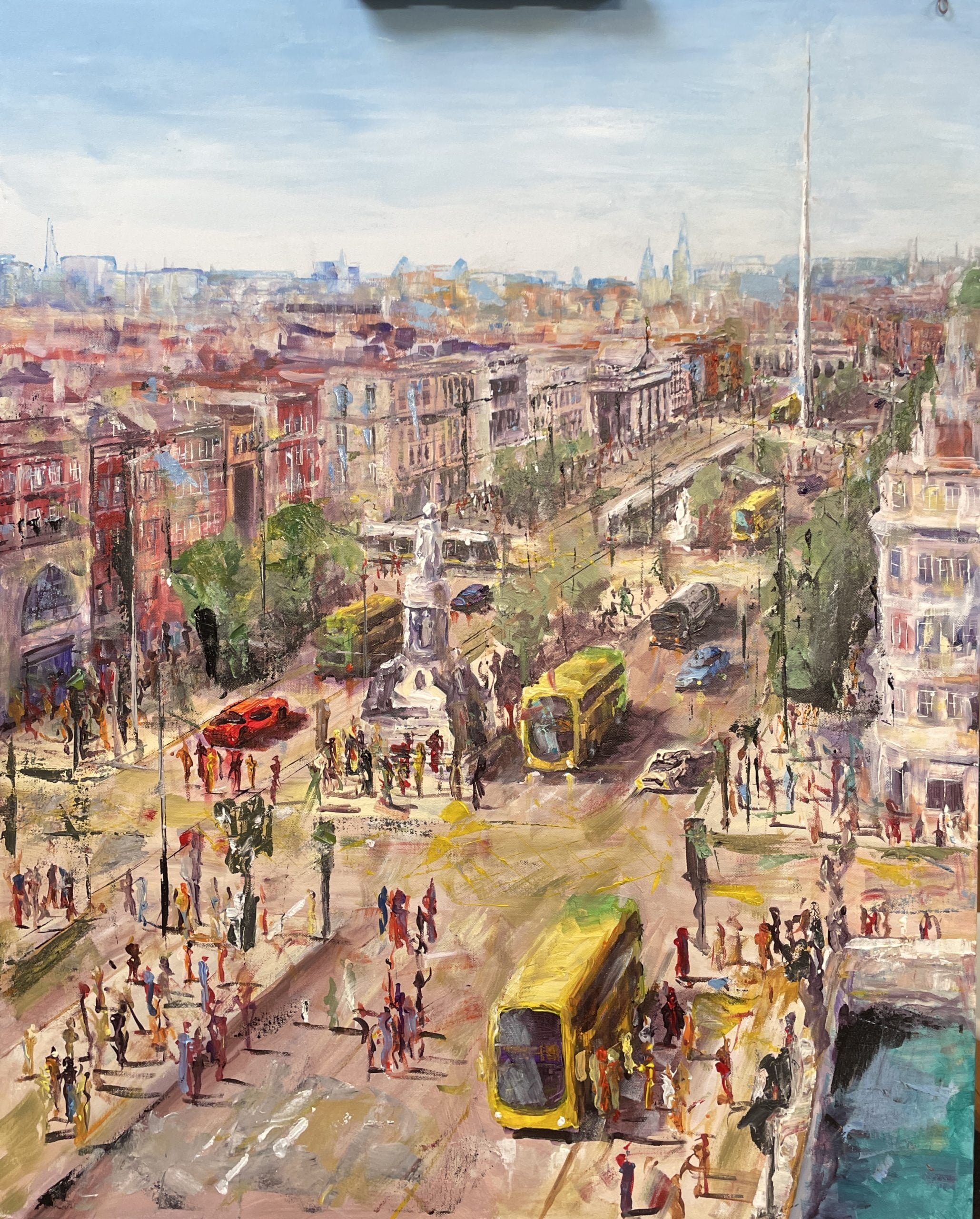
A standout feature of Mykola's work—apart from the vibrant amalgamation of colourful paints—is movement. Each piece radiates action and life. The combination of a flowing sea and sky in his piece Cobh, Ireland breathes subtle intensity. Similar motion is noticeable in works such as Dublin Docklands in Light, Temple Bar, Dublin, and a personal favourite, Evening Wander on Grafton Street. Although loose, visible brushstrokes create a certain distortion—a hallmark of Impressionist painting—the key features of the capital's busiest street remain clear. The main subject of the painting, the lady with the red hat, can be seen carrying what looks like the iconic Brown Thomas shopping bag, a familiar sight on Grafton Street. To her right looms Powerscourt Clock while a busker plays underneath. Just past the musician, the distinct façade of Bewley’s stands out against the blurred background, and on the horizon, one can assume the tall structure with the domed roof is St. Stephen’s Green Shopping Centre. There is a sense of pride in being able to identify such familiar sights amid the organised chaos.
Other works become a sort of geographical Where’s Wally? for Dubliners, such as Mykola’s several bird’s-eye views of the capital. One can follow the River Liffey’s journey through Dublin city in his paintings: beginning at the Four Courts and looking back towards the Guinness Storehouse, then moving to the Ha’penny Bridge, the Custom House, and finally ending with a sweeping view of the city from the Poolbeg chimneys.
On his website, Mykola lists some of his inspirations, including Ivan Marchuk (naturally), Jim Fitzpatrick, Jackson Pollock, and Vincent van Gogh. Works such as Spring Whirlwind, Summer Vibrance, and Autumnal Symphony clearly echo the chaotic energy of Pollock, while Happy Light Acrylic Tangled Lines and Dublin’s Starry Night align more with van Gogh’s influence.
Mykola Babiy is one of many immigrant artists creating a name for themselves and breathing new life into Ireland's artistic scene. Through his unique combination of Ukrainian techniques and Irish themes, he has created not just beautiful artwork but also an extension of his cultural identity—and by extension, the identity of many other Ukrainian-Irish citizens. Mykola is open for commissions and can be contacted through his website, mykolababiy.com, or via his Facebook page.
Written by Jack Murray(@jack.mrry)
Copy editor - Niall Carey(@niall.030)
