Oisín Returns: Blue Niall Reimagines the Irish Myth for a Generation on the Move

In Irish mythology, Oisín was the young prince who rode away to Tír na nÓg, the land of the young. After spending three years in Tír na nÓg, Oisín decided to come back home. However, three years in the land of the young is three hundred years in the real world. When Oisín returned, his homeland was unrecognizable and his people were long gone. “That’s the story we grew up hearing”, says Niall, after being asked the story behind his new album; Oisín. For generations, this story has carried a haunting echo for Ireland; of leaving, longing, and of coming home to a place that no longer feels like home.
Now, Blue Niall has reclaimed that legend as the heartbeat of a deeply contemporary project. His album, Oisín, reimagines the myth as an allegory of emigration in today’s Ireland; a country still marked by cycles of departure and return, and a youth struggling to find space to belong.
“I am doing a retelling where Oisín is leaving Ireland to emigrate to a city that represents a modern city like London, Sydney or New York, and when he returns to Ireland it is a distant and dystopian future”
It’s a story rooted not in fantasy, but in reality. Emigration has long been Ireland's inheritance; from the famine to the economic depressions of the 1950s and 1980s, and now to a new era shaped by housing shortages and a sense of social claustrophobia. “Over 70% of Irish people between 18-34 live with their parents. Not the way to develop and have your own space and grow”, Niall explains.
However, even as young Irish people scatter to London, Sydney, New York or Berlin, they carry home with them, the cadence of the language, the pull of music, culture and place they left behind.
“We do miss Ireland a lot when we leave and try to come back - despite the downsides we still develop a huge love for the country and we really miss it when we go”
That sense of dislocation courses through Oisín. But it’s not just a lament, it is also a reclamation. The Irish language itself, once suppressed and nearly lost, has been more and more embraced by the younger generation, including artists such as Blue Niall. When asked what does the resurgence of the language mean personally to Niall, he states:
“The language holds a lot of collective knowledge of the culture. In our country there were big efforts being made to strip our language from us and most people had lost the language. When you do speak it you get another feeling. We have a saying “Teanga Eile Súil Eile“ “another language another eye”, a different way of seeing the world. When I was feeling homesick it was particularly for language and music I was missing. When I speak it I feel a sense of home.”
The revival of the language, especially among younger generations and artists, feels to them like a homecoming in itself. And it is at the heart of what Blue Niall tries to achieve through Oisín; to open a conversation about belonging, identity, and what it means to come home to Ireland that feels new and old all at once.
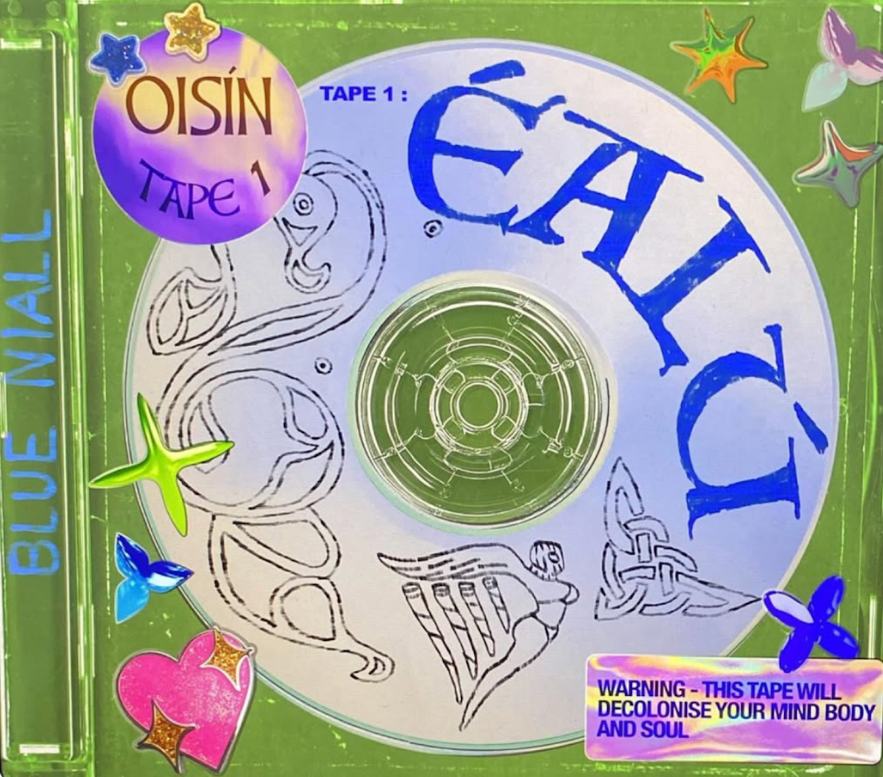
The Oisín project, which began with a live show at Dublin Fringe Festival, is now expanding into a series of mixtapes that follow Oisín’s journey across acts; leaving home, being away and finally returning. The story will unfold not just through music, but also through essays, memes, and visual work; an experimental, multimedia mythology for the modern Irish diaspora.
Perhaps that’s where the legend lives on, not just in the ancient texts, but in the hearts of those still riding between the worlds. For Blue Niall, that myth is not just history; it’s prophecy. A reminder that every generation of Irish people has its own version of Tír na nÓg. That every exile carries within them the dream of return.
Writer: Ieva Dambrauskaite (@ievadambrauskaite_)
Copy Editor: Alex Kelleher (@alex_kelleher_)
