WAGs: A Recession or an Achievement?
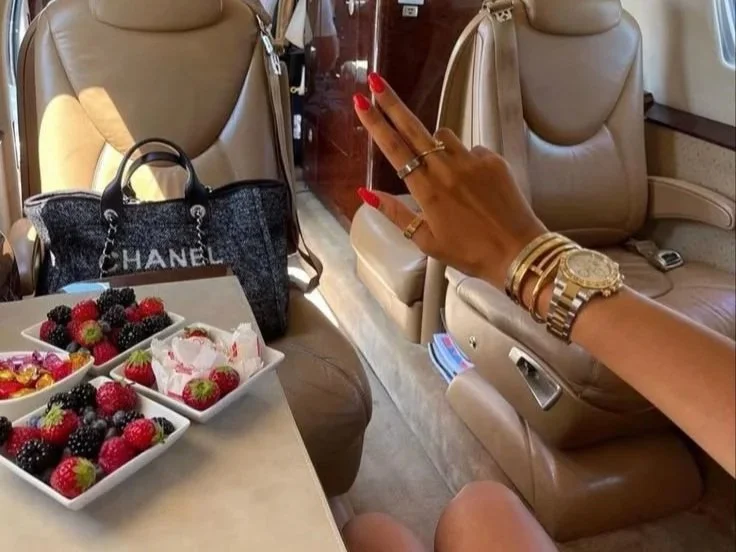
There was a time when the term “WAG” came with a very specific image: flashy tabloids, football matches, and women photographed more for what they wore than what they did. It was a label built by media, shaped by public curiosity, and often reduced to one defining detail: who they were dating.
Fast forward to now, and the image feels different. Scroll through Instagram or TikTok and WAGs appear less like background figures and more like individuals with their own aesthetic, voice, and following. The question is, has the role actually evolved, or has it just been rebranded?
On one side, not much seems to have changed. The label still exists, and it still leads the conversation. Figures like Alexandra Saint Mleux are often introduced through their relationship to Charles Leclerc before anything else. It’s subtle, but telling. No matter how curated or independent their identity may be, the starting point is often the same. The attention comes first from association, and everything else follows.
There’s also a certain expectation that hasn’t disappeared. WAG culture still carries an unspoken checklist, style, appearance, composure, presence. It may look softer now, more aesthetic than extravagant, but the pressure to fit into a certain image is still very real. In that sense, the “recession” argument holds weight. The label continues to define, even if it does so more quietly.
But at the same time, something has clearly shifted. Many WAGs today are not just present, they’re intentional. They build personal brands, create content, and shape how they are perceived. Social media has given them a kind of control that didn’t exist before. Instead of being spoken about, they can now speak for themselves.
Take Alexandra again. Her online presence leans into art, fashion, and a calm, almost intellectual aesthetic. It doesn’t rely on constant visibility with her partner, and it doesn’t feel dependent on it either. This is where the idea of “achievement” comes in. The role is no longer just passive, it can be strategic. It can be curated. It can even be independent, at least on the surface.
What’s also changed is how much of this culture is driven by the digital space. Platforms like TikTok and Instagram don’t just reflect WAG culture, they amplify it. Relationships become content. A simple appearance at a race or event turns into a moment that’s analysed, reposted, and romanticised. The algorithm rewards these glimpses into curated lives, and audiences engage with them just as quickly.
This creates an interesting dynamic. WAGs are no longer just shaped by media narratives, they’re shaped by audience behaviour too. People follow, comment, compare, and, in many ways, participate in building the image. The fascination isn’t just about the relationship itself, but the lifestyle surrounding it.
Which brings us to the grey area. Even when WAGs build their own identity, the label rarely disappears. It stays attached, sometimes quietly, sometimes obviously. Success might be self-made, but visibility often begins elsewhere. So the question becomes less about whether WAGs are empowered, and more about how that empowerment is framed.
Is this real independence, or just a more polished version of the same idea? Can someone fully move beyond a label that played a role in their recognition? And does it matter if they can, as long as they’re able to shape what comes next?
There isn’t a simple answer, and maybe that’s the point. WAG culture today sits somewhere in between. It reflects progress, but also carries traces of the past. It offers opportunity, but still operates within a framework that hasn’t completely disappeared.
Maybe the question isn’t whether WAGs have evolved, but whether we’ve stopped defining them by who they stand next to.
Written by: Shreya Sharma @shreyaaaaaaa159
Edited by: Alex Kelleher @alex_kelleher_
