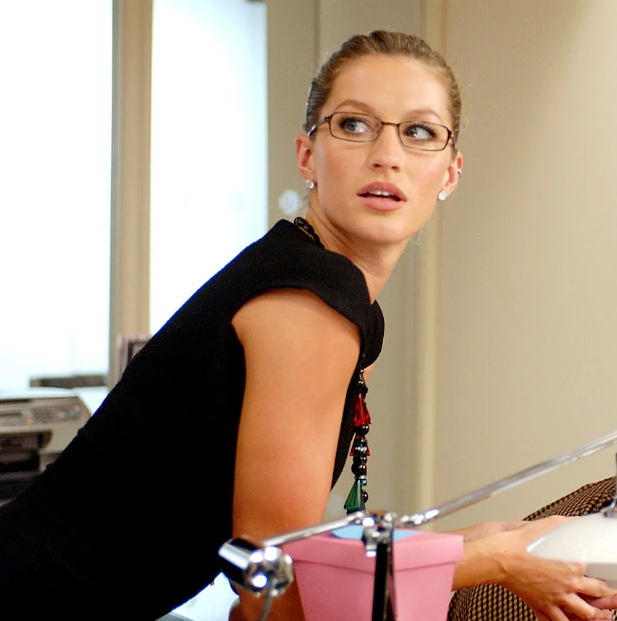
Open TikTok for five minutes and you'll be told exactly who to be.
Maybe you're a clean girl. Office siren. Mob wife. Maybe you're a coastal grandmother, despite living nowhere near a coast and being twenty-two years old. Identities now arrive pre-named, pre-packaged, and ready to be worn.
One week, you're being encouraged to dress like you've just stepped off a yacht in the South of France. The next, you're resurrecting indie sleaze from a Tumblr account you were too young to remember the first time around. Somewhere in between, you'll be informed that skinny jeans are back, then out again, then back once more.
Fashion has always been cyclical, but today's trend landscape feels different. Trends no longer arrive seasonally; they appear, peak and disappear at a pace that can feel impossible to keep up with. Personal style increasingly feels less like something formed organically and more like something selected from a shared catalogue of aesthetic algorithms.
Which raises an interesting question: what happened to anti-fashion?
Broadly speaking, anti-fashion refers to styles of dress that reject mainstream fashion trends and the social hierarchies that surround them. Rather than embracing what is considered fashionable, desirable or appropriate at a given moment, anti-fashion has often functioned as a refusal to conform.
This movement has never had a single uniform. In fact, its defining characteristic is that it constantly changes shape. The punk movement of the 1970s is perhaps one of its most recognisable expressions, emerging as both a musical and visual rupture against the social and economic climate of the time. In a moment marked by political instability, rising unemployment and a growing sense of disillusionment among young people, punk became less a coordinated movement and more a visible reaction to collapse.
What began in underground music scenes quickly translated into dress. Clothing became deliberately confrontational: ripped fabrics, safety pins, distressed denim and DIY alterations were not simply stylistic choices, but a rejection of polish, consumption and the idea that clothing should signal respectability.
Figures such as Vivienne Westwood and Malcolm McLaren played a key role in shaping this visual language through their King's Road boutique, translating the energy of youth subculture into garments that blurred the line between fashion and provocation. At the same time, bands like the Sex Pistols turned clothing into a performance-wearing disorder as identity and turned style into a form of refusal that was as loud as the music itself.
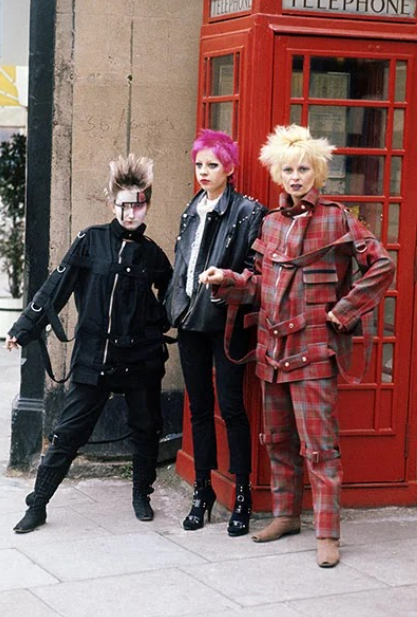
Punk did not propose an alternative system of taste so much as it rejected the idea of taste altogether, collapsing the distance between fashion, politics and protest.
In the 80s, Rei Kawakubo and Yohji Yamamoto arrived in Paris from Japan, unsettling Western ideas of silhouette, beauty and luxury. Their avant-garde “anti-fashion” approach rejected rigid tailoring and traditional silhouettes, introducing deconstruction, heavy layering and a monochromatic, predominantly black aesthetic that would permanently shift the industry.
Kawakubo in particular rejected conventional ideas of femininity, instead designing clothing driven by concept rather than decoration or the male gaze. Iconically, she has been quoted as saying her clothes were made for women who “pay no attention to their husbands”.
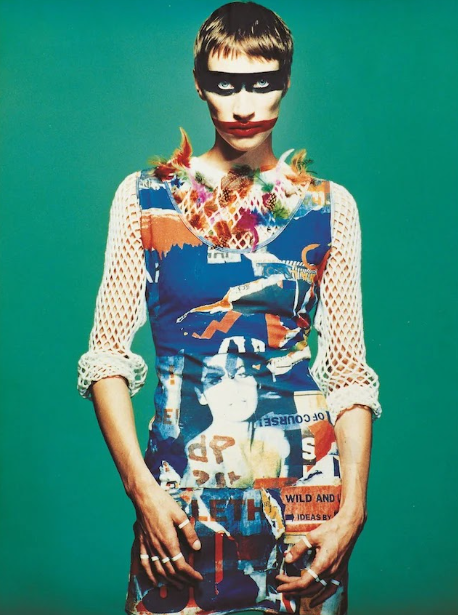
And of course, in Belgium, the Antwerp Six would go on to expand the language of anti-fashion through their rejection of the decades’ polished conventions, instead embracing imperfection and deconstruction. Garments were left intentionally unfinished, inverted, anonymised, or made deliberately “incorrect” with exposed seams, raw edges and visible construction becoming part of the design itself.
The goal was never simply to look different. Anti-fashion questioned the assumptions underpinning fashion itself: What makes a garment beautiful? Who decides what is desirable? Why should clothing conform to established standards at all?
Yet anti-fashion has always been caught in a paradox. The moment something becomes visible enough to challenge fashion, it also becomes visible enough to be absorbed by it.
Punk eventually found its way onto luxury runways. Distressed denim became a designer product. Margiela's once-radical deconstruction techniques are now referenced across the industry. Even normcore, a movement built around dressing as ordinarily as possible, became a recognisable aesthetic with its own visual codes and cultural references.
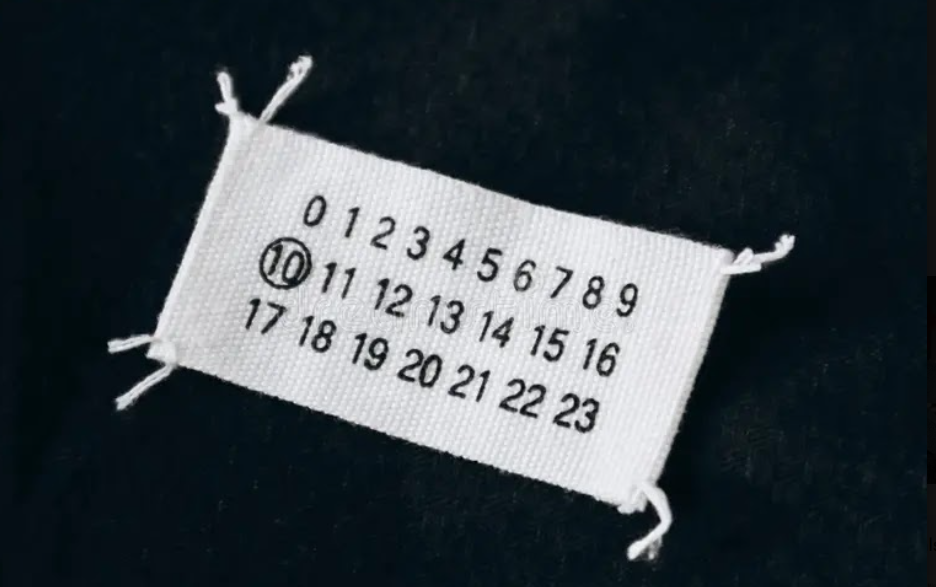
Fashion has a remarkable ability to turn resistance into style.
The rise of micro-trends and "core" aesthetics has only accelerated this process. Every aesthetic arrives neatly packaged and immediately identifiable. The names themselves are almost more important than the clothes. Once an aesthetic is named, it becomes searchable. Once it becomes searchable, it becomes reproducible. And once it becomes reproducible, brands can sell it back to us.
What makes this particularly interesting is the effect it has on taste.
Taste is often spoken about as though it were something deeply personal: an expression of individuality, instinct or preference. But how much of what we like is genuinely ours? When we're exposed to thousands of carefully curated images every day, the line between personal taste and repeated exposure becomes increasingly blurred.
Algorithms don't simply reflect our preferences; they help shape them. The more we engage with a particular aesthetic, the more it appears in our feeds. Over time, familiarity begins to feel like preference. What starts as exposure can gradually become desire.
This isn't to say that personal style no longer exists. It does. But developing it has arguably become more difficult in an environment where identities arrive pre-assembled. When every aesthetic comes with a moodboard, a shopping guide and a list of must-have items, there is less room for experimentation and contradiction, the very things that often make personal style interesting in the first place.
Perhaps this is where anti-fashion still has something valuable to offer.
In a culture obsessed with speed, anti-fashion may no longer be about rejecting fashion altogether. Instead, it may be about resisting the pressure to immediately participate.
Because perhaps the most radical thing a person can do in the age of micro-trends is take their time.
In a world that profits from constant reinvention, slowing down allows taste to develop naturally rather than reactively. It creates space to distinguish between what is genuinely appealing and what is simply being shown to us repeatedly.
Anti-fashion, then, isn't dead. If anything, it feels more relevant than ever, not as a fixed style or a particular way of dressing, but as a reminder that personal style should be formed, not prescribed.
And in a culture determined to tell us who to be next, that might be the most unfashionable idea of all.
Written By: Leah Carolyn Murphy
Edited By: Kirsten Baldwin
