Laura Rivoiro’s Feminist World of Freedom and Artistic Expression
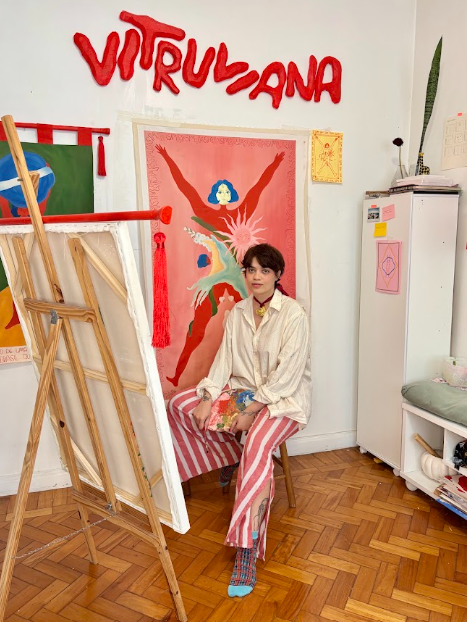
Visual artist Laura Rivoiro has created an entire universe through her art. As seen through her eyes, the world is effervescently colourful and teeming with life; bodies, especially female bodies, exist and interact with the world around them freely and without apology.
There is also an incredibly tactile aspect to Laura’s work: her art is so clearly hand-made, with so much care and attention, that even just looking at images of her paintings and sculptures, you can imagine how it would feel to reach out and touch them.
When you engage with Laura’s art, you can instantly sense her love for the world around her and the people in it, and for creativity itself.
Starfish were delighted to sit down with Laura to talk about her artistic journey, the feminist themes and intention in her art, and the vivid universe she has created.
Where are you based?
I currently live in Rio de Janeiro, and I feel like the city deeply crosses through my work. There’s something very specific about the way Rio blends body, architecture, and nature — everything feels more exposed, more organic, more alive. The light, the heat, the movement of people, and even the relationship people have with their own bodies ended up directly influencing my artistic research.
When did you become interested in visual art?
Art has always been very present in my life — my parents encouraged it a lot. Because of that, I think I started understanding it as a language very early in childhood. I was constantly drawing and creating things. Over time, I realised it was also a way of processing feelings, desires, and discomforts I didn’t even know how to name.
Today, I understand my artistic practice almost as an extension of my body and my way of existing in the world.
What are the most prominent themes or ideas that you explore in your art?
My work mainly revolves around the female body and the relationship between nature and humanity. There’s one question that runs through a large part of my research — and I’m obsessed with it: “Why do we value the curves and volumes of nature so much, but not those of our own bodies?”
I’m also deeply interested in talking about acceptance, desire, presence, and freedom. Many of my works carry the word “YES” as a gesture of consent toward oneself — a “yes” to existence and to occupying space as a woman in a world where only women and their children exist, and yet we are still not truly welcome.
Who or what are your most important artistic influences?
I have many influences that come both from art and everyday life. I feel deeply connected to artists like Frida Kahlo, Artemisia Gentileschi, Adriana Varejão, and Tarsila do Amaral.
But I’m also very influenced by human behavior, astrology, symbolism, spirituality, and the observation of natural forms — stones, fruits, skin, water, plants. My work comes very much from the physical sensation of things.
My father is a tarot reader, so the first images I saw in life were tarot cards. They live in my subconscious and inevitably in my work as well.
You work within many forms of visual art, including sculpture, painting, print-making, and jewellery-making. Is there a form you’re particularly interested in, and if so, why?
I enjoy moving between different languages and mediums. I feel that each idea asks for a different body in order to exist — sometimes it becomes a painting, sometimes jewellery, sometimes an object. I don’t like limiting my research to a single form.
Even though painting is my comfort zone, I have a very strong connection to sculpture. There’s something almost ritualistic about building volume with my hands. I like the idea of creating bodies that occupy real space, that can be seen from different angles, almost like presences.
You describe your artistic creation Lalau as “the main character in [your] universe”. Can you tell us about the universe you’ve created in your art, and Lalau’s place within it?
Lalau emerged almost like an entity that concentrates everything my research is trying to say. She is a character, but also an extension of myself, of the women I know, and of a freer, more expansive feminine imaginary. An ideal that does not follow ideals.
The universe I create revolves around bodies that exist without apologising. A space where excess or absence is not a flaw, sensitivity is not fragility, and the body does not need to fit rigid standards in order to be beautiful.
Lalau inhabits this place as its protagonist because she represents precisely that permission: to take up space, to feel pleasure, to exaggerate, to overflow. She does not fit in — she creates the space. In this territory, the body is no longer measured or contained; it simply exists. Raw flesh, excess, presence.
Can you tell us about some of your favourite artworks you’ve created so far?
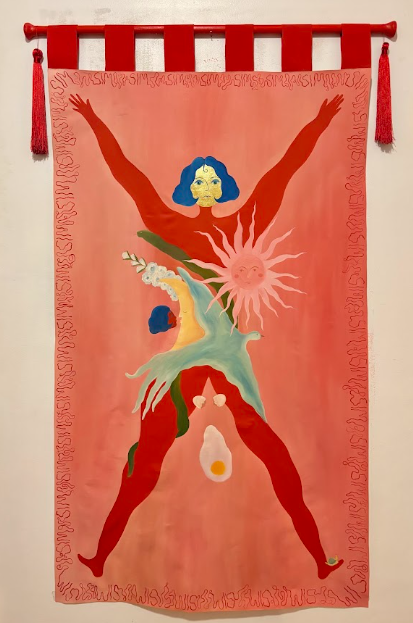
Last year, in September 2025, I worked on my first solo exhibition, called VITRUVIANA. It was a very intense and transformative process for me because I feel that it was there that I gave birth to some of the most important works of my career so far.
Among them are Corpo Território (Body Territory), Corpo Inventário (Body Inventory), and Vitruviana itself.
Corpo Território comes from the phrase: “from the body of a woman will be born the Brazil we will become.” To me, this work speaks about hope. About imagining freer and more humane futures through the female body — a body historically crossed by violence, control, and judgment, yet still remaining a space of creation, affection, and power. There’s an idea within it that transforming the way we look at bodies also transforms the world we collectively build.
Corpo Inventário speaks about cataloguing and accumulation. About all the versions of ourselves we are forced to carry throughout life: expectations, standards, experiences, affections. It’s a work that deeply dialogues with excess and with the almost impossible attempt to organise everything we feel inside a body.
And Vitruviana is the synthesis of the entire exhibition. It emerged as a direct response to the historical ideal of perfect proportion associated with the human body. I wanted to create a monumental, free, and expansive female figure — a body that does not ask permission to exist.
I have a very emotional connection to these works because I feel they marked the moment when my artistic research found a more mature, courageous, and radical voice.
Are there any projects you’re currently working on that you can tell us about?
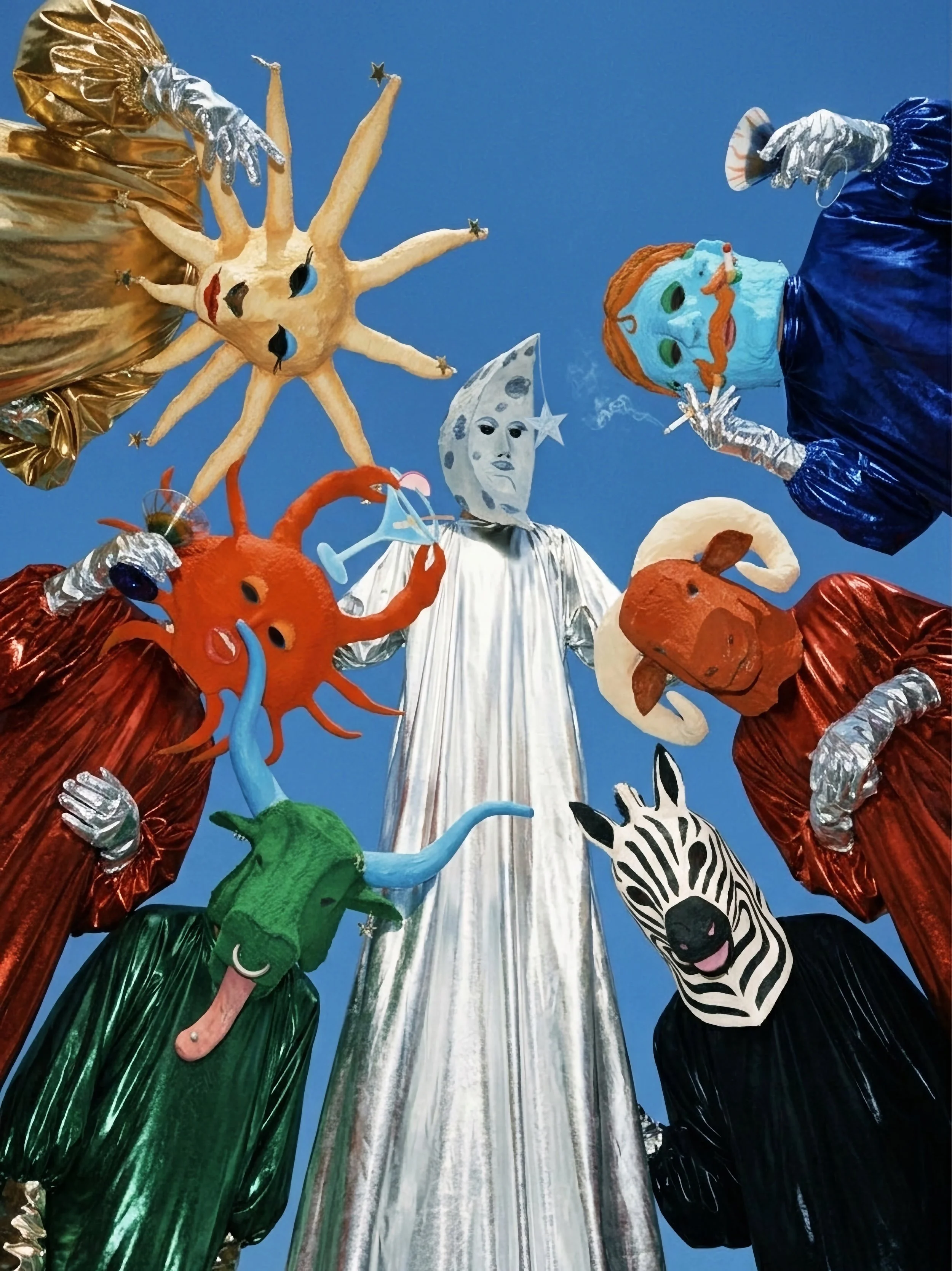
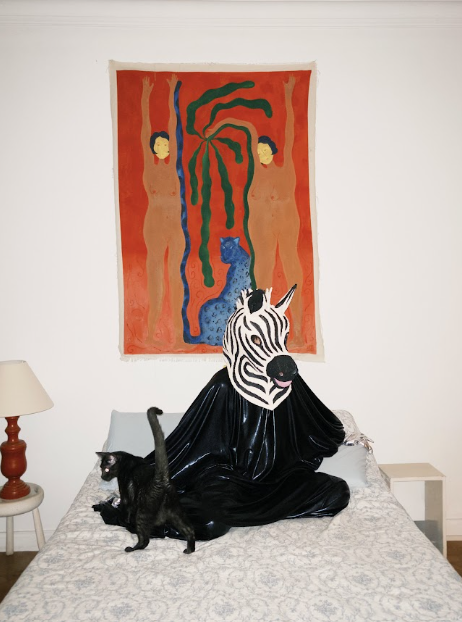
Recently, I started working with papier-mâché masks, and I’m completely enchanted by the process. It was the first time I explored this language, and there’s something very fascinating about building faces and presences from such a simple material.
Papier-mâché opened up a very new space of experimentation for me. I find it beautiful how the material carries imperfection, texture, and gesture — almost as if it preserves the memory of the hands that shaped it.
Now I want to explore this even further and understand how far this research can go. I want to take papier-mâché beyond masks… because why not? I feel like I’m only beginning to discover the possibilities within this universe.
You can check out Laura’s work on her Instagram, @lauralalaulaura, or her website, https://www.laurarivoiro.com.br/.
All photos by Laura Rivoiro
Written By: Mia Tobin Power
