A Generation on ‘Do Not Disturb,’ But is this Empowerment or Isolation?
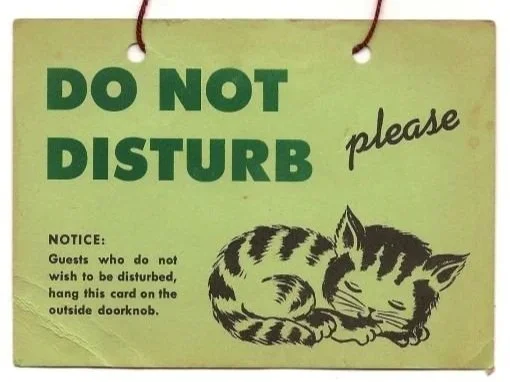
What scares a Gen Z-er? Lions and tigers and landline telephones – oh my! All three contain the same fear: being trapped beside the unexpected. We grew up with such technological social control: chosen names, filtered notifications, profile details for all our contacts whom we can patiently draft and re-draft texts to instead of real time communication. The fear of mistakes done talking has turned most of Gen Z away from the idea of just… calling someone out of the blue.
Now, if you do call someone impromptly, the first thing they’ll say probably won’t be ‘Hello’, but rather, ‘Why did you call?’, and then, ‘Ah you could have just texted!’. For many, calling is no longer categorised as casual conversation: rather, the phone call’s role is relegated to emergencies, scheduled video chat events, proxy doorbells and calls to attention when tons of texts go unanswered. However, what happens when that final role stands no chance, because the majority of Gen Z decide to keep their phones on silent, or block calls, or even go full ‘Do Not Disturb’ until the time suits them to get back to you?
Increasingly, young people are keeping their phones on ‘Do Not Disturb’, and, more broadly, taking on a philosophy of ‘Do Not Disturb’ to deal with the constant bombardment of notifications, mystery callers and masked advertisements, where one is asked to always be reachable in an ever-reaching world. In one respect, this is an empowering defence to a social battery-draining contract we never signed up for. But, on the other hand, will it lead to a fragmentation of friendships and communities, where isolation and irrespective control become the new norms? There is no clear answer, but this article will try to get a better understanding of the ‘Do not Disturb’ trends from both of these angles.
The Empowerment Perspective
Living the ‘Do Not Disturb’ lifestyle is deciding to take on life on your own terms. When you can be reached at any time, when your workplace expects you to text in the employee group chat long after your shift ended, and when conversation can thread and weave and bend without any direction in the end, it can begin to impact your own personal energy, boundaries and downtime. Therefore, sometimes the best way to take back control over your own life is setting hours of your day on ‘Do Not Disturb’, allowing yourself the space to focus on yourself, your feelings, your plans and your time. That way, your relationship with your phone is more proactive, instead of always reacting to what notification you get the moment you get it: you decide when you want to use your phone based on your own feelings, not based on a buzz. You go from the passenger seat to the steering wheel, and you learn to forget about the slings of FOMO forevermore. So, living on ‘Do Not Disturb’ sounds pretty idyllic: everyone leaves you alone until you decide otherwise. But does this perspective tell the complete story?
The Isolation Perspective
Like it or not, phones are important. Like it or not, when you silence your phone because of all the annoying scam callers and such, you are also silencing it for a friend who may be in crucial need of you. Is it our responsibility to be constantly available for people? Not quite. However, it is our responsibility to communicate our boundaries with the people we love, and prepare for the fact that if they need us, we should be able to be there for them and not miss them because of silent pockets. Furthermore, leading the ‘Do Not Disturb’ lifestyle doesn't just have the chance of letting others down, but it can also lead you down a worse path. Blocking out people who want to help, or the community around you to focus on self-improvement becomes a way of self-isolation. The illusion of no one being there can quickly turn into reality if you disregard your friends and your social community for too long. Community is integral for mental health: no person is an island, and while it is never nice to be disturbed, is it worse to be left completely alone?
Therefore, the answer to this ‘Do Not Disturb’ dilemma is the same as most things: balance. Everybody needs their downtime, but it is important to let people know when you can’t be reached. Everybody needs a break from the digital bombardment, and focusing on yourself is crucial; but we need to have an environment where just calling someone up for a chat isn’t viewed as breaking into a house through a window. We are social creatures, we are independent creatures: let’s all try to be less disturbing and get less disturbed and the world will be bliss in no time!
Written By: Ben Lynch, ben_lynch__
Edited By: Kirsten Baldwin, teddys_bookshelf
