An Interview with the bbft: The Audio-Visual Electric Dance Duo Taking Dublin by Storm.
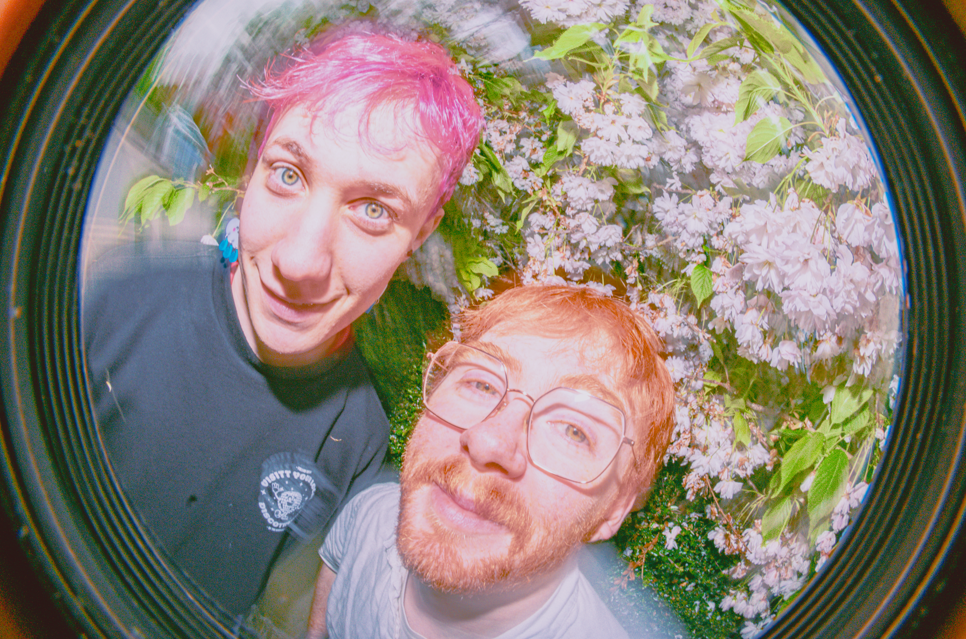
An utter bootleg of dance genres, bbft provides a blend of deep-cut jungle breaks with distorted textures, melded together to create an auditory experience that is uniquely theirs and is all wrapped up in a nice pink bow.
bbft have just come out of a busy and exciting 2025, playing festivals like Another Love Story, Electric Picnic and Forbidden Fruit, and coheadlining shows with Bucket, Vaticanjail and Julia Louise Knifefist – along with several other really well-received shows. Recently announced as a Hotpress’ ‘Hot For 26’, bbft are now ready to hit the ground running with their upcoming EP which is set to be an exciting “ode to their live set”.
It was great getting to talk to the duo about their upcoming EP, their creative process, the philosophies they place onto electronic music and the simultaneous beef and love which they have for the Dublin Scene!
So, how did bbftbegin?
Noah: “Well, we've known each other since we were twelve. We went to school in rural county Louth. We had this tiny music class, too, where Ciarán and I first met. With our many awkward uptown-funk school bands along the way, we’ve been making music together ever since.”
Were you both always interested in making electronic music?
Ciarán: “My interest started quite late. With our band, I was always a rock/metal guitarist, so it wasn’t until I was 18 that I got interested in electronic music.”
Noah: “While I was the one saying: “Can we do a dance track?”. Despite being a metal band, it was perfect timing when Ciarán got into electronics (because that’s when we were DJing) so we just said, “Should we do it?”.
Ciarán: “We’ve almost gone the opposite way now: I’m always focusing on the electronic sound while Noah will want to stick some guitar or drums onto there.”
So, how do you go about creating your tracks?
Noah: “Our writing practice is backwards. We play the song live first, and then we look at it with our ‘recorded track’ eyes set and see what works, what doesn't and if we can add something, like, for example, acoustic guitar.
Which is funny, because for FLOWEREMOJI, adding the acoustic was at first a big yes, then a big no and then finally we added it in. I think it shows the juxtaposition of texture really well, from soft to complete ‘BBBHHH’, if you know what I mean; we’re really interested in the relationship between electronic and instrumental, and seeing how much we can get away with.
For example, GUNEMOJI (coming on the new EP) is primarily instrumental: it’s just a huge noise breakdown and it's been the one that people have left the live shows the most excited about.
We have had to accept that recorded tracks sound differently than live ones and learning to adapt both is something that’s really helped us perfect the EP which is our verbatim live set, an ode to it.”
Ciarán: “And the origin of GUNEMOJI was being asked to play a last minute gig with a day-before notice and no prepared tracks. We had to throw a set together right to the wire and came out with four awful songs, and GUNEMOJI…Which we thought had something to it when we had combined two old tracks together, and both of them strengthened the other into one.
When we write for a gig, we decide how we want the set to flow: we want this section here and that section here. When we write for recording, we ask: ‘How can we make this more concise, what would we add in the studio, and what cherry on top textural finishes can we touch up?’.”
Why do you create this kind of music instead of any other kind of music?
Ciarán: “We’re allowed to do anything with our sound; our sound is ‘anything goes’. We don’t take ourselves seriously, and the message of our music is whatever you take from it: not what we decide.”
Noah: “I think the reasoning behind having no lyrics is because rather than singing, ‘This is how we feel, listen to how we feel’…it’s more: how do you feel?
Like for Cherry, the EP’s last song, I feel something different every time I listen to it. There’s always a different setting; like, sometimes it’ll bring me back to my grandmother's garden. But then, each time I hear it, I’ll end up revising another memory or past feeling that I lived so happily and cherish deeply. The best thing we’ve heard people at our set say to us is, ‘I needed that’. The whole set is about creating an energy release and being present in the moment, forcing ourselves and others to be present.”
Finally, what are your thoughts on making music in Dublin guys? What’s the community like?
Noah: “I used to have a bit of beef with the Dublin music scene, when, on account of there being too many grumpy bollockses, they’re just like: ‘Oh, y’know, music, Jesus’, saying, ‘Remember when that popular Irish band were grumpy? We should all be grumpy’. And I’m like, no, that's the opposite of it. So, we’ve built a lovely community where we’re obsessed with each other, constantly checking in, and learning from each other. I think the scene has gotten less gatekeep-y, and now there’s a beautiful curiosity with everybody’s work where we ask, ‘How did you do that?’. And we all support each other.”
Ciarán: "At the beginning, I felt on the outside looking in. But recently we’re collab-ing more with other artists, and it's much more connected. It’s not this distant thing that’s unreachable: the scene feels so open lately, and there’s no real barrier to entry. The most important thing is not viewing it as a competition. As people say, ‘The rising tide lifts all boats’: if it’s all connected, then when somebody starts doing better, everybody starts doing better.”
Noah: “And you should never be trying to be better at what someone else is doing. All you gotta do is be good at what you’re doing: be good at being you.”
It was great chatting to you lads, take care!
Written By: Ben Lynch, @ben_lynch__
Edited By: Kirsten Baldwin, @teddys_bookshelf
Photos by: Dylan Scully, @dylpool_
