Beyond Gender: The Future of Fluid Fashion
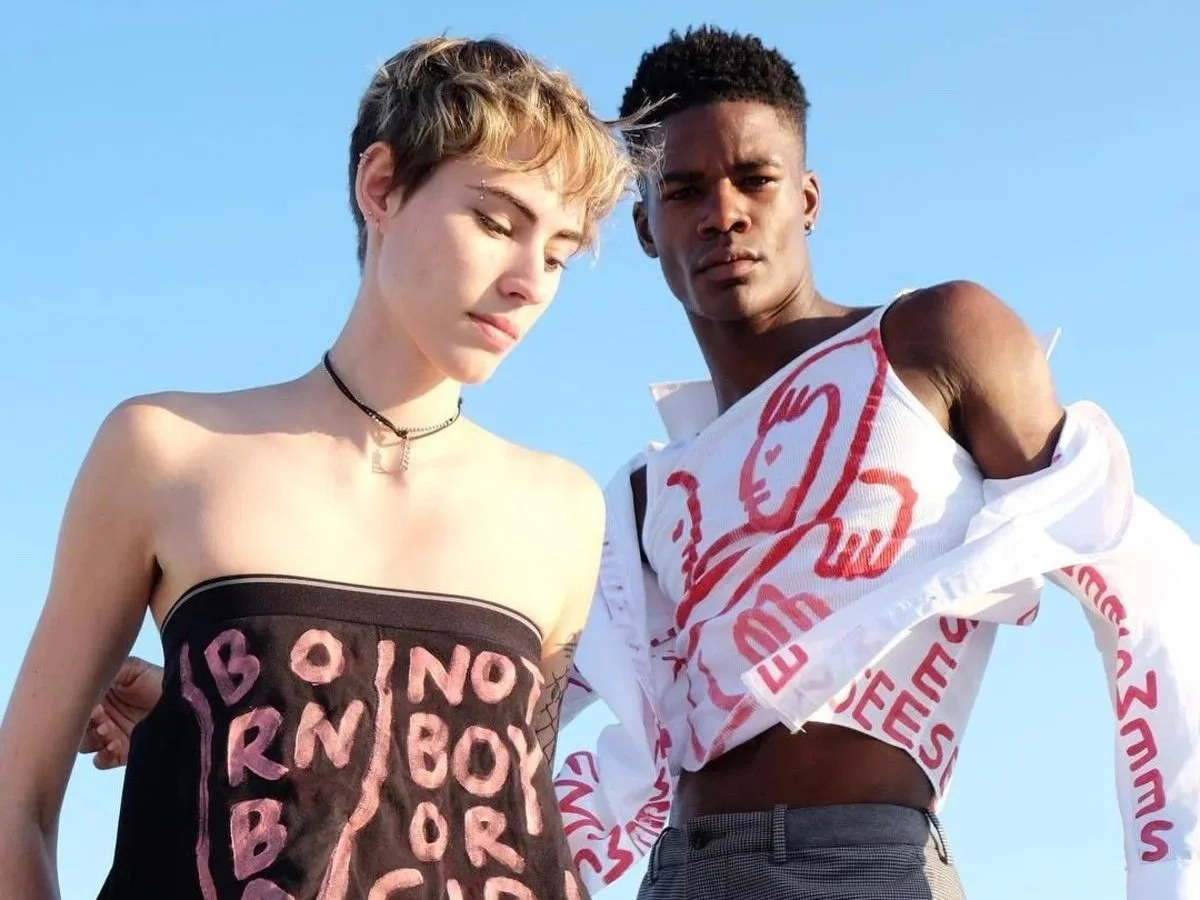
For many the idea of genderless fashion, clothes not characterised by a certain gender, seems like a fairly new concept. However, genderless or androgynous fashion has a long history in a variety of cultures and traditions. What is new is mainstream acceptance of breaking gender norms in fashion, largely attributed to social media and gen z’s push of self expression through clothes. This is the result of a long standing push from women's rights and LGBTQ+ movements along with an artistic vision of inclusivity beyond aesthetics from major labels such as Gucci and Thom Browne.
Early forms of gender fluid fashion are recorded across ancient societies such as Greece, Egypt and Japan. Clothes were often not divided by gender as seen today with robes, tunics and draped garments worn by everyone. Due to hot climates it was necessary for men and women to both wear linen garments such as the Shendyt, a kilt-like skirt worn by men and women of all classes in Ancient Egypt. The only distinct difference between genders was the garment's length. Fashion in Egypt was more about class and its hot climate than gender. Jewellery, makeup and wigs were worn by all genders as a symbol of beauty and status.
Over thousands of years gender roles became more than just simple guidelines of how to act or based on what duties need doing. The idea of what a man and a woman should be became extremely rigid and dogmatic, gendered clothing became another byproduct of this phenomenon. Trousers, once functional clothing for horse riding worn by both men and women in central Asia, became associated with knights and soldiers. Women of high status wore gowns and skirts, although they restricted mobility the idea of modesty and social class had already worked its way into the fabrics. By the middle ages, pants became synonymous with authority, a masculine symbol of power.
Soon fashion symbols of power and status became the target of the working class. During the French revolution “sans-culottes” (literally “without knee-breeches”) were worn by working class men who rejected aristocratic clothing. Trousers became a symbol of equality and soon a feminist symbol. During World War I & II, with men away at war, women took over male dominated industries working in factories wearing trousers out of necessity. Women wearing trousers became widespread, a shift from rebellion to respectability.
Before gender-fluid clothing was even a buzzword, fashion houses challenged norms such as Coco Chanel's ‘Chanel suit’. The suit included a collarless tweed jacket and a slim skirt. It was elegant, but symbolised power and authority. Worn by icons such as Jackie Kennedy and Princess Diana it became the image of the independent woman. Since ‘The Chanel Suit’ modern designers no longer just borrow from the opposite gender but reject the binary altogether. Gender play in fashion is no longer used to shock as artists infamously intend but now celebrates authenticity, identity and representation. In Alessandro Michele's time as Gucci’s creative director we saw the line between men's and women's collections blurred with lace, floral patterns and pearls. Burberry, Bottega Veneta and Balenciaga now merge their men’s and women’s shows. Gender-fluid high fashion is now about merging self expression with art, deconstructing expectations and expanding choice while still feeling seen.
Although there has been constant breaking of fashion gender norms throughout history, it does not mean that it's been easy to do so. As much as social media has brought together like minded individuals who create and dress as means of self expression, it has also brought together those of new wave traditional ideologies whose greatest threat is individuality. Celebrities like Harry Styles and Janelle Monáe have been hit with waves of abuse for wearing clothes typically associated with the other gender. It offends people in a wide range of ridiculous manners from infringing on one's own masculinity or influencing young men to dress femininely to desexualising women and removing the image of a desirable object.
Clothes should be an extension of character, of who we are. Such as people judge us for our personalities, so we will be judged for how we dress. Hate will always be inevitable, but by pushing the boundaries and liberating people from dressing one way or another we push the message of guilt free self expressionism. Gender-fluid fashion today breaks gender norms by being intellectual, cultural and artistic pushing creativity beyond binary constraints. It challenges how society defines beauty and power, and reflects youth cultures itch for expressional freedom.
Written by Jack Murray (@jack.mrry)
Copy Editor - Niall Carey (niall.030)
