Bram Stoker in Dublin
Despite being published in 1897, Dracula remains a hugely influential novel, inspiring countless films, books, adaptations, and, of course, Halloween costumes. Its author, Bram Stoker, was born in Dublin and spent much of his life in the city, drawing inspiration from both its atmosphere and his own homes to fuel his imagination and creative career. Despite the fame of the novel and its iconic character, Bram Stoker himself remains relatively unknown, even in Dublin, where he spent half his life.
Located at 15 Marino Crescent in Clontarf, Stoker’s childhood home is a small Georgian-style house where he lived for some of his most formative years alongside his six siblings. Within its walls, Stoker endured a prolonged illness. Bedridden for much of his early childhood, Stoker was carried from place to place, unable to walk or play. This severely affected his childhood experiences and had a profound impact on his developing mind. This experience likely forced him into a life of observation, reflection, and imagination, all qualities which would later contribute to the writing of his masterpiece.
The interior of this house likely inspired the young author, its walls lined with crucifixes and its black wooden beams. The contrast between the dark interior and the light that shone in through the enormous windows exacerbated the sense of entrapment that his bedridden state would have created.
Similarly, the sea view from the dark house could also have fed the novel’s motifs, such as travel, arrival, and ships, born from Stoker’s fruitful imagination and ample time to dream up stories and tales.
Now, the house is a protected structure and a private residence, though the park it overlooks is now named Bram Stoker Park in his honour.
The second house in which the author resided is 30 Kildare Street, where he spent his adult life, working, writing, and developing a sense of his own character and career before his move to London.
The house is located close to Trinity College Dublin, where he studied maths. Its more central location stood in stark contrast to his youth of confinement, allowing him to build relationships in both social and professional contexts. Here, Stoker was surrounded by ambition and creativity.
During his time on Kildare Street, Stoker balanced his work as a civil servant with developing his passion for writing and theatre. His location in the city centre allowed him to grow from a shy, confined child to a connected, inspired professional, leading him to move to London to manage the Lyceum Theatre.
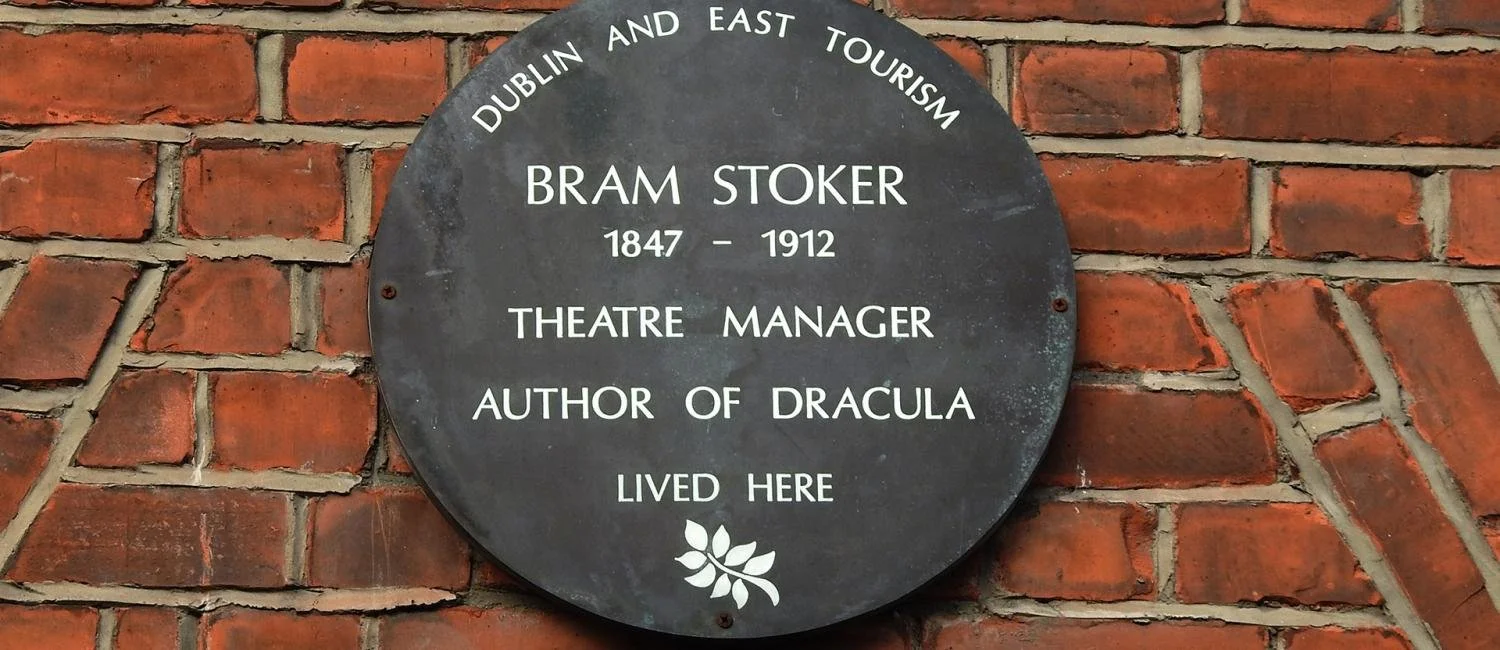
Today, a plaque dedicated to Bram Stoker marks the Kildare Street house, which visitors can easily see if they walk past. Neither this home nor his childhood residence has been made into a museum, yet both quietly preserve the echoes of Stoker’s Dublin life and the city that helped shape the imagination behind Dracula.
While the story itself unfolds far from Dublin, it is clear that the city left its mark on Stoker. Living in the city, he developed his imagination and his ability for introspection, grew professionally, and found his writing voice. Two centuries on, both houses are subtly signposted and endure as silent witnesses to Stoker’s imagination, reminding us that even tales capable of shaking the world often grow in ordinary streets, far from any fanfare.
Written by @freyadunlop
Copyedited by Shaunamay Martin Bohan ( @F4wnfatale)
