I was twelve when I first watched Exit Through the Gift Shop, a documentary about a French immigrant with a camera and a passion for capturing street art being made in the depths of the night. It was also how I was introduced to some of my favourite street artists: Banksy, Invader and Shepard Fairey.
I remember thinking, I can't wait to visit one of these major cities and see the art for myself.
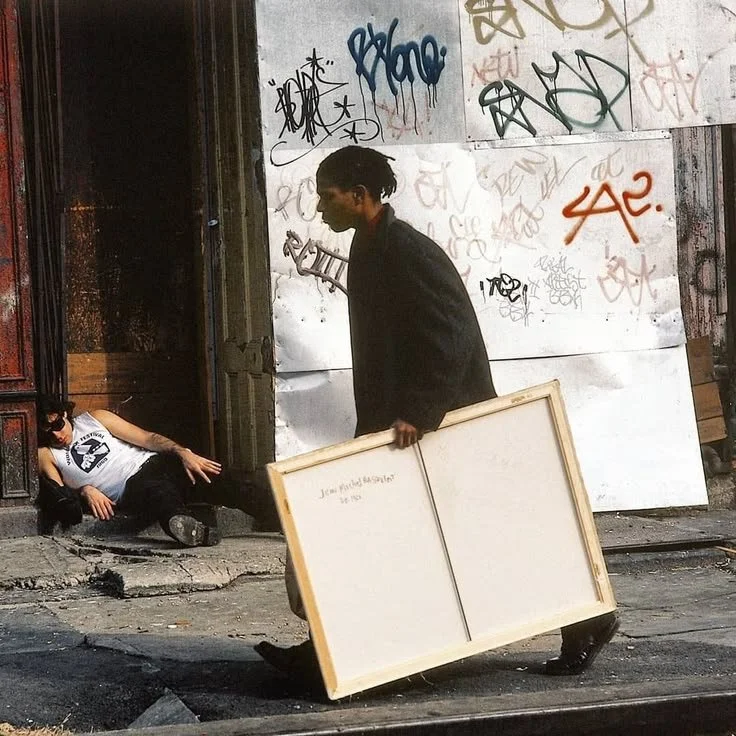
So, when I eventually moved to Amsterdam and discovered there was a museum dedicated to some of the artists whose work I had only ever seen on screens, I had mixed feelings. Part of me thought, how cool, I could finally see a real Banksy, a real Basquiat, a real Warhol. But another part of me felt rather strange about the idea. Knowing what Banksy and his art stand for, I couldn't quite wrap my head around paying a museum to see his work. In my mind, either they had somehow taken it from the streets (which is precisely where much of his work comes from), or they had a fake. So, I never went.
I knew it wouldn't give me the same feeling I got from spotting Invader's mosaics throughout Paris and London. The excitement of turning a random street corner and finding a new one, almost like discovering a little secret that someone had left behind for whoever happened to walk past. I even remember staying at an Airbnb where the hosts had books documenting the locations of his pieces. I loved that. The idea that you could spend an afternoon wandering around a city, looking for art that wasn't necessarily asking to be found.
I knew visiting Moco Museum would never give me that feeling. Street art, at least to me, is meant to be experienced on the street.
Then, one day, while scrolling through TikTok, I came across a video by Spanish creator Raquel Rodríguez speaking about her experience visiting Moco Museum in Barcelona. Although she had been invited to experience the museum, she didn't shy away from expressing how she actually felt about it. Rather than simply accepting the invitation as an opportunity for a nice day out, she used the experience to question what the museum was actually offering.
Her argument was particularly interesting because it put into words some of the reservations I had about visiting Moco in the first place.
She begins by explaining that Moco is a private museum that originated in Amsterdam before opening its Barcelona location in 2021. Its mission, according to the museum, is to make modern and contemporary art accessible to a broad, younger audience while challenging elitism in the traditional art world. Its collection brings together some of the most recognisable names in contemporary and modern art, including Banksy, Warhol, Basquiat, Haring and KAWS, alongside digital art and immersive installations.
Raquel makes it clear that her criticism isn't simply a matter of personal taste. She isn't approaching the experience with a straightforward I like this, I don't like this mentality. Instead, she breaks down her reservations into three arguments, all of which I found myself agreeing with.
The first: democratising art doesn't mean watering it down.
Just like Raquel, I don't believe art needs to be easy or simple to understand. Art, by its very nature, requires time, attention and context. Sometimes you need to sit with a piece, read about the artist, understand the circumstances in which it was created or simply allow yourself to feel something without immediately knowing what that feeling is.
Raquel argues that making art accessible shouldn't mean lowering those requirements. It should mean giving people the tools to engage with that complexity in the first place. Yet, during her visit, she felt the experience was quite the opposite: immediate, fast and incredibly easy to consume.
The installations and artworks, she explains, often rely on a visual language that is direct and easy to digest. And to be fair, there is nothing inherently wrong with that. Art can be playful, accessible and visually engaging without necessarily having to be complicated. The problem arises when that immediate visual appeal starts substituting the context and depth that make the work meaningful, she states.
I think there's a tendency to underestimate younger audiences when we talk about making culture more accessible. As though people need everything explained in the simplest possible terms, or that they won't engage with something unless it immediately catches their attention. But why should accessibility come at the expense of curiosity? Why assume that people don't want to learn, question or discover something beyond what is immediately in front of them?
The second: are we actually getting to know the work of these artists, or are we just buying into their names?
This was the argument that resonated with me the most.
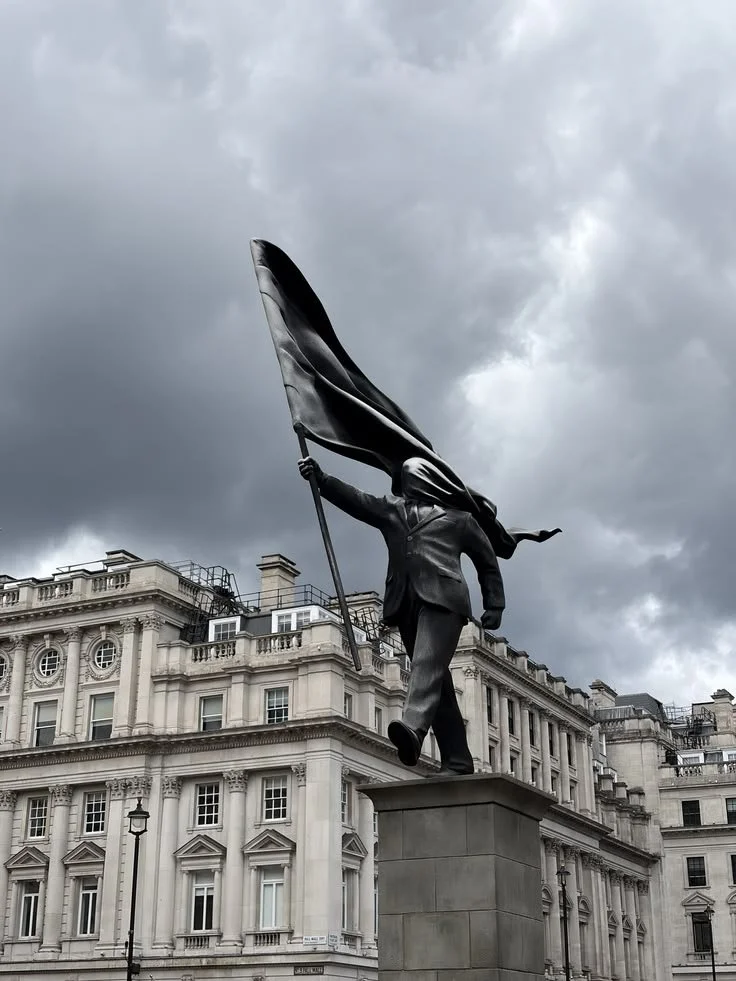
As I mentioned earlier, I already found it difficult to align Banksy's work with the idea of displaying it inside a museum. To me, there is something almost contradictory about using the name of an artist whose work has consistently challenged institutions, capitalism and the traditional art world to promote an experience that is, itself, an institution.
Banksy's work is interesting partly because of where it exists. His art interrupts public spaces, makes political commentary accessible outside traditional galleries and allows people to encounter it without needing to purchase an exhibition ticket. It doesn't require an invitation. It simply exists, sometimes in places where you least expect it.
To remove that work from its original context and present it as a museum attraction changes the experience entirely. Raquel describes seeing Banksy displayed in museums as something that strips the work of its original intention, even calling the practice criminal and tacky. I have to say, I couldn't agree more.
Of course, there is a wider conversation to be had about ownership, authentication and the private collections from which some of these works originate. Moco's Banksy exhibition is not authorised or curated by the artist, although the museum states that its works are authenticated by Pest Control, Banksy's official authentication body. So the question isn't necessarily whether the work is real. It's whether displaying it in this particular context does justice to what made it significant in the first place.
Raquel also questions the way museums can rely on recognisable artists to attract visitors while showing works that might not be as familiar to the general public. Their names carry enormous cultural and commercial value, and that recognition undoubtedly helps sell tickets.
Her discussion of Basquiat made this even more interesting. One of the works she questions is Flash in Naples, which is displayed at Moco Museum Barcelona. Its date, 1982–87/2022, initially raises an eyebrow. Basquiat died in 1988, so what exactly does a 2022 date mean?
After looking into it, she found that the work is a limited-edition screenprint based on artwork created between 1982 and 1987. The edition was published in 2022, with 85 prints, stamped and signed by Basquiat's sisters, Lisane Basquiat and Jeanine Heriveaux, who administer his estate.
So, no, this isn't a newly painted Basquiat, nor is it necessarily a fake. It is a posthumously published edition authorised through his estate. But I still find the whole thing fascinating. An artist's work can continue to circulate, be reproduced in authorised editions and hold enormous commercial value decades after their death. And while there is nothing inherently illegitimate about that, I do think audiences should be given the context to understand exactly what they're looking at.
At what point does preserving an artist's legacy become capitalising on it? And how much of the experience is actually about engaging with the artist's ideas, rather than buying into the recognition attached to their name?
The third: democratising art also means creating real access.
This is where the conversation becomes even more interesting.
Raquel points out that Moco is a private institution with a distinctly commercial model and an entrance fee that isn't necessarily accessible to everyone. That doesn't automatically invalidate its mission, but it does raise questions about what the museum actually means when it talks about democratising art.
Because making art more digestible and making it more accessible are two very different things, Raquel states.
You can simplify an artwork, create an immersive installation and make an exhibition incredibly Instagram-friendly, but if the actual experience remains financially out of reach for certain audiences, who exactly is benefiting from this democratisation?
I don't think private museums are automatically incompatible with making art accessible. Nor do I think every cultural institution needs to be free to have a meaningful impact. But I do think we should examine the language surrounding accessibility beyond marketing. It should be reflected in the way institutions curate, educate, price and engage with the communities they claim to serve.
Raquel finishes by explaining that she left feeling like she had experienced more of a cultural attraction than the kind of museum she was actually interested in visiting. And honestly, after hearing her perspective and looking more closely at the museum myself, I can understand why.
I also came across a comment under her video pointing out the apparent lack of female artists represented in Moco's collection, with Marina Abramović's AI installation being brought up as an example. That's a conversation in itself, and probably an entirely separate article, but it does raise another question about who gets to be represented when institutions decide which names are worth putting on their walls.
So, despite Moco's mission statement, I find myself questioning whether what we're seeing is really an effort to democratise art or simply another way of packaging cultural relevance into a profitable experience. Some might call it an Instagrammable museum. Others have compared it to the fast food of art. Those descriptions might sound harsh, but I understand where they come from.
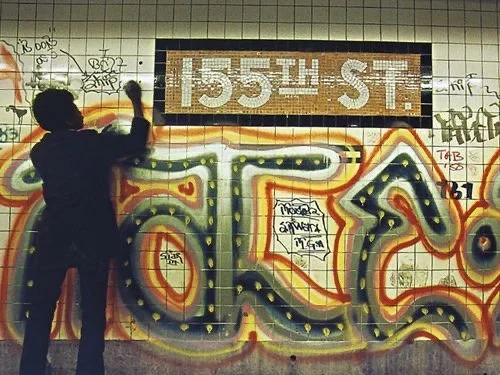
And perhaps my reservations are particularly personal because I remember being twelve and discovering these artists without anyone telling me where to look. I remember wanting to visit cities because of the art I had seen in a documentary. I remember the excitement of finding an Invader mosaic in a place I wasn't expecting, or learning about an artist simply because their work had caught my eye on a street corner.
Those experiences made me curious. They made me want to look closer, find out more and understand the people behind the work. Nobody had to package that curiosity into an exhibition for me.
I don't think street artists should be kept out of museums, or that their work loses its value the moment it enters a gallery. Artists deserve recognition, and their work deserves to be preserved, studied and introduced to new audiences. But I do think we should be careful about celebrating institutions for making art accessible when what they're really making accessible is the consumption of art.
Because there is a difference between seeing a Banksy behind glass and stumbling across one on a wall in a city you've never visited before. One is an experience you pay to have. The other is an encounter you get to carry with you.
And maybe that's what I miss about the idea of street art in the first place. It wasn't waiting for me to buy a ticket, understand its value or know the artist's name. It was just there, part of the city, part of the everyday.
I don't want to suggest that art should never be commercialised. That would be both unrealistic and unfair to the artists themselves. But when the very institutions profiting from the visual language of rebellion start selling it back to us as an attraction, I think it's fair to ask what exactly we're paying to experience.
I still haven't visited Moco. I don’t think I ever will. But if I do, I hope I leave with more than a few photographs on my camera roll. I hope I leave curious, challenged and wanting to know more.
Because if we're going to put rebellion behind glass, we should at least make sure it still has something to say.
Written by: Valerin Vanegas
Edited by: Rose Curnym
