Imagine spending years making a film. Not months, not the length of a trend cycle, but years. Years of auditions, rewrites, location changes, costume fittings, press training, production delays and whatever other fires needed putting out behind the scenes before a project could finally make its way to an audience. Then imagine finally sitting down to discuss all of that work, all of those creative decisions and everything that happened along the way, only to be asked "are you're having a brat summer?"
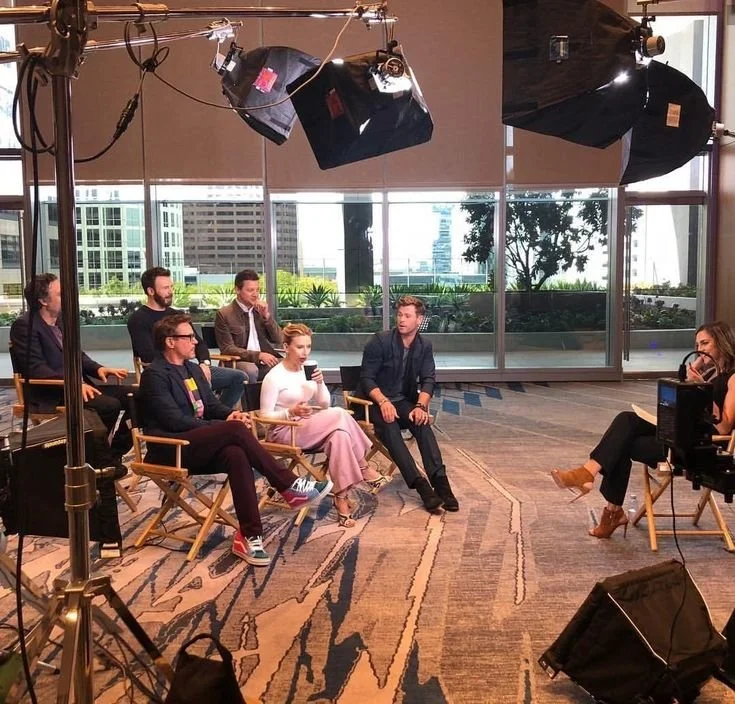
Now, I love Charli XCX just as much as the next person. Brat summer was unavoidable. It dominated timelines and made green the new black. But why would you ask an actor that while interviewing them on their latest project? They are promoting a film they've spent years working on yet asked a question that feels completely disconnected from the project they're there to discuss. I can't help but wonder what exactly we're doing anymore.
I know I'm not the only one who loves what comes after watching a movie. Once the credits roll, I don't immediately move on to the next thing. I'll go looking for interviews with the cast, press junkets with the director, roundtable discussions and behind-the-scenes conversations, because I'm genuinely interested in learning more about how something came together. Finding out that a director made a specific choice because of an obscure film from the 1970s, discovering that an actor improvised one of your favorite scenes, or hearing a writer explain why a character's ending changed, all completely alter the way you see the finished product. Sometimes those details make me appreciate a film more than I did while actually watching it.
That's not to say bizarre interview moments have never existed. Some of my favourite interview clips are completely ridiculous. To this day, I still randomly think about the Elijah Wood interview where he's repeatedly asked if he wears wigs. It's one of those internet clips that has permanently lodged itself in my brain and occasionally resurfaces while I'm doing something completely unrelated. The reason that clip became so memorable, however, wasn't because somebody genuinely thought they were conducting a hard-hitting interview about wigs. It worked because it was a prank orchestrated by Dominic Monaghan, another actor who knew Elijah well enough to make the absurdity funny. Everybody involved understood the joke, including the audience.
What made that moment entertaining was how unexpected it felt. It wasn't trying to manufacture virality because the idea of going viral wasn't really a thing back then. It was simply a silly moment that happened organically and became memorable because of it. Compare that to many modern film interviews, where it sometimes feels as if the entire interaction has been built around creating a similarly awkward or random moment, and you start to see the problem. What was once an exception has slowly become the blueprint.
That's why this recent shift in entertainment journalism has been so frustrating to watch.
At some point, interviews stopped feeling like conversations between people who cared about the same thing and started feeling like content factories trying to produce clips. The goal no longer seems to be uncovering something interesting about a project. Instead, it feels like everyone is chasing the same thing: a viral moment, a funny reaction, a quote that can be ripped out of context and posted on TikTok before the interview has even finished filming.
You can almost feel it when you're watching. An actor starts discussing their process, mentions a challenge they faced while making the film, hints at some interesting detail from production, and before they can get any deeper into it, the interviewer is already asking them what their go to dance move is. What could have been an interesting conversation gets abandoned because there are fifteen more questions on the list and one of them might become a clip.
The strangest part is that this obsession with reinventing interviews isn't even new.
For years now we've seen interviewers trying to differentiate themselves through a specific gimmick or personality. Probably the most famous example is Chicken Shop Date, which worked because it genuinely felt different when it first appeared. Amelia Dimoldenberg and her team created an environment that felt less polished and less rehearsed than traditional celebrity interviews, and the awkwardness became part of the appeal. But what often gets overlooked when people discuss why Chicken Shop Date works is that underneath all the awkward flirting and uncomfortable silences, Amelia is actually listening. The awkwardness isn't replacing the interview. It's simply the setting in which the interview takes place.
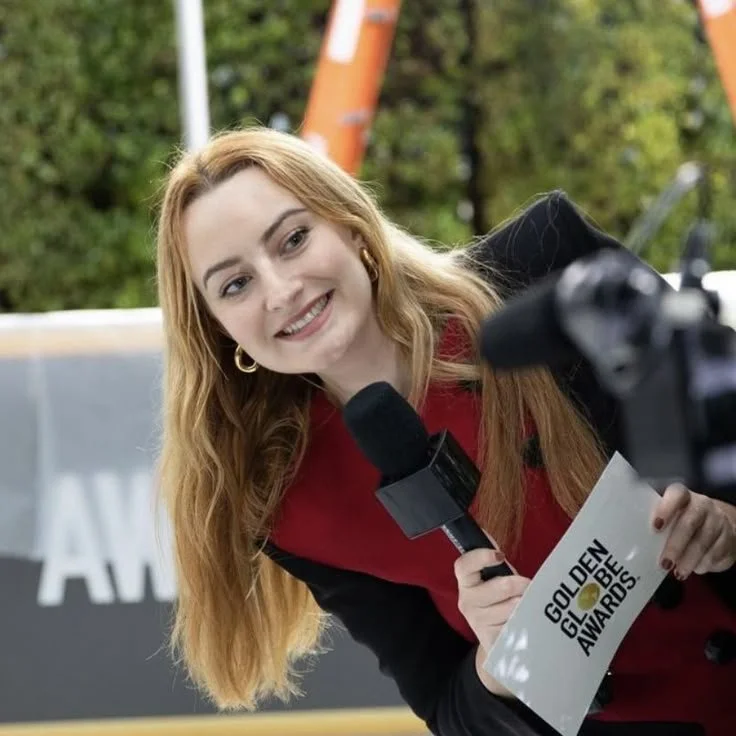
The success of that format opened the door for an entire generation of interviewers who wanted to become as recognisable as the celebrities sitting opposite them. Suddenly awkwardness became a genre in itself. Interviewers like Funny Marco and Bobbi Althoff built audiences through uncomfortable interactions, dry humor and creating situations that felt unpredictable. While there is certainly room for that style of interviewing, it has also contributed to a culture where the interviewer increasingly becomes the main attraction.
I find that fascinating because interviewing was never supposed to be about the interviewer. The best interviewers I've watched almost disappear into the conversation. You remember the stories they uncovered, not the fact that they managed to centre themselves in every clip. Yet now we're in an era where many interviews seem to begin with the assumption that the project itself isn't interesting enough to carry the discussion. There always needs to be an extra hook attached to it. A game. A gimmick. A challenge. A ranking. Something that can be cut into a thirty-second video and shared a thousand times before the film itself has even been released.
The irony is that I don't actually think gimmicks are the problem, because when done right they can add to the interview. Some of the most interesting interviews being made right now are built around concepts. What separates them from the rest is that the concept comes from a genuine place rather than existing purely for engagement. Devon Rodriguez sketches people while interviewing them because he's an artist. Jack Edwards brings books to interviews because books are something he's genuinely passionate about. Thomas Duke from Stepping Through Film spent years documenting and writing about cinema long before he ever sat across from actors and filmmakers. When these people interview guests, their interests are enhancing the conversation rather than distracting from it. You never get the sense that they're trying to manufacture a moment.
Instead, it feels as though they are inviting the audience into something they already care deeply about, and that enthusiasm becomes infectious. Even when they use a format that could technically be described as a gimmick, there's a sincerity underneath it that makes the interaction feel worthwhile. That sincerity is becoming increasingly difficult to find elsewhere because so many interviews now feel transactional. Questions are asked because they are expected to be asked. Responses are given because they have been prepared in advance. Everybody involved understands that the interview exists as part of a promotional cycle rather than an opportunity to discover something new.
What makes this particularly frustrating is that asking good questions was never the most important skill an interviewer could have, listening is.
You can find a list of questions anywhere. Every aspiring journalist, every content creator and every podcast host can write down ten things they want to ask somebody. The difficult part is paying enough attention to the answer that you recognise when something interesting has appeared, and know when to abandon your script to explore it further.
This is one of the reasons why so many people criticise celebrity podcasts despite their popularity. One of the recurring complaints surrounding interview shows like Call Her Daddy isn't necessarily that the questions being asked are bad. It's that guests will often bring up something genuinely interesting only for the conversation to immediately move on because the interviewer needs to get through the next question on the list. The audience can practically see an interesting story trying to emerge before it gets cut off and replaced with something safer, simpler and more predictable. A great interview doesn't feel like somebody ticking boxes. A great interview feels like you're watching somebody's curiosity take over.
One of the clearest examples of this came during an interview conducted by Frederica Polidoro with Ayo Edebiri, Julia Roberts and Andrew Garfield. While discussing the Me Too and Black Lives Matter movements, Polidoro directed the question towards Roberts and Garfield, despite sitting across from Edebiri, who was not only the only Black actor in the conversation but also a woman. As if that wasn't strange enough, the question went on to suggest that these movements were essentially over because they were no longer trending in the same way online.
The clip quickly made the rounds on social media, and for good reason. People weren't reacting because it was awkward. They were reacting because it was baffling. How do you bring up Black Lives Matter while overlooking the Black actress in the room? How do you bring up Me Too and direct the question to a man and exclude the other woman in the room? It wasn't a case of an interviewer failing to adapt or missing an opportunity for a follow-up question. The problem was that the question itself revealed a complete disconnect from the people sitting in front of her.
What made the moment memorable wasn't the question, though. It was the way the cast responded. Rather than letting the conversation move on, Edebiri, Roberts and Garfield challenged the premise of the question itself, pushing back against the idea that social justice movements somehow lose relevance the moment they stop dominating headlines. Watching them navigate that exchange was far more interesting than the question that prompted it because it felt genuine, unscripted and rooted in actual thought rather than a desperate search for a viral moment.
And in many ways, that small moment perfectly captures a larger issue within entertainment journalism right now. Too many interviews feel predetermined. They're designed around what the interviewer wants to accomplish rather than what the conversation itself might reveal.
Social media has only accelerated this. We are seeing more influencers move into interviewing, and I want to be clear that this isn't automatically a bad thing. Some influencers are excellent interviewers and some journalists are terrible ones. The issue isn't who gets access, the issue is what gets rewarded. Right now, virality is rewarded.
If an interview generates millions of views because an actor was asked a bizarre question, that interview is often considered successful regardless of whether anybody learned anything interesting. If a clip trends on TikTok, it hardly matters whether the discussion had any depth. Meanwhile, journalists who have spent years studying film, media and journalism find themselves competing within a landscape that increasingly values reaction over reflection.
As a result, even the people who genuinely care about the craft are pushed toward finding hooks and clips because that's where the attention lives. What makes all of this so frustrating is that audiences haven't stopped caring about films. If anything, audiences are more interested than ever in understanding how things are made. Just look at how many people obsess over director commentaries, behind-the-scenes footage, production design breakdowns and cast interviews when they're done well. People love hearing about the choices behind their favourite films because those stories deepen their connection to the work. They remind us that every frame exists because somebody made a decision.
There is still an audience for curiosity, thoughtful questions, and there is still an audience for conversations that go beyond whatever trend happens to be dominating social media that week.
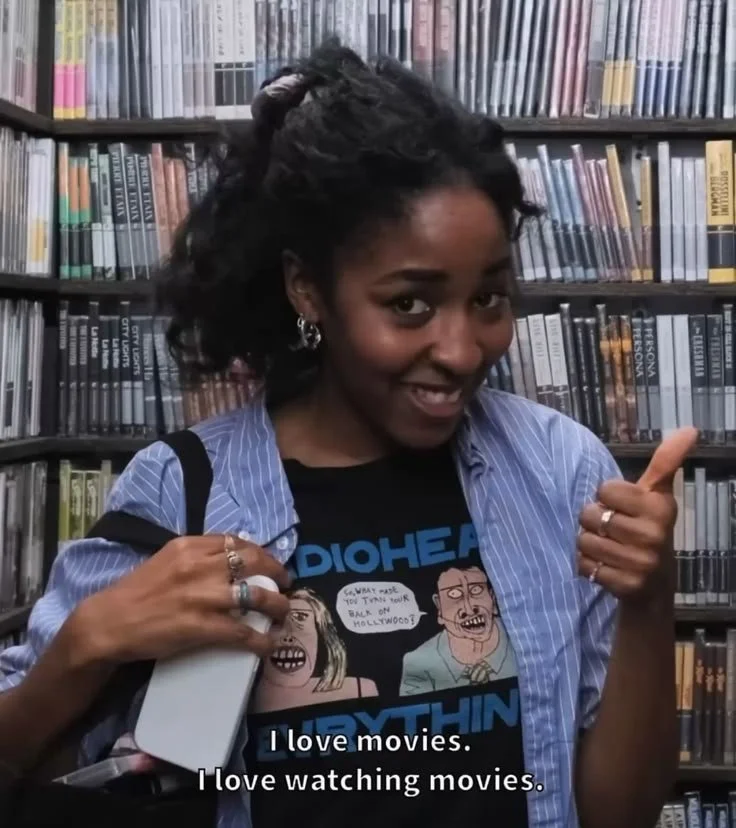
The problem is that somewhere along the way we became convinced that none of that is enough, that simply talking about the film isn't engaging enough, that discussing performance, directing, cinematography or writing somehow needs to be dressed up as something else before people will pay attention.
Maybe that's why the tiny mic has become such a useful symbol for this entire phenomenon. The tiny mic itself is harmless. It's not ruining interviews. It's just a microphone. But it represents an era of entertainment journalism where the packaging often receives more attention than the conversation itself.
And that's a shame because some of the most fascinating stories in cinema are sitting right there waiting to be uncovered. They're found in the decisions actors make while building a character, the compromises directors make during production, the behind-the-scenes disasters that somehow lead to brilliant scenes and the creative risks that nearly didn't happen at all.
All of those stories are infinitely more interesting than whether somebody is having a brat summer. Unfortunately, we'll never get to hear them if nobody bothers asking.
Written By: Valerin Vanegas
Edited By: Rose Curnyn
