Scotland has a rich history of textiles, design and culture. Yet, somewhere along the way it has been caricatured into a version of Scottish identity too far removed to be ours to claim. We love that Scotland is on the international map, but there is a fine line between heritage and costume, between the past and present.
But it is time for a reclaimed Scottish identity and that is exactly what Jordan is doing with his independent, experimental fashion brand, Fergusson.
His pieces are rural and urban intertwined, unique and yet rooted in history. Every piece is handmade by Jordan, and are in very limited runs. This is a designer you need on your radar.
Starfish were ecstatic to sit down with Jordan and talk about all things identity, sustainability, design and the cheekiness of Scotland! There’s also some exciting things in the works for Fergusson.
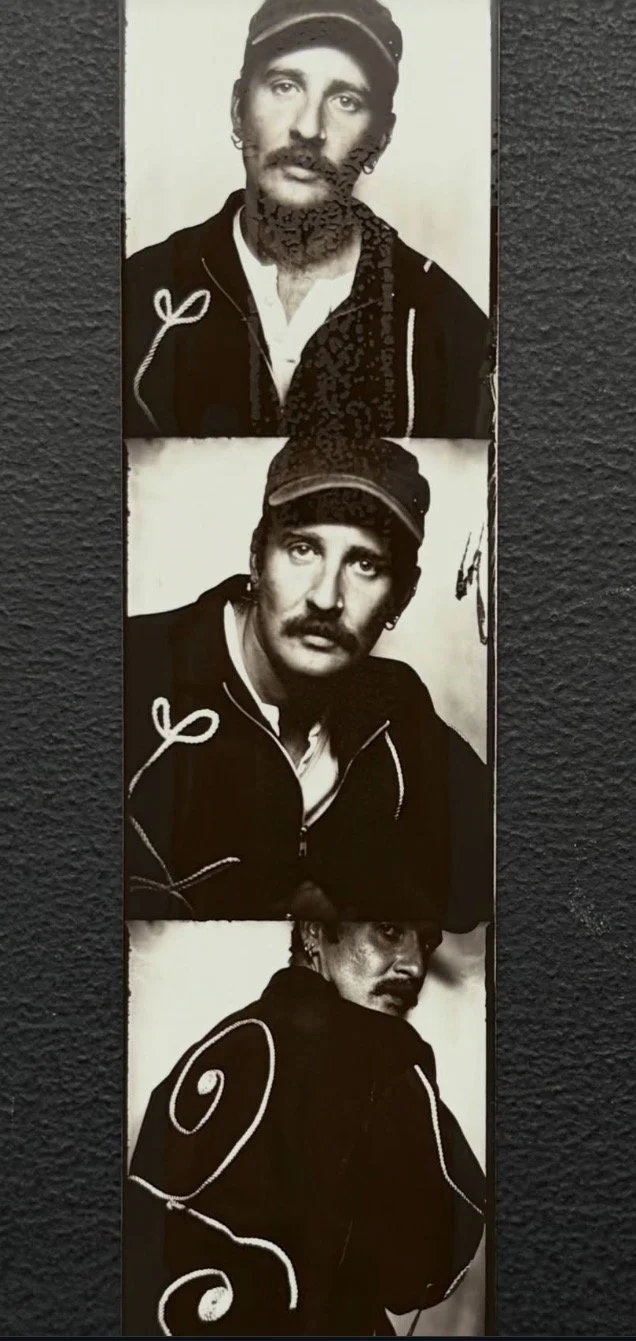
So let’s go back to the start.
‘I was always into art and design, but I wasn't quite sure what I wanted to do growing up in the Highlands. I feel like the options you would get when you'd have meetings were just very generic. Not that there's anything wrong with that, but I just feel there wasn't any direction for what I wanted to do, which was more fashion leaning. So I ended up moving to Glasgow when I was 18. And I did a course, actually, for photojournalism because I was always interested in photography, but then I dropped out of that real quick because I hated the shorthand. I didn't like any of that. But I always said, I just like clothes. I was always playing with my clothes when I would go to festivals when I was younger. I'd be bleaching them and stuff like that. But then I just came to the conclusion, ‘Maybe I'll go and study at college and learn everything from scratch.’
Jordan then studied in Glasgow, learning practical techniques like making jackets, shirts and couture techniques. Realising he wanted a more abstract way of learning fashion, he then went on to study at Manchester Metropolitan; there he had amazing opportunities:
‘I actually won a competition with GAP/Old Navy to go and work for three months in San Francisco for their design team. And then I actually went and studied for a master's; I realised, "Why am I doing this?" I felt like I was just doing it because I had all the facilities. I didn't really learn anything at uni. It was more self-led. One day I realised, "I actually don't need this." So I missed Glasgow.’
This is when Jordan moved back to Glasgow; we both discussed how it feels like Scotland is always calling you back to create there. She is a great muse. Jordan found himself in a creative slump:
‘A master's is only a year, but I was like, "Why am I doing it?" I think for two years, I just had this creative slump; I was overthinking everything.’
The start of this year is when Fergusson took off:
‘I’ve always wanted to be back in Scotland and do something from here. I got to a point at the start of this year, and I was like, "I've got all this website that I've set up and made. I've got a logo. I've got all these products." I'm like, "Why am I not just going for it?" So I just launched the website in February. And I said,
"No." I was basically like, "Fuck this. I'm doing it."
But it's not like me. It's not like me. I just had a slump, and I'm not very scared of putting myself out there. But I think I just had that when it's something that you really care about, and it's creative; it's that vulnerability and putting yourself out there in a slump. I was doing a bit of everything. But it got to that point where it was like, I'm living someone else's dream, and I'm taking away from my own. I said, "This is what I've dreamed of”, having that full creative autonomy and not answering to anyone else but myself and just focusing on what I want to do and moving forward.’
Why have you stayed in Scotland, when so many creatives move to places like London?
‘If you were to move to London, you're like a wee fish in a big pond. But yeah, I think for me, that's the biggest thing. I want it to be in Scotland. And also, just the biggest thing about my brand is I like to have fun with it. And I like to mesh different styles and take inspiration from history or the culture that's maybe been lost or traditions, and just remind people that we should be proud of just everything that we have in Scotland and what we've kept alive.’
Where does your unique interpretation of Scottish identity in your pieces come from?
‘I think that's another thing. My biggest thing that I always go back to with designs and stuff is the words. So whether that's distorting history or warping something historical into a modern sense or if it's distorting a print or tartan, things like that, or just distorting the silhouette or just even the tongue and cheek element as well. Even with the body spot thing, there's a play on words or the good girls go to heaven one. Just stuff like that. I like a mix of cheeky with more serious and kind of redefining what it is to be Scottish.’
Your fabric and leather are reclaimed; do you source them from Scotland?
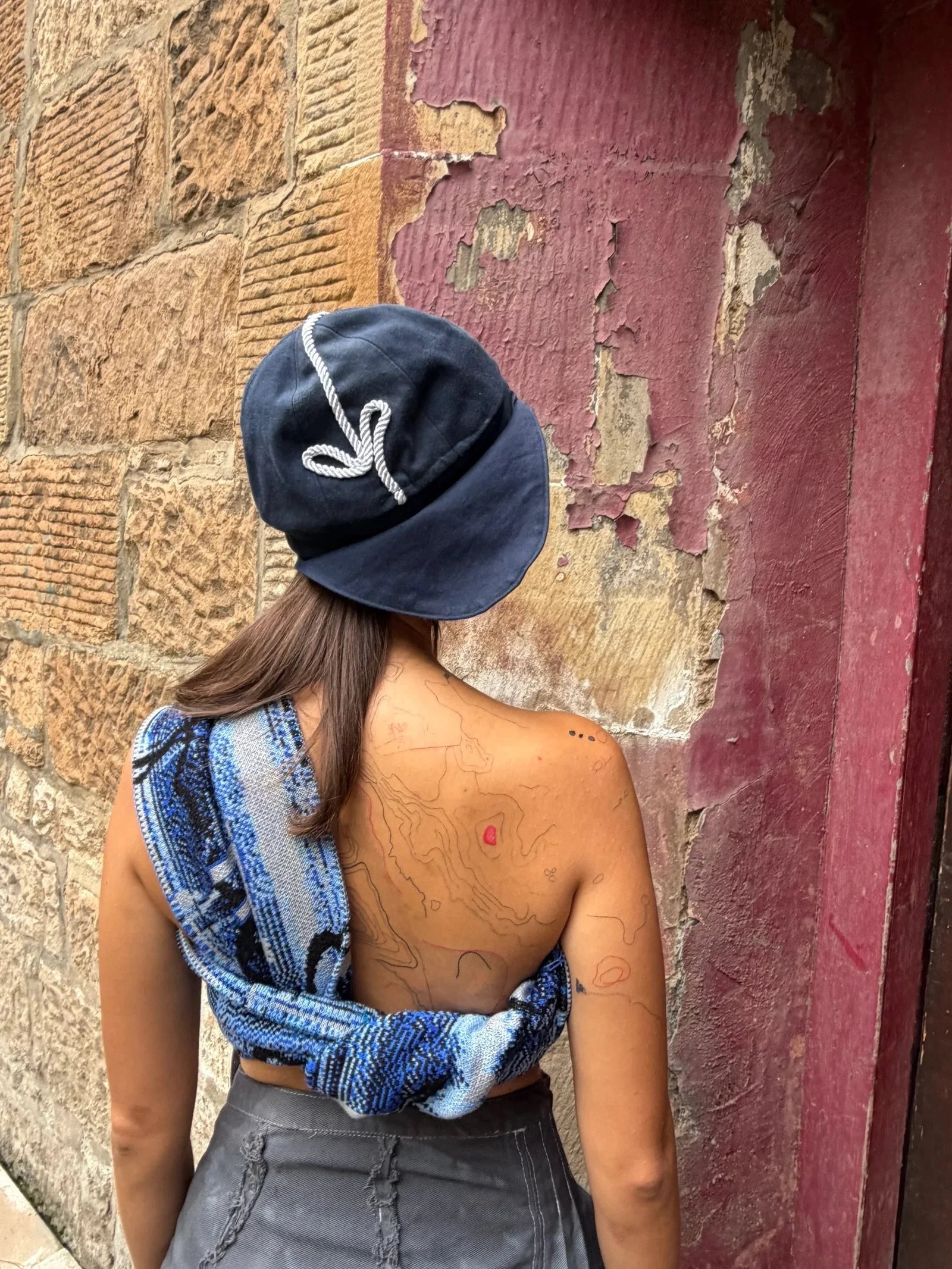
‘What I strive to do is reach out to places around Scotland for fabrics. So for example, I've had fabrics before, from Harris Tweed; they've donated 10 meters of a few different tweeds to me in the past, and they've just sent me another batch that I can use. So, end-of-row fabrics. I've also reached out to Bridge of Wear leather group, which is just outside of Glasgow. They produce all the interiors of fast cars with leather. So I'm getting a lot of leather in to make leather bags from that. But also, I did get a bunch of fabrics donated from the Scottish Opera. I got tons of really nice heavy cotton and a few bits of leather. They were massive costumes that you can adjust right down to a certain waist size. So I went in, and they just said, "Oh, take what you want." It was retired costumes from a production of Madame Butterfly. So they let me take it and they said, "Just do what you want with it." So the hats, the sailor hats that I've done with the braiding, they came from these massive, honestly, probably like 60-inch-wide trousers. There was a big bag of trousers that I've deconstructed. And then it's quite nice because they're navy blue, but then they've got kind of black dye marks where the tweets have been. So when you take it out, you can see all these black parts through the navy. So basically, for the jacket as well, and the hat and a few other things, I've been taking these fabrics and turning them into brand new garments.’
Do all of your pieces have a story and history behind them?
‘So that's been really cool because I like the idea of taking something that's had a life. It's literally been all over the UK for that production and then giving that a whole new meaning. And a lot of the garments, like the sailor hats and stuff, have kept their original Scottish Opera label; I stitch it back in. So it's like adding to the story, which I like. That’s my main thing. I do strive to take a lot of secondhand fabrics or just end-of-row fabrics because then that adds to the whole charm of it and also just the premium element of this is a limited stock. The bag that I've just released, it's the Stormy Grey. I've only got six that I can make from the leather that I've got. So it's things like that. I like to always have a strong narrative, and with my next collection, I want to focus on accessories around Scottish icons.’
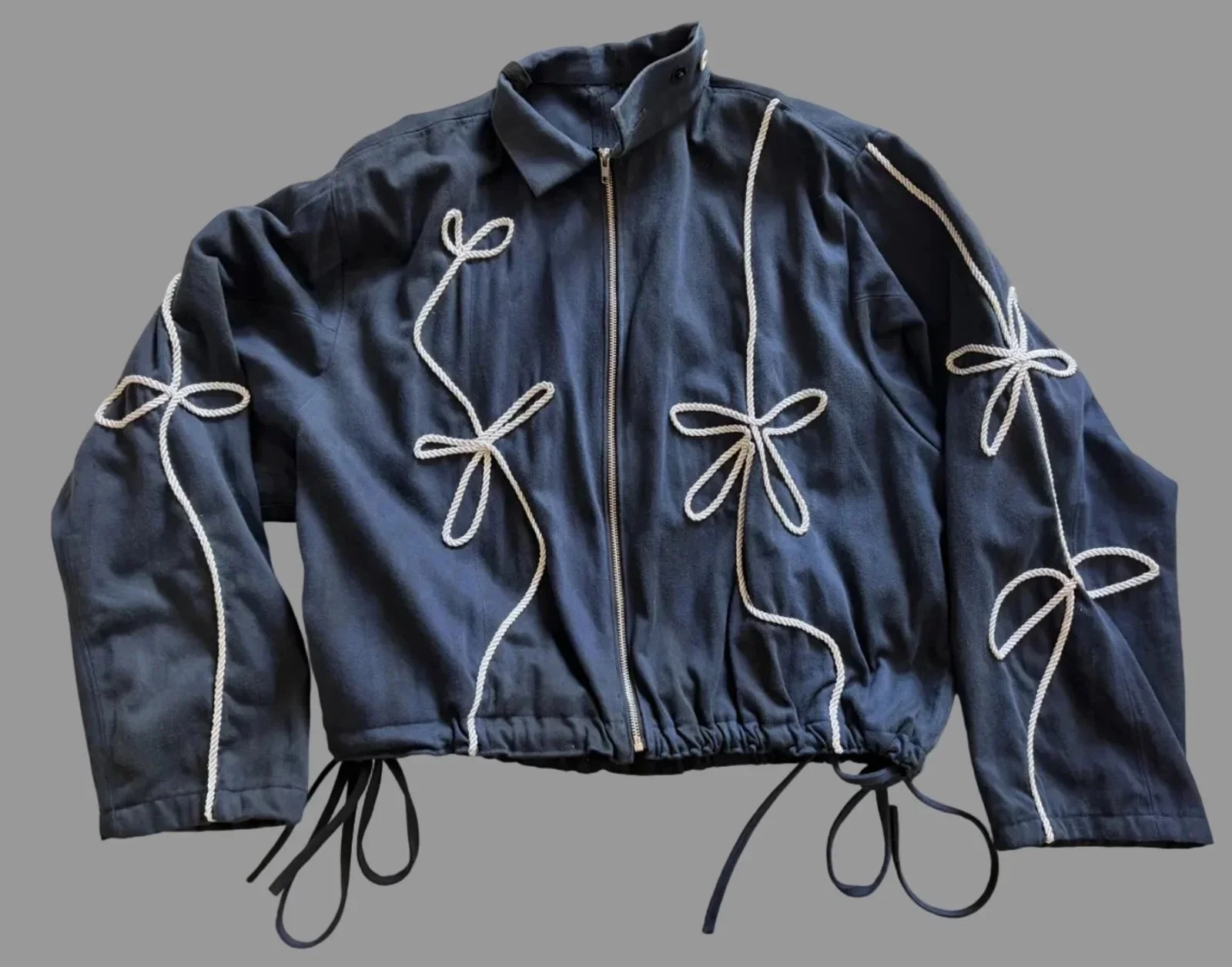
Fergusson pieces are made in such small quantities by Jordan; this means that not one piece is the exact same as another; it is warped; it has its own identity. Just like the people who wear it:
‘I coined this ages ago, actually, but I always say that it's for the style chameleons. Style is always changing, morphing into something else or blending different styles. Say it's something really sartorial with something sporty or something really traditional uniform with, Something a bit more feminine, girly. I like blending different styles like that. And I think you can see it in the way I dress as well. It depends on what you're demanding. I want that to come across in the brand. And I think it also is reflected in things that I've done during uni and projects that I've done.’
The Fergusson signature warped Tartan came from a project with the British Library:
‘I worked on a project with the British library, that's where the warp tartan came from. The British Library has an online database, and it was a competition around identity and disruption. And I think that fit the bill for me perfectly because I was kind of turning something on its head and doing my own spin on it. I created this whole collection of gender-fluid Jacobites. So I reimagined what a Jacobite would be like now if they were still around. It was basically a remix of Highland dress and just amplifying things like big bows and the depiction of Bonnie Prince Charlie when he had ribbons in his hair and quite fanciful. I kind of blew that up. Amplified it and made it way more flamboyant. And basically, the warp tartan came from a scan on their database of this 1800s graph on paper, and it was someone doing a dotted line drawing of the Aurora Borealis, the northern lights in the sky. I'd also obviously found tartan scans and stuff when I was there, and I was like, "Oh my God, I should do a warp tartan." So I started developing it. That's where it came from.’
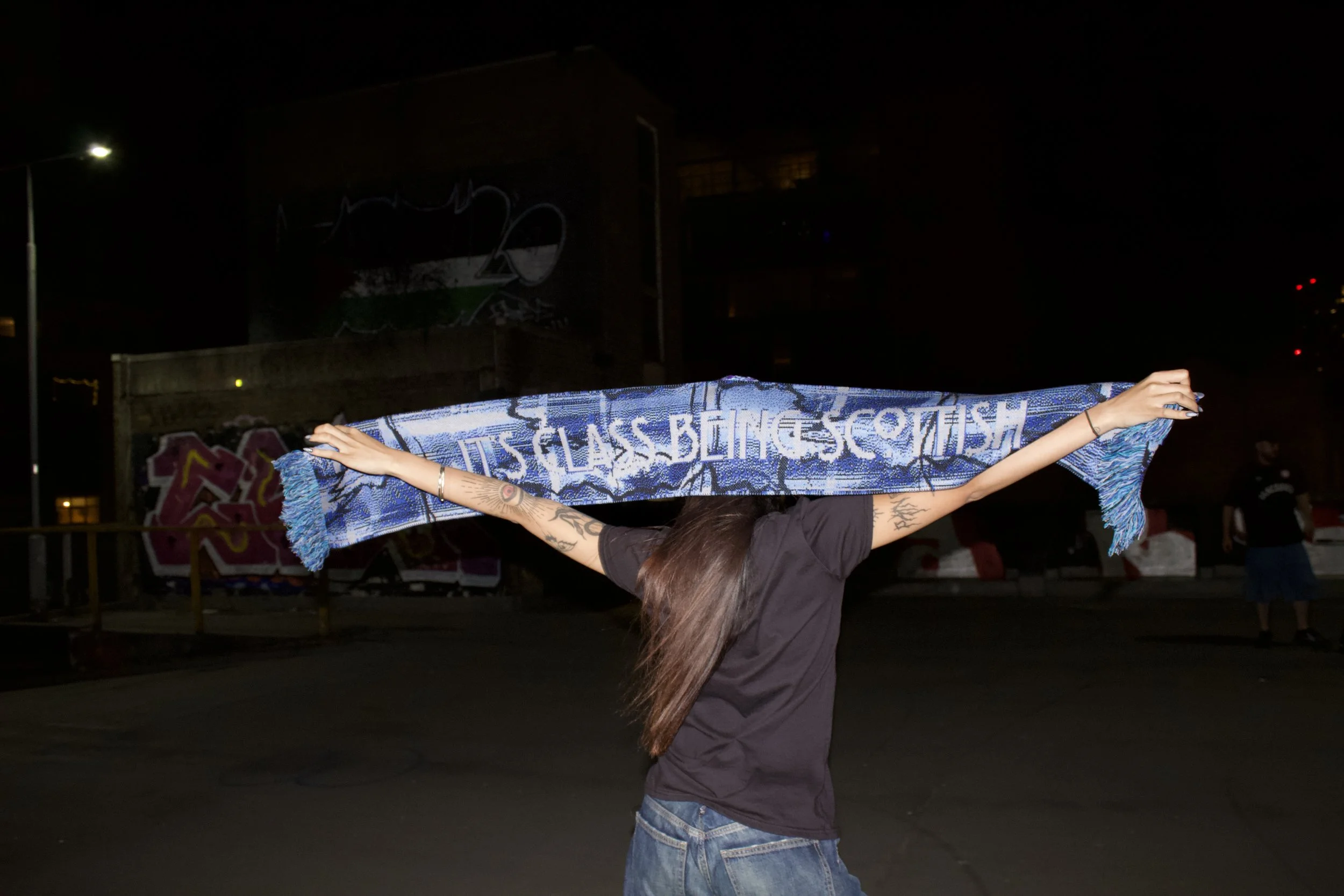
As such a sustainable brand, Fergusson is also incredibly accessible. Every piece is sourced, designed and made by Jordan, yet the price point is surprisingly affordable:
‘I think with the brand, a lot of people have said to me, "Oh, some of your prices are so cheap, etc." And obviously, depending on materials, I've learned along the way that I had to increase certain prices because it's my labour. There’s also, sending it out, the labels, things like all that, the materials that go into one order. But people have said, "Some of your prices are a lot lower, cheaper." And I feel that, for me, it's important. It's important for me not to sell myself short, but it's also important for me to have some hero products, but also products that are accessible for everyone of any income, because I know what it's like not to have money. And I don't want my brand to be like some of the latest brands, and I don't want it to be something pretentious. That's where I'm coming from. I'm not a pretentious person. I think that's important. I don't mind if something's maybe not too polished, the odd times, you know what I mean?’
We could have spoken to Jordan for hours; his passion and love for creating shines through in his work. He is creating a space for Scottish Identity in the fashion world, starting at home in Glasgow, where he runs different events for Scottish Creatives.
You can follow his Journey and find out about all of his events, like Cuttin Aboot markets, and his immersive fashion show Fantoosh through his Instagram, @fffergusson.
Written By: Hazel Hunter, @hazelhunterrx
Edited By: Kirsten Baldwin, @teddys_bookshelf
