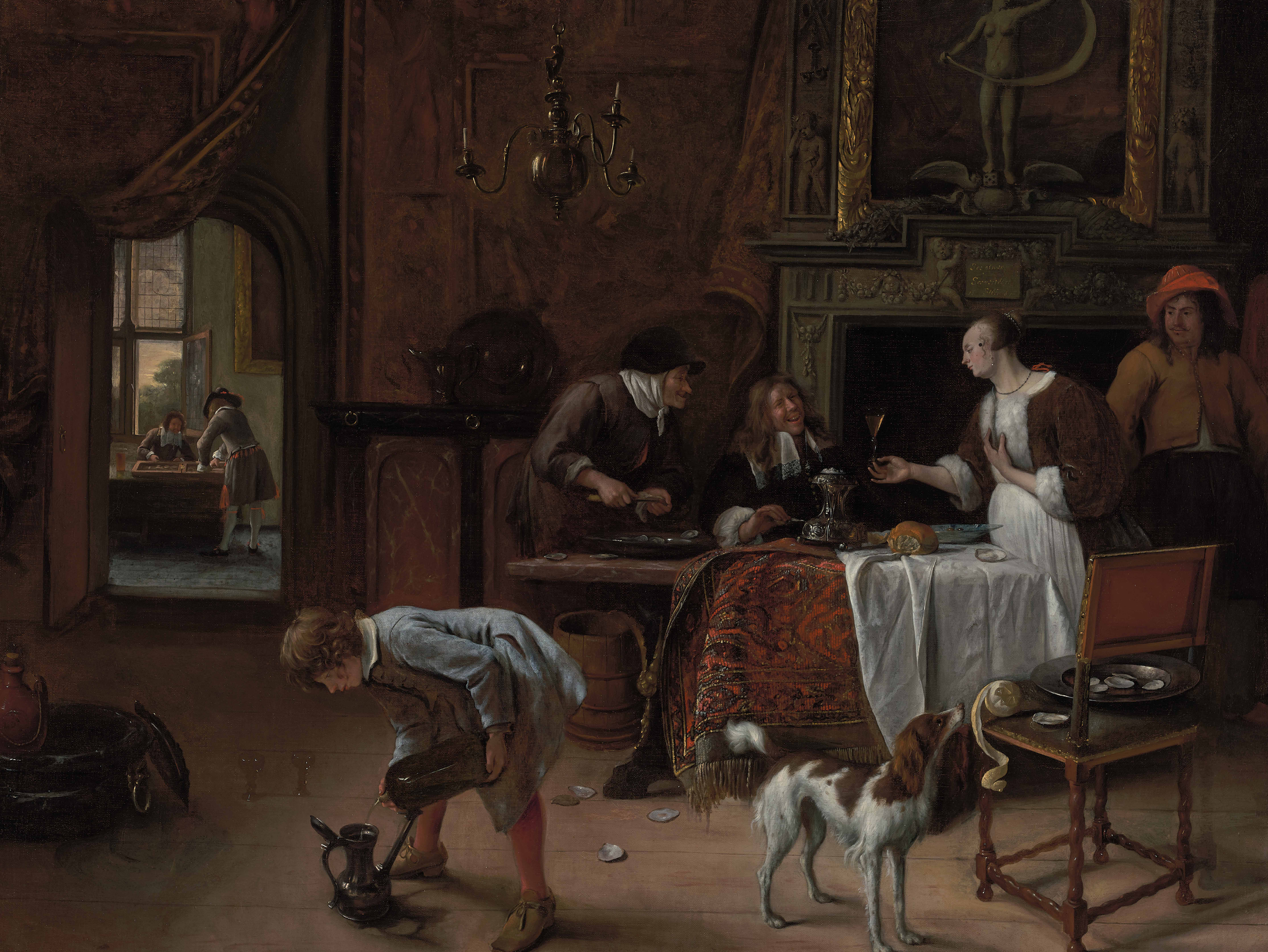
Four hundred years after his birth, Dutch Golden Age painter Jan Steen remains one of the most fascinating storytellers in European art. This winter, the National Gallery of Ireland marks the anniversary with Jan Steen: Sacred and Profane, a special exhibition that offers visitors a deeper look at an artist whose work explored every corner of human experience. Running from 21 November 2026 until 25 April 2027 in the Sir Hugh Lane Room, the exhibition brings together works from international collections alongside two paintings already held by the gallery, creating a rare opportunity to experience the broadness of Steen's artistic vision.
For many people, Jan Steen is synonymous with chaos. His name is often associated with lively domestic scenes filled with disorder, noisy families, mischievous children and hidden moral lessons. In the Netherlands, the phrase "a Jan Steen household" even became a common expression for a messy home. Yet reducing the artist to these humorous scenes overlooks the remarkable range of his work. The exhibition seeks to challenge that perception by highlighting Steen's ability to move effortlessly between the everyday and the extraordinary, the humorous and the spiritual, and the sacred and the profane.
Born in Leiden in 1626, Steen lived during the Dutch Golden Age, a period that saw immense growth in trade, science and culture. While many artists specialised in a single genre, Steen demonstrated an unusual versatility throughout his career. He painted religious narratives, portraits, historical scenes, tavern interiors and depictions of everyday life, all with the same attention to character and storytelling. What connected these seemingly different subjects was his fascination with human behavior and his ability to capture people at their most recognizable.
At the center of the exhibition are two paintings from the National Gallery of Ireland's own collection: The Village School (c. 1665) and The Marriage Feast at Cana (1665-70). Although very different in subject matter, they reveal the extent of Steen's artistic range.
The Village School presents a lively classroom scene filled with animated characters. Children talk, play and misbehave, while the teacher struggles to maintain order. At first glance, the painting appears humorous, but closer inspection reveals Steen's extraordinary ability to observe human behavior. Every figure contributes to a larger narrative, creating a scene that feels surprisingly familiar despite the centuries that separate modern viewers from its subjects.
In contrast, The Marriage Feast at Cana depicts the biblical story of Christ's first miracle, turning water into wine during a wedding celebration. Here, Steen moves from the everyday world into the realm of religious storytelling. Yet even within this sacred subject, he retains his interest in human interaction and emotion. Rather than presenting distant religious figures, he fills the composition with believable people engaged in a shared moment of wonder and celebration.
This contrast forms the foundation of the exhibition's title, Sacred and Profane. The phrase reflects not only the different subjects Steen painted, but also his broader understanding of humanity. Whether depicting biblical events, village schools or elegant social gatherings, he approached each scene as an opportunity to explore how people behave, interact and respond to the world around them.
What makes Steen particularly fascinating to contemporary audiences is the cinematic quality of his work. His paintings often feel less like static images and more like scenes from a carefully crafted story. Faces express curiosity, amusement, frustration or surprise. Small details scattered throughout each canvas reward close attention and invite viewers to construct their own interpretations. Long before cinema or photography existed, Steen mastered the art of visual storytelling.
The exhibition is especially significant because it brings together important international loans, allowing visitors to see works that would rarely be displayed alongside one another. By placing paintings from different genres in conversation, curator Dr Lizzie Marx encourages audiences to move beyond simplistic understandings of the artist's career. Rather than seeing separate categories such as portraiture, religious art and genre painting, visitors can trace the consistent themes that unite Steen's work.
One of those themes is humor. Even in more serious compositions, Steen frequently included moments of wit, irony or gentle observation. His paintings acknowledge human flaws without judging them too harshly. Instead, they invite viewers to recognize themselves in the behavior of others. Whether portraying a distracted student, a celebratory wedding guest or a busy family household, Steen understood that people are often at their most interesting when they are imperfect.
Another recurring element is his attention to narrative. Every object, gesture and expression serves a purpose within the larger story. This narrative richness helps explain why his paintings continue to resonate centuries later. Viewers are not simply observing historical scenes; they are witnessing recognisable emotions and experiences that remain relevant today.
For Irish audiences, the exhibition also provides an opportunity to engage with one of the defining figures of Dutch art without traveling abroad. The National Gallery of Ireland has increasingly positioned itself as a space where international artistic traditions can be explored alongside Irish collections, and Jan Steen: Sacred and Profane continues that approach. By presenting masterpieces from international lenders alongside works already in Dublin, the gallery offers a comprehensive introduction to an artist whose influence extends far beyond the Netherlands.
Ultimately, Jan Steen: Sacred and Profane is more than an anniversary exhibition. It is an exploration of storytelling, observation and the complexities of human nature. Four centuries after his birth, Steen's ability to capture life's contradictions remains remarkably fresh. His paintings remind us that humor and seriousness, order and chaos, and the sacred and the everyday are often inseparable parts of the human experience.
For anyone interested in art history, visual storytelling or simply understanding why Jan Steen remains one of the Dutch Golden Ages most celebrated painters, this exhibition offers an ideal place to start. Through a carefully curated selection of works, visitors will discover not only the artist's remarkable versatility, but also the enduring relevance of his unique perspective on humanity.
Written By: Valerin Vanegas
Edited By: Rose Curnyn
