In Conversation with Louis Urbex
Known on social media as Louis Urbex, he has amassed nearly 30,000 followers with the intrigue of his explorations.
Urban exploration, at its core, is about entering spaces that have been left behind. But for Louis, it’s less about trespass and more about testimony.
He grew up in a quiet, rural part of France near the Swiss border, in a village scattered with forgotten buildings like an old theatre, a manor house, both strangely intact. “I started exploring them out of pure boredom more than anything,” he says. “But once I stepped inside, I realised I loved it.”
It wasn’t adrenaline that hooked him. It was something quieter. “The real appeal for me isn’t adrenaline, it’s that feeling of opening a door you’re not meant to open and seeing what’s behind it. It’s the unknown that pulls me in.”
That sense of discovery still drives his work. His videos feel cinematic, long corridors dissolving into shadow, dust caught in torchlight. However, he shrugs off the suggestion of a deliberate craft. “Honestly, it’s completely instinctive. I don’t have much interest in cinematography… I just take my phone out and film what I’m seeing in that moment. If it feels cinematic, it’s probably just because the places themselves are dramatic.”
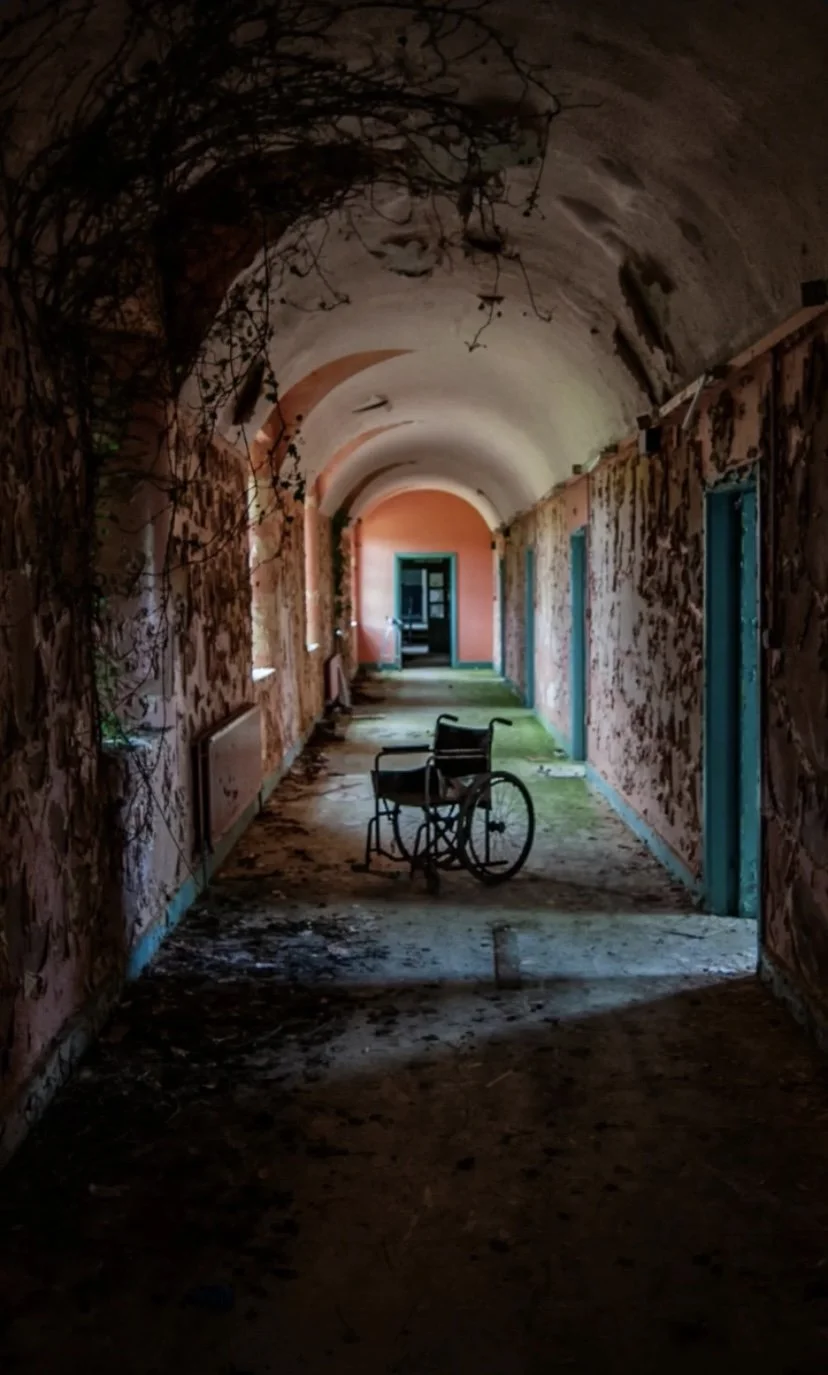
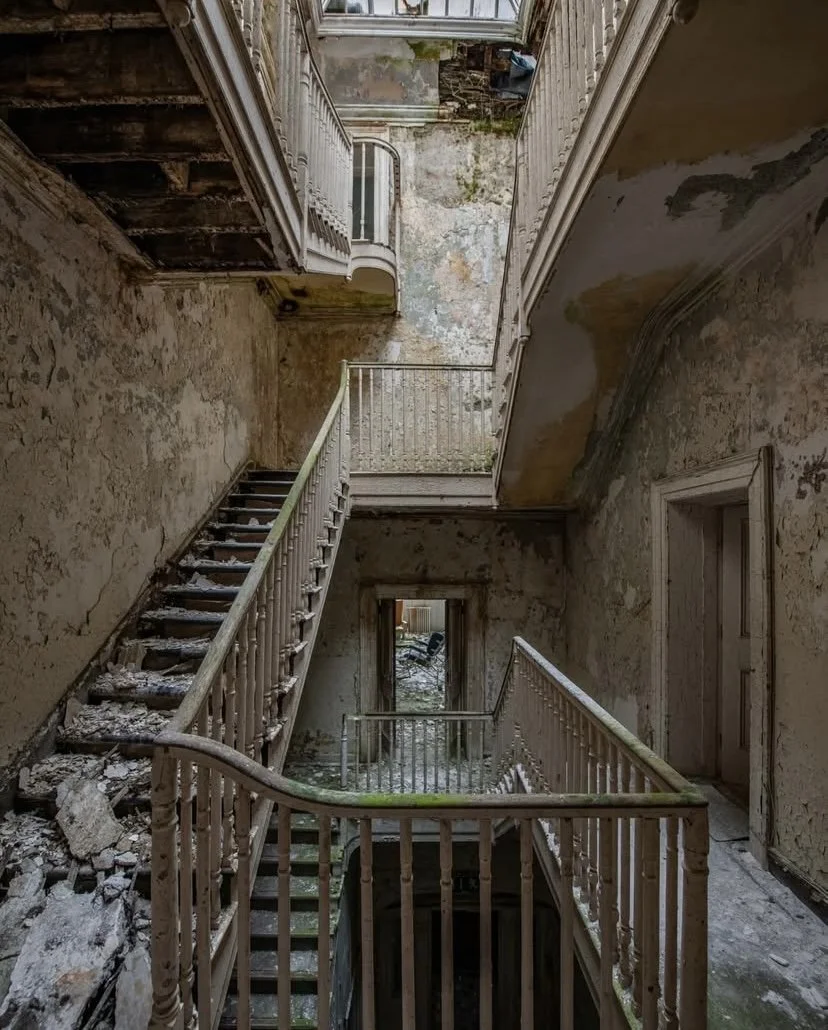
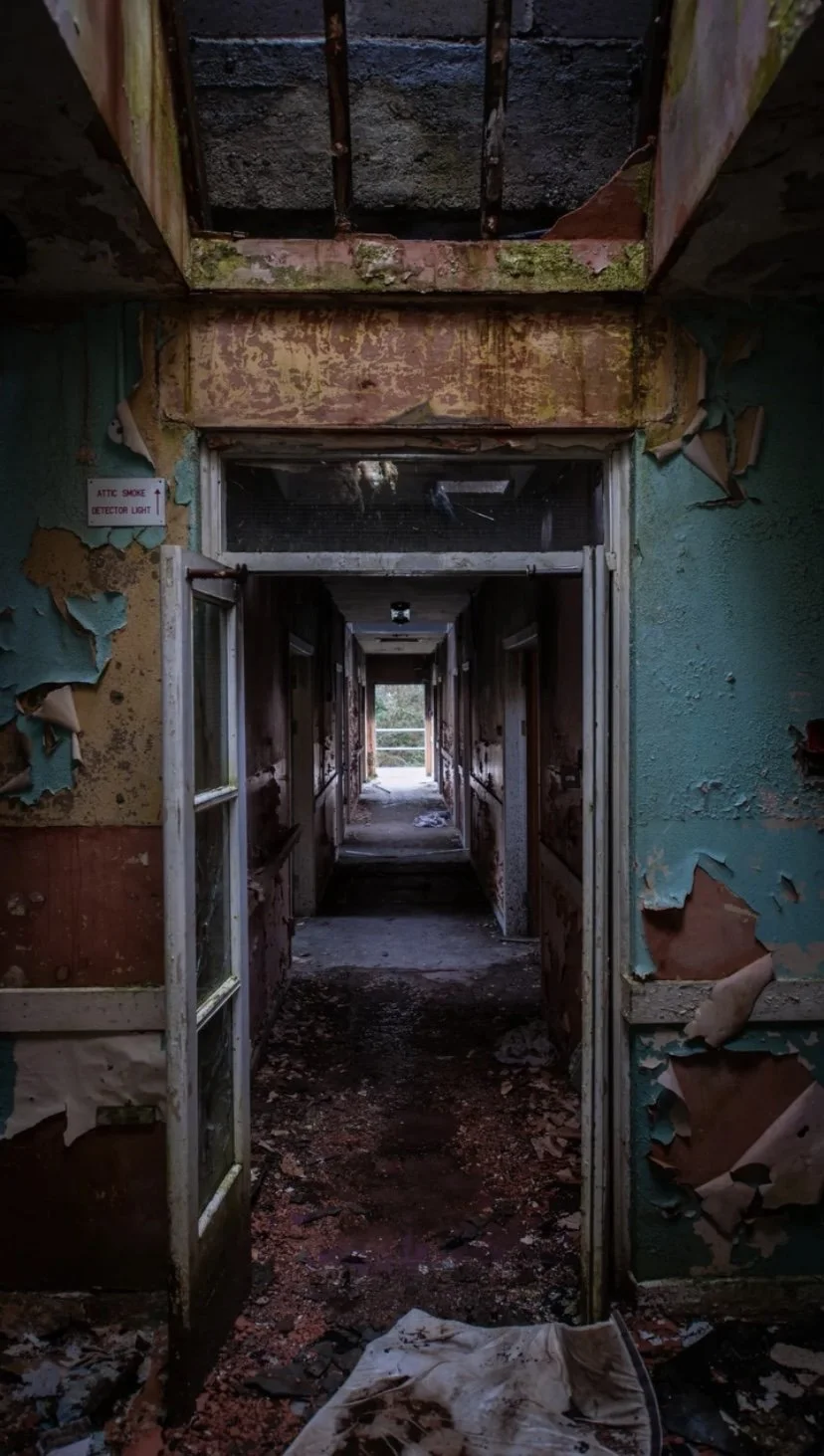
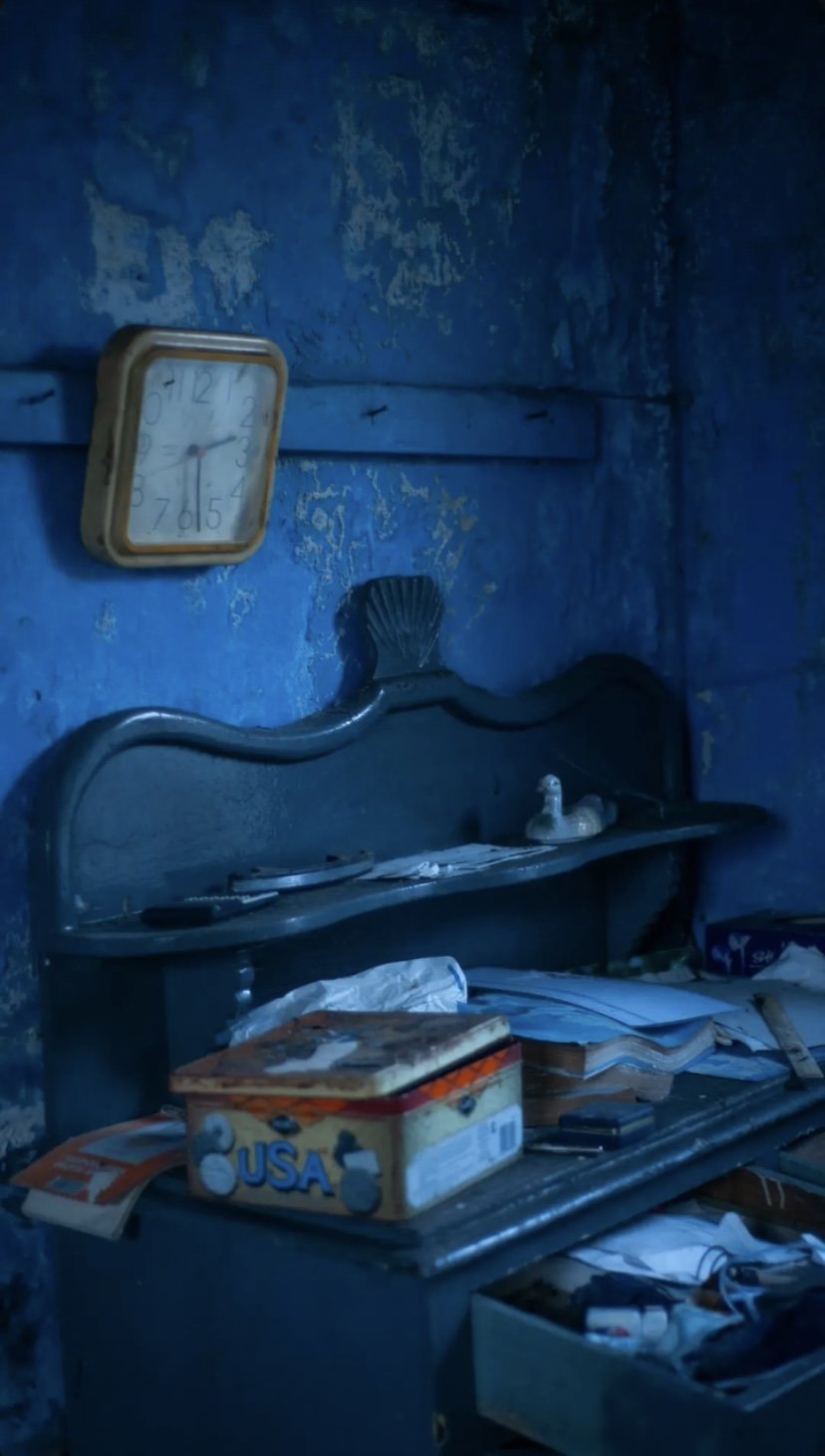
In Ireland, where he is now based, urbex culture is often assumed to be small or non-existent. He disagrees. “It actually is associated with urbex more than people think. Not on the same level as France or Portugal, but people do travel to Ireland specifically to explore.” The difference, he explains, is effort. “Finding spots here takes a lot of work. They’re not just handed to you. Most people simply aren’t bothered putting the time into research and locate them.”
From the outside, Ireland can look sparse. But this is often a matter of access and consequence. “When people realise the potential consequences if they get caught, they’re put off.” The mystery remains partly because it has to.
There’s also something archival about what he does. Many of the buildings he has explored no longer exist. “A lot of the spots I’ve explored are now demolished or renovated… Some just fade into forgetfulness entirely.” Documenting them feels urgent. “Filming and photographing them feels like keeping a trace of their existence before it’s gone for good.”
Atmosphere, he says, shifts from building to building. Some spaces are eerily still. “You can spend hours exploring every corner without being bothered.” Others are tense, alive with risk. “You know security is probably nearby or might have seen you on CCTV. In those cases, it’s a rush, you have to move fast while trying to see as much as possible.” The pressure reshapes the experience. The air feels different.
But not all encounters are cinematic or thrilling. Some are heavy. “Especially in older buildings or hospitals, you sometimes come across human remains.” He pauses on that. “It’s unsettling because it’s not just the memories of the place fading away; it’s the traces of people themselves disappearing along with it.”
For Louis, that’s the core of it. Not decay, but humanity. “Decay can look interesting, but it’s the traces of life that really make a place meaningful, like a chair pulled out from a table, shoes left by a bed, paperwork scattered across a desk.” These fragments speak louder than collapsing ceilings. “Those little details tell more about the people who lived there than the crumbling walls ever could.”
With a growing audience comes responsibility. “I don’t encourage anyone to do what I do,” he says plainly. Locations remain undisclosed. Some explorations are shared years later, if at all. “I focus on sharing the experience without giving away locations or shortcuts.”
When he stands in a decayed room, he isn’t just seeing ruin. He’s reading it. “A nail on the wall that probably held a painting, marks on the floor where a grand carpet once lay… It’s like reading the room’s memory rather than just looking at the decay.”
And maybe that’s what urban exploration becomes; not intrusion, not spectacle, but preservation. A quiet act of noticing before everything disappears.
Written by: Sadie Murray @sadiebabyyxo
Edited by: Shaunamay Martin Bohan @f4wnfatale
