Inside the National Art Gallery Of Ireland: AIB Portrait Prize Exhibition
In a culture where faces are filtered, cropped and endlessly reposted, it’s easy to forget what portraiture actually does.
At the National Gallery of Ireland, the AIB Portrait Prize exhibition (on view until 15 March) offers a quieter, more considered counterpoint. Bringing together submissions from artists across Ireland, the show spans painting, photography and mixed media, reflecting the range and direction of contemporary portraiture today.
The works don’t just focus on likeness. They explore identity, family, community and ask what it means to represent someone in 2026. Some portraits feel intimate and touching; others are bold and colourful. Together, they create a snapshot of how artists across the country are interpreting the human face right now.
Beyond celebrating individual talent, the Prize also seeks to spark interest in contemporary portraiture and elevate the National Portrait Collection.
If you’re looking to recalibrate your relationship with the image and with how we see one another, this is a strong place to start. Read on for a closer look at some of the standout works featured in this year’s exhibition.
Piece One
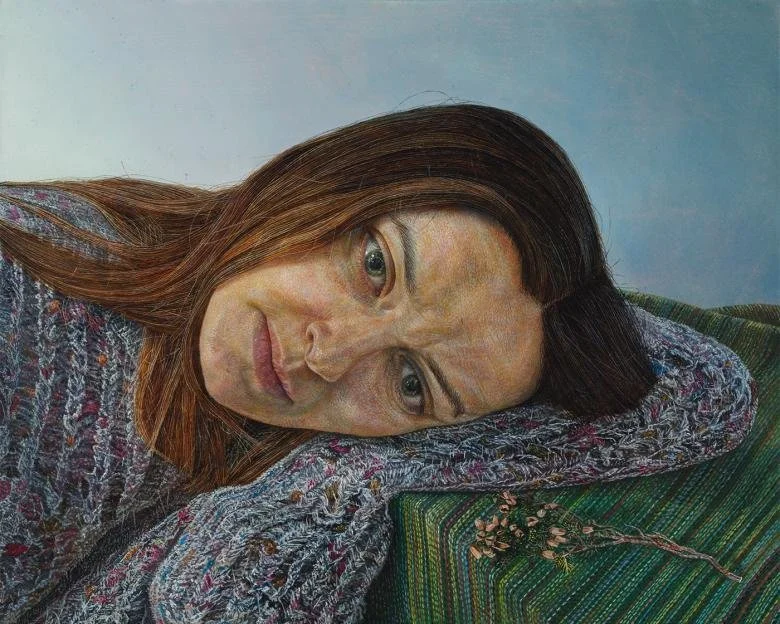
Late Spring, (2025) - Daniel Nellis
Winner of the Portrait Prize, Daniel Nellis turns the lens inward with a tender oil painting of his wife, Andrea, created in the quiet lead-up to their wedding. It’s intimate without feeling overly sentimental. Andrea is rendered with near-photographic precision, yet the palette feels heightened colours dialled up just enough to push the scene beyond our own dull reality. Her gaze slips past us. It’s that lost in a thought expression we develop when our minds are anywhere but the present. In contrast to Andreas's look, Nellis's painting captures this present moment and allows it to linger with us. His practice is less about spectacle and more about suspension: holding onto the still, unperformed moments that usually pass unnoticed.
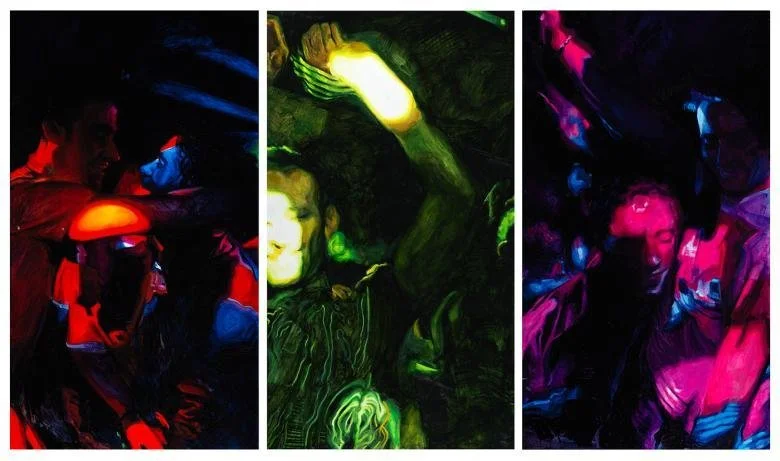
Pink Triangle, (2025) - Peter Bradley
Through the electric “Pink Triangle”, Peter Bradley captures the feelings your digital camera fails to capture on the best nights of your life. Bradley's work features movement, frames of nightlife through neon colours and figures that blur around the edges. The piece draws you into its world with such force that it’s disorienting to remember it’s oil on canvas, not a replay of a memory or a dream. Bradley's piece aims to capture the freedom of queer joy on the dancefloor, where many people can peel back their masks for the first time and let go of societal expectations and limitations. It is a breathing piece that emphasises the importance of these spaces as a medium for self-expression. Above all, the pulse that Pink Triangle emits challenges the idea of a portrait as a frozen face.
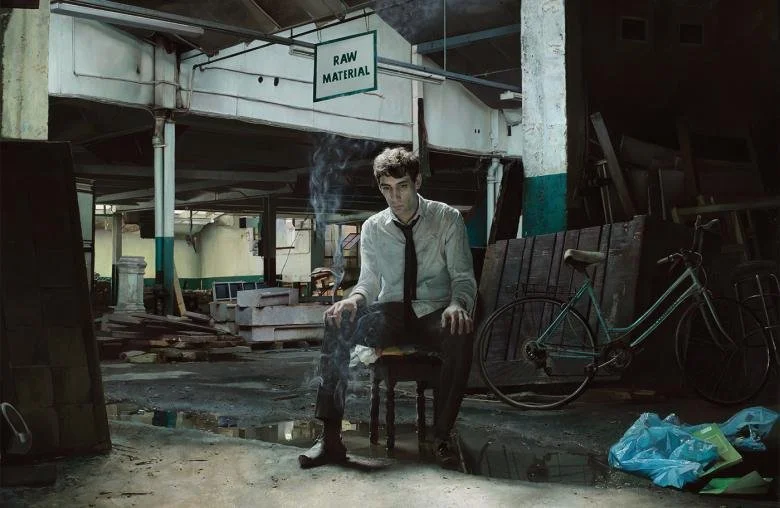
The Waste Land, (2025) - Francis O’Toole
A man in a crumpled shirt and tie sits in a crumbling industrial shell, cigarette suspended mid-burn and wearing an expression somewhere between detachment and defeat. In The Wasteland, Francis O'Toole taps into a mood that feels painfully contemporary, a portrait that could belong to the burnt-out corporate climber just as easily as to an anti-capitalist watching the system fray. It almost feels like it’s set in a dystopian reality, yet the piece's composition shows nothing that couldn’t be seen in our current reality. While the man sits amongst waste, O’Toole’s piece suggests the true wasteland may be internal. Despite the visual drama of the space, the man’s gaze is vacant, as though his inner world has eroded faster than the building around him. Executed on linen, the surface offers depth and texture that a screen simply can’t replicate. To experience its full weight, you have to stand in front of it.
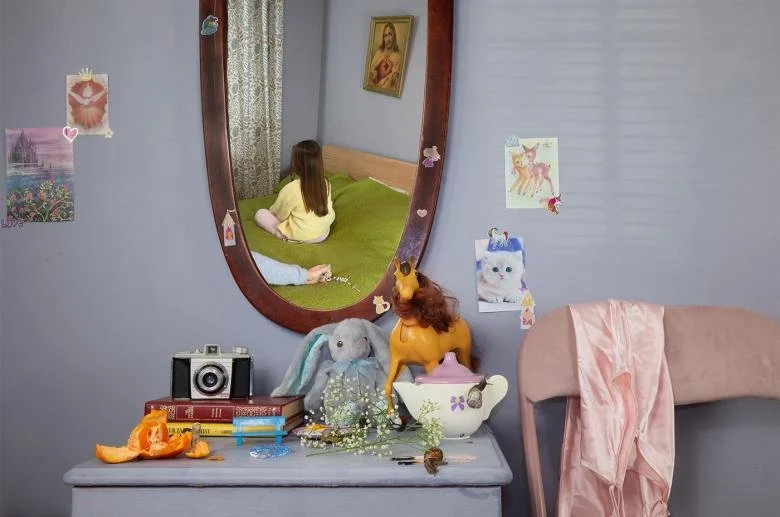
God, I Hope it All Goes Away, (2025)- Niamh Swanton
This frozen moment challenges the traditional expectations of portraiture. Instead of offering us a face, Swanton turns her subject away; a girl sits with her back to us, visible only through the mirror’s reflection. This act of obscuring identity immediately creates distance, yet paradoxically invites projection; she becomes less of an individual and more of a symbol. The room feels tender. Soft toys, pastel walls and scattered domestic objects emit a dream-like stillness, as though we are witnessing a preserved childhood memory. But this sweetness is unsettled by a subtle religious presence. Above the child, Christ watches from the wall, and just below the mirror, an outstretched hand grips a rosary. Swanton freezes a moment that feels suspended between innocence and spiritual surveillance. The composition balances comfort and quiet unease, suggesting how faith can be woven so deeply into everyday life that it becomes inseparable from it.
AIB Young Portrait Prize
Running alongside the AIB Portrait Prize is the AIB Young Portrait Prize, open to artists under 18 of all skill levels and just as compelling. The exhibition offers a glimpse into creativity that feels instinctive and unfiltered, where childlike imagination and wonder pour out of each work. What is equally striking, however, is the level of technical skill on display. The confidence and vision shown by these young artists suggest that the future of Irish portraiture is already taking shape.
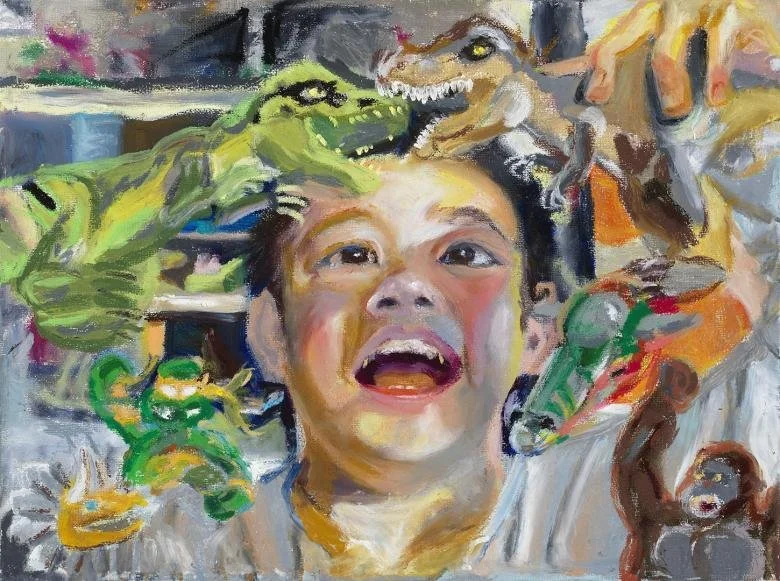
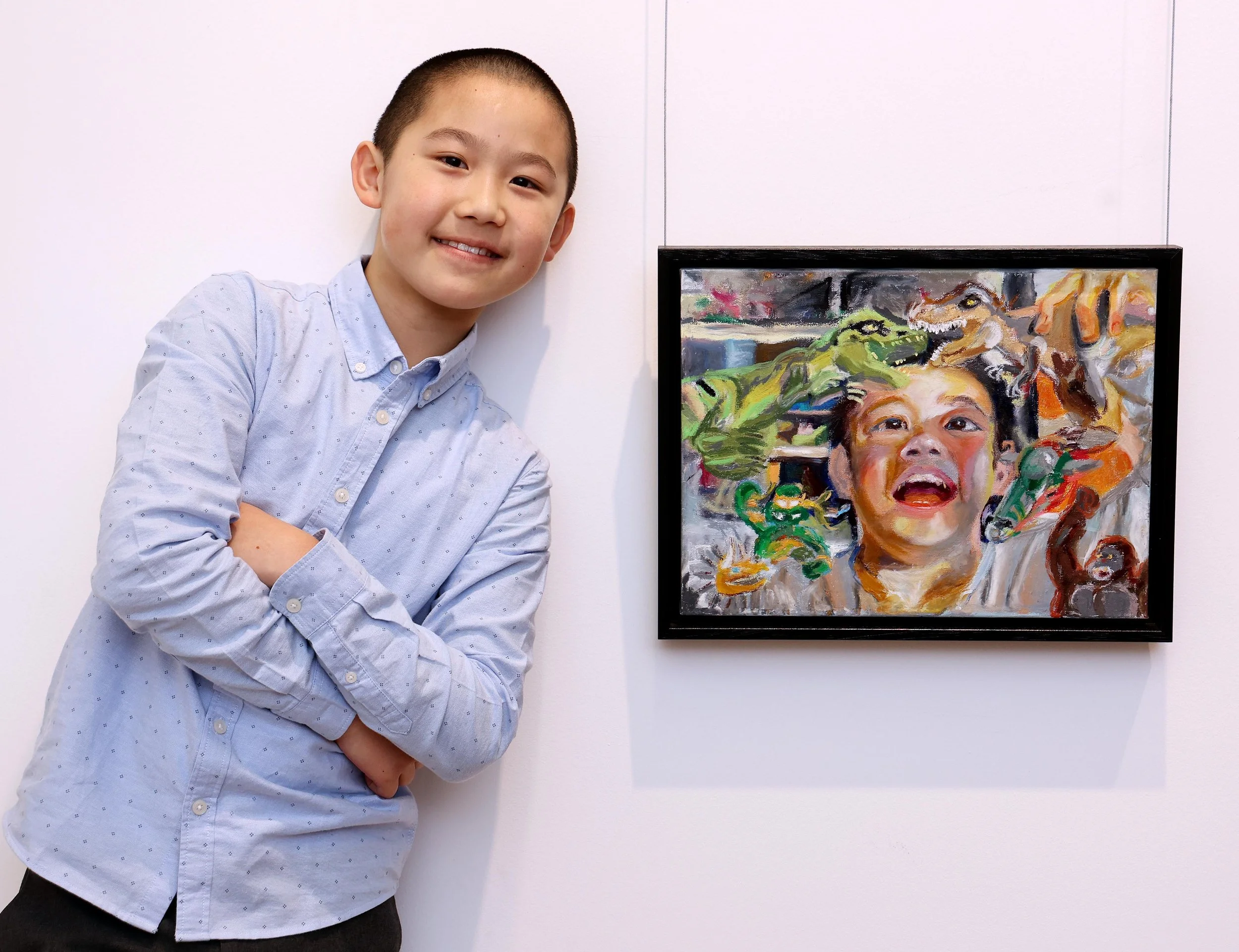
My Own World of Fantasy, (2025) - Guorui Sui
The winning piece of the AIB Young Portrait awards feels almost unbelievable when you learn its creator has not yet reached his teens. Guorui Sui captures himself surrounded by an array of toys, his smiling face framed within a world that many would dismiss as fleeting. The composition radiates the softness and imagination of childhood, yet the control and intentionality behind the image reveal an artistic maturity far beyond his eleven years. What makes the work especially moving is its quiet defiance of growing up too quickly. Rather than distancing himself from childhood, Sui leans into it. He consciously preserves this “in-between” stage, the final stretch of uncomplicated play before adolescence reshapes identity. In doing so, Sui reminds us that childhood is not something to rush through, but something to recognise as worthy of documentation.
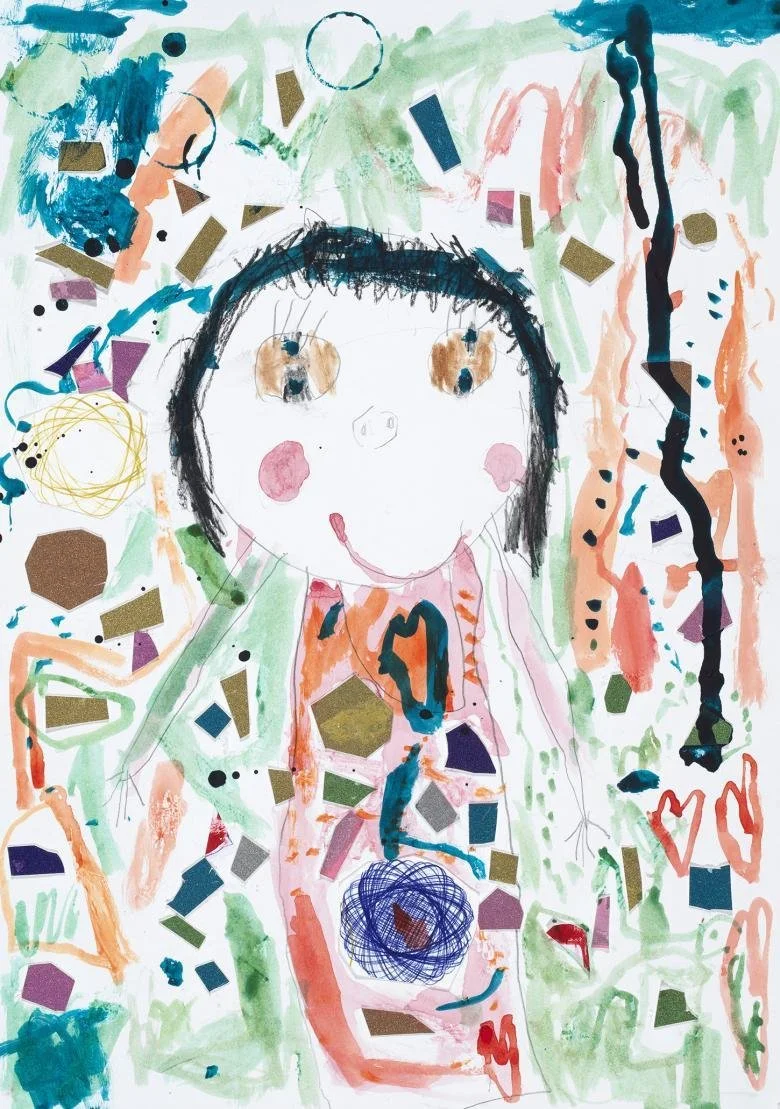
Rainy Day, (2025) - Abigail Leonard
Pencil, charcoal and collage, all mastered by Leonard to draw us into her colourful world of wonder. She describes the piece simply as “a self-portrait of me in the summer rain,” a humble explanation for such a joyful act of documentation
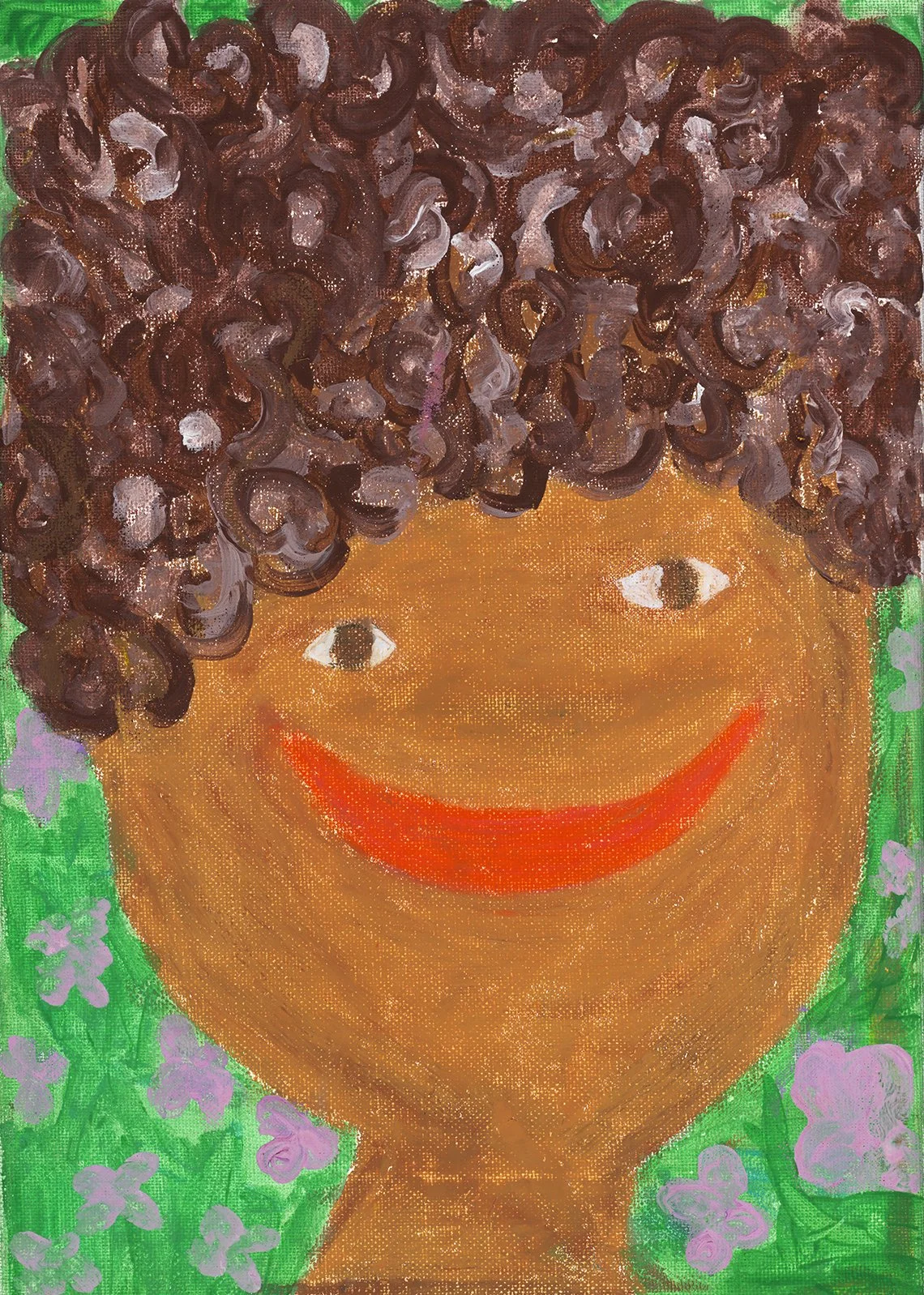
Me and My Curls, (2025) - Rohan Agrawal
In this self-portrait, Agrawal tackles the century-old question of how to truly capture oneself in a single painting. When asked about his method, Agrawal staI have lots of curly brown hair, and I worked hard on trying to fit it all into my portrait”
Taken together, this year’s AIB Portrait Prize and AIB Young Portrait Prize remind us that portraiture is far from static. Whether exploring intimacy, identity, burnout, queer joy or the fragile in-between of childhood, these works prove that the human face and the human condition remain endlessly compelling subjects. In an era saturated with instant imagery, the exhibition asks us to slow down, to stand in front of a work, and to really look.
The exhibition is free to visit at the National Gallery of Ireland until 15 March. For those outside Dublin, it will travel to the Regional Cultural Centre in Letterkenny from 4 April to 20 June 2026 and to Waterford Gallery of Art from 18 July to 11 October 2026, extending the conversation around contemporary Irish portraiture far beyond the capital.
Written by Shaunamay Martin Bohan @f4wnfatale
