How Maria McManus Is Bringing Ireland to New York
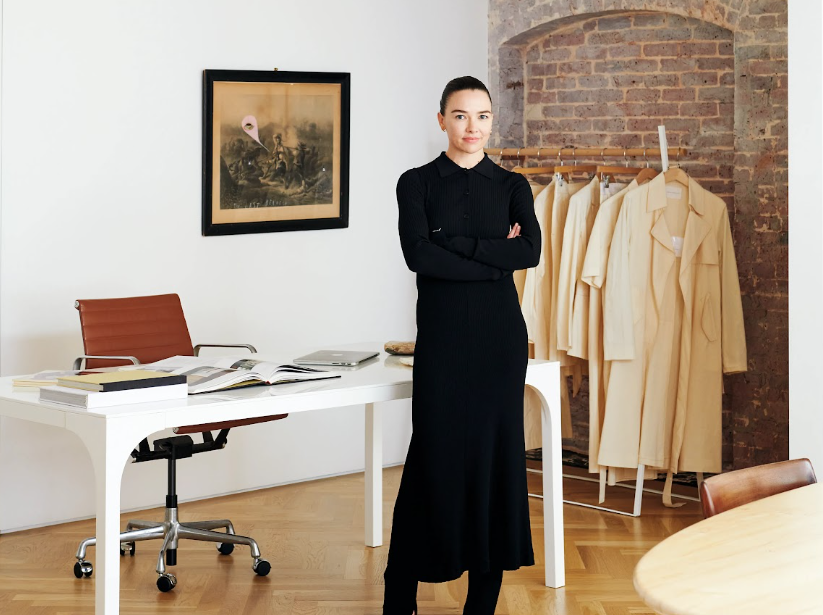
There are things you notice differently when you live away from home. A landscape you once passed without thinking, becomes something you remember in colour. A familiar piece of clothing starts to feel strangely specific. Even the weather can become something worth holding on to.
For Maria McManus, Ireland has taken on some of that distance. The Irish born designer has spent years building her label in New York, but the country she grew up in continues to surface throughout her work. Not as a fixed idea of Irishness, and certainly not as a costume, but through the materials, people, music, and memories that have stayed with her.
Her AW26 collection brings that relationship into clear focus. Inspired by what she described as, “The Ireland of my childhood and the one I now observe from a distance.” The collection looks at home through the eyes of someone who no longer lives there.
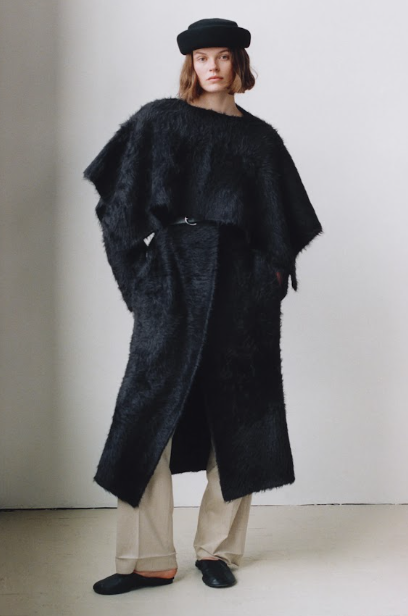
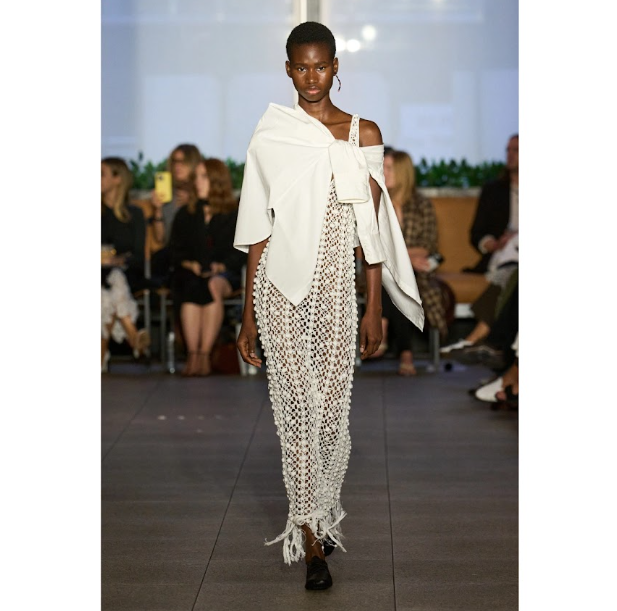
The clothes have a softness that makes the connection immediately apparent. Aran-inspired knits are worked into gentle, sloping silhouettes. While tweed, crochet and pearls bring the familiarity of Irish craft into a wardrobe that remains unmistakably contemporary. There is an Aran knit finished with a pearly clasp, a black velvet dress edged with vintage pearl-adorned trim and a fisherman's sweater, combining Irish sensibilities with recycled Italian cashmere and cotton. A hand crocheted bandana was made by an artist on New York's Lower East Side, while a python-print leather skirt was produced from deadstock material sourced from one of McManus’s New York factories.
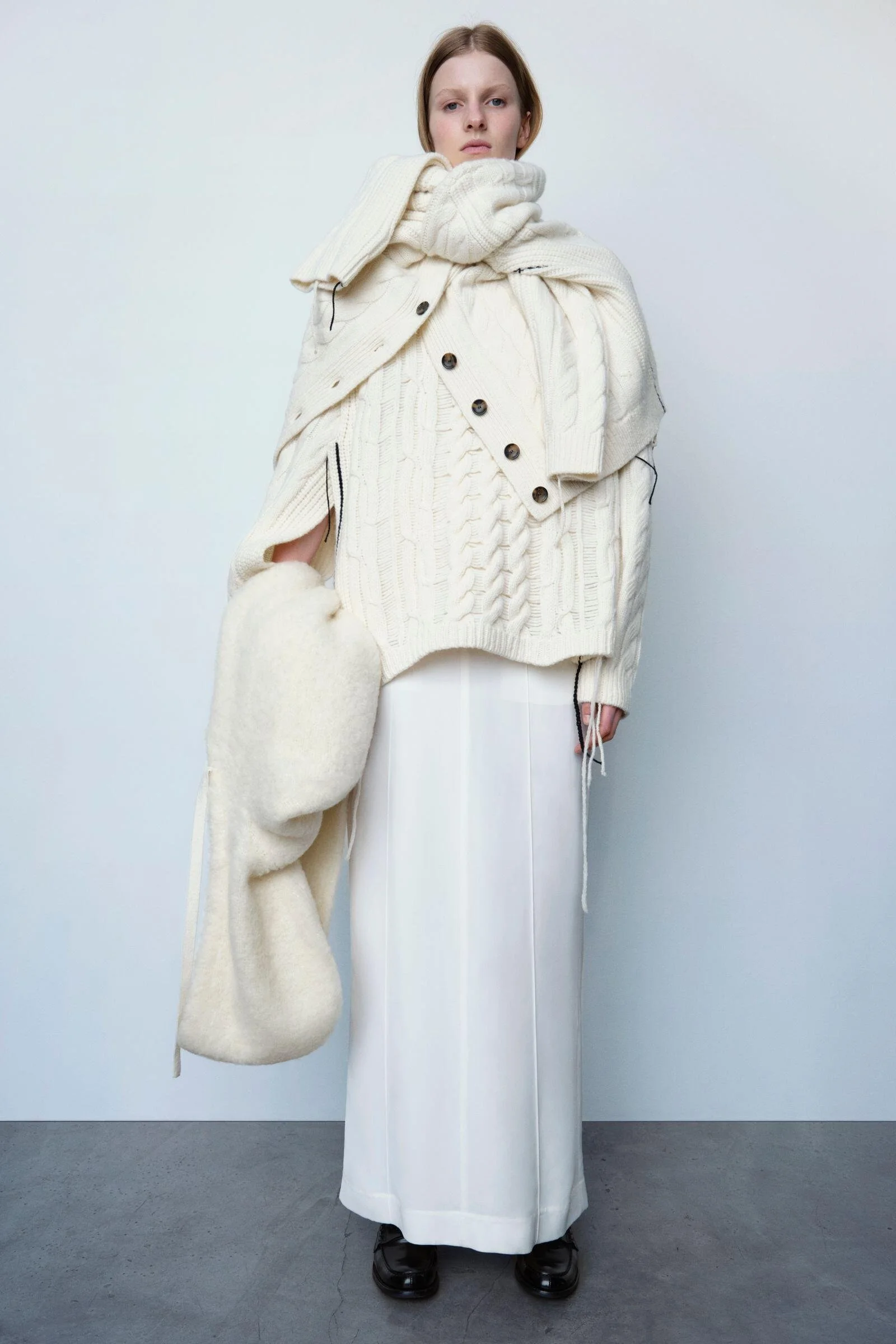
It is a collection built from contrasts. Irish references sit beside the sharper, more polished language of New York dressing. The clothes feel soft without becoming sentimental, feminine without looking delicate. Even the presentation reinforced that tension: the collection was shown in a downtown New York gallery surrounded by mid century French furniture, where the Aran knits and heirloom crochet somehow looked completely at home.
That sense of belonging is important. McManus isn’t recreating an Irish wardrobe. She is taking pieces of one culture and allowing them to exist within another.
The inspiration behind the collection stretches beyond clothes too. She looked to former Irish president, Michael D Higgins and his advocacy for the preservation of Irish culture, as well as the writing of Seamus Heaney and the music of Sinead O'Connor. In her notes, she described Ireland from her position as an immigrant in America as almost ‘mythical’; a place where arts, culture, landscape and collective well-being are deeply valued.
There is something revealing about that description. The Ireland that appears in her work is not necessarily the Ireland someone living in Dublin might recognise immediately. It is an Ireland filtered through memory, distance, and affection. The landscape becomes softer. Familiar craft becomes precious. The things that once belonged to everyday life acquire the weight of heritage.
That is particularly true of the handmade elements in her work. McManus has spoken about growing up in north Dublin with a mother who made many of her clothes and grandaunt, Bibi, who crocheted and embroidered. Making was not an abstract concept or a luxury, it was part of family life. She later rediscovered a linen tablecloth made by Bibi, which became the starting point for her experimentation with lace. The object mattered not only because of what it was made from, but because of the person who made it.
This is where her understanding of sustainability becomes more interesting than simply choosing recycled materials. She has spoken about realising that sustainability can also be about the story an object carries; its history, its maker and the reason it has been kept. A garment can have value because of what it means to somebody, not only because of how responsibly it was produced.
That idea connects directly to community. Clothes are rarely meaningful in isolation, they are made by someone, worn by someone, passed between people, associated with places, and remembered long after they have stopped being useful. The things we inherit from other people often become the things that tell us where we came from.
McManus has carried that understanding into the community she has built around her in New York. Her SS26 collection was inspired by, “The women around me and how we come together through community, creativity and craft.” Friends, artists, designers, and activists have all formed part of the network surrounding her work.
That makes the community within AW26 feel bigger than the idea of Irish heritage alone. The collection begins with Ireland, but it doesn't end there. An Aran stitch can travel. A family technique can be reworked by a designer in another country. A memory of home can become part of a new community without losing its original meaning.
This is what makes her relationship with Ireland so compelling. She does not treat heritage as something that needs to be preserved behind glass, she works with it, changes it and replaces it in rooms where it would not traditionally be expected to appear.
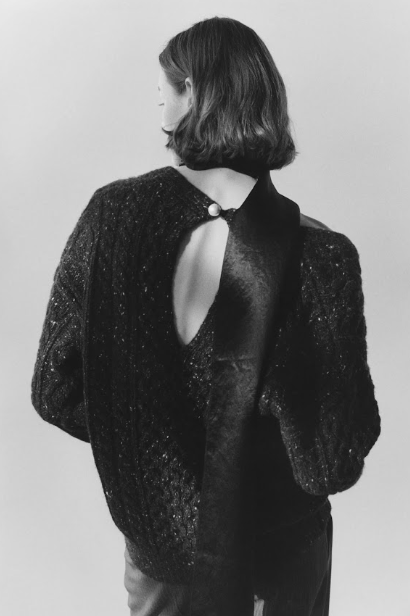
Ireland is in the cable of a sweater, the texture of a handmade piece, the memory of a relative's work. It is in Heaney’s words and O'Connor's music. It is in the landscape remembered from across the pond.
And New York changes all of it.
The result is not an Irish collection made for an international audience. It is a collection shaped by what happens when one place becomes part of another. McManus's work shows that leaving home does not mean leaving its influence behind. Sometimes distance gives familiar things a sharper outline.
For Maria McManus, Ireland has travelled all the way to New York, and it has become something new along the way.
Written By: Leah Murphy, @leahcmurphy
Edited By: Hazel Hunter, @hazelhunterrx
