Nepotism vs Organic Growth
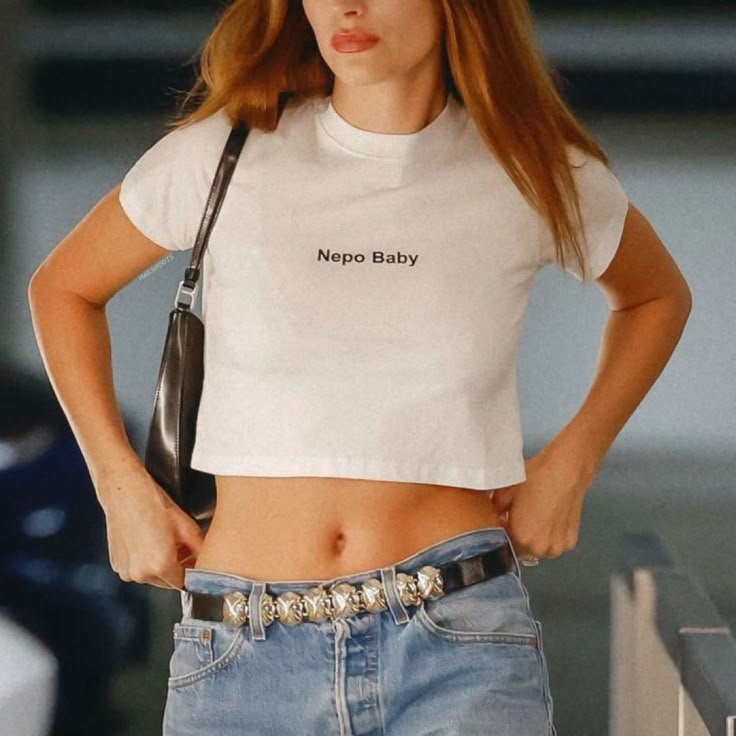
The conversation around ‘nepo babies’, specifically those born into Hollywood and the film industry, has been exhaustively deliberated on social media and the internet over the last 5 years. Whether it be the memes of Brooklyn Beckham’s infamous photography books (‘So hard to photograph but incredible to see’) or New York Magazine’s December 2022 edition with the cover title ‘Extremely Overanalyzing Hollywood’s Nepo-Baby Boom,’ everywhere you look online, someone is uncovering the heritage of another Hollywood A-Lister and getting incensed due to said discovery.
These online discussions reflect a general frustration with a creative industry that is reckoning with the devastating impact of the pandemic, as opportunities became increasingly difficult to find, let alone access, while the cost of living continued to rise exorbitantly. Naturally, an aspiring actor working three jobs to make a living, while receiving constant rejections from casting agents, is inclined to feel embittered when they see the child of whatever famous movie star walk into a career-launching acting gig. The general criticism of nepotism, whether that be in Hollywood or outside of it, is valid. However, the obsession the internet holds in relation to Hollywood and its ‘nepo baby’ stars has become tiresome and, quite frankly, futile.
Should the internet truly concern itself with the lack of accessibility in the film industry, it might prove worthwhile to shift focus from the A-list actors to the significantly larger numbers of crew that contribute to the production of a film. The constant perpetuated narrative of the ‘nepo baby’ getting a job that was perhaps better filled by a non-famous worker may be true. But it seemingly is the only injustice of employment in film that the internet is interested in holding any kind of attention on. A-list celebrities, whilst the cover girls, make up remarkably little of what Hollywood is. Nepotistic behaviour may be a significant contributor, but it is not the root cause of inaccessibility within the industry. Marking it as the main cultural talking point regarding inequity in film removes the systemic responsibility of governments, studios, and the industry as a whole to offer grants and support for lower-income and minority artists that would allow them to access and afford a tangible route into the arts.
Irish actor, Anthony Boyle (not a ‘nepo baby’, as far as I’m aware…) stated in his acceptance speech for the IFTA Rising Star Award earlier this year that ‘the arts are not a prerequisite for the privileged few, nor are they a playground for the intelligentsia; the arts are for everyone and failure to include everyone diminishes us all.’ His speech, as a proud Belfast man, was a powerful reckoning against the decade-long decline in funding, with Arts Council Northern Ireland’s government experiencing a 63% cut, making it the lowest arts funding in the UK. These cuts are a direct action of the Tory government, with a decrease in arts funding seen across the UK, in their time in power from 2010 to 2023. In that same period, Arts Council England also saw its budget cut by roughly 30%. As a result, reports in the UK in the last five years display the diminishing number of artists who come from a working class background, making up only 8.4% of those working in film, TV, radio and photography, according to The Guardian in May 2024. The arts are, and should always be, for everyone; their commercialisation should not change that.
Despite the uninspiring statistics, the situation is not totally dire. Ireland has made the positive decision to make the previously piloted ‘Basic Income for Artists’ scheme permanent, supporting 2000 Irish artists with an unconditional payment of €325 a week for three years. In a study of the scheme, RTE reports that ‘the socioeconomic benefit of supporting artists to complete new work, participate more and feel more confident and assured is valued at over €100 million to society.’ It is not a perfect antidote, but it is undoubtedly a step in the right direction and will hopefully encourage other countries to follow suit.
It is easy to get caught up in the aggrandising narrative of Hollywood Stars perpetuated on social media. It can be fun too. And so, while ‘nepo babies’ are perhaps a silly party conversation or an easy way to tease celebrities, it is probably best to leave it at that and focus any real frustrations you feel for the industry’s obvious disparities into a more worthy fight. The real issue isn’t that some people are born into opportunity; it’s that access to creative industries remains tightly gatekept by systemic privilege. Don’t let a well designed New York Magazine cover distract you.
Author: Maeve Ronayne (@maeveruaneronayne)
Editor: Shaunamay Martin Bohan (@F4wnfatale)
