No Place Like Home, Apparently
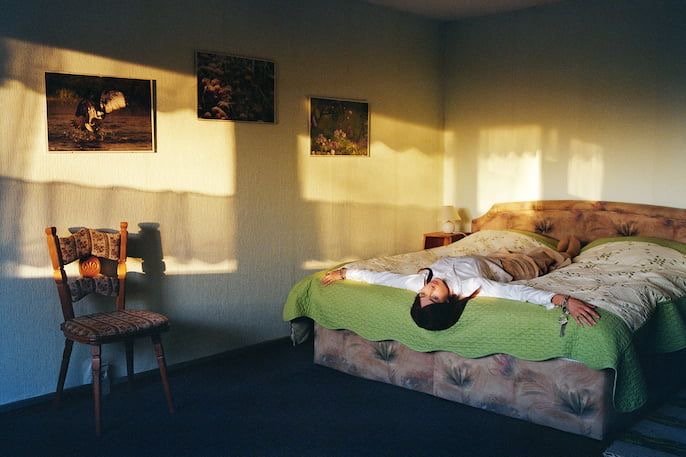
There is a strange version of adulthood that happens when you have a job, pay your own bills, make your own plans and still have to tell your parents whether you’ll be home for dinner.
Moving out has long been treated as one of adulthood’s cleaner dividing lines. You leave the family home and, however gradually, begin constructing a life that belongs entirely to you. Your own food in the fridge, your own keys, friends coming over without asking, someone staying the night without requiring an elaborate logistical operation.
Except that dividing line is becoming increasingly blurry.
For many young adults in Ireland, leaving home is no longer something that naturally follows college or a first proper job. Some stay home to save for a deposit, others move out only to return when rent becomes unsustainable. While plenty cannot justify handing over a huge portion of their salary for a room in a shared house.
The scale of it is significant. At the 2022 Census, more than 440,000 people aged 18 to 34 were living with their parents in Ireland, accounting for 41 per cent of the age group. More recent CSO research found that financial reasons were the main factor keeping many young adults at home.
Financially, staying home can make perfect sense. Emotionally, it can be considerably worse.
There is something about walking through your parents’ front door that can collapse ten years of personal development remarkably quickly. You might manage people at work, travel alone and make every other decision in your life independently, only to return home and find yourself explaining where you’re going on a Saturday night.
It creates an odd halfway point between dependence and independence. You are not a teenager, but you are living in a space where the rules and relationships were established when you were one.
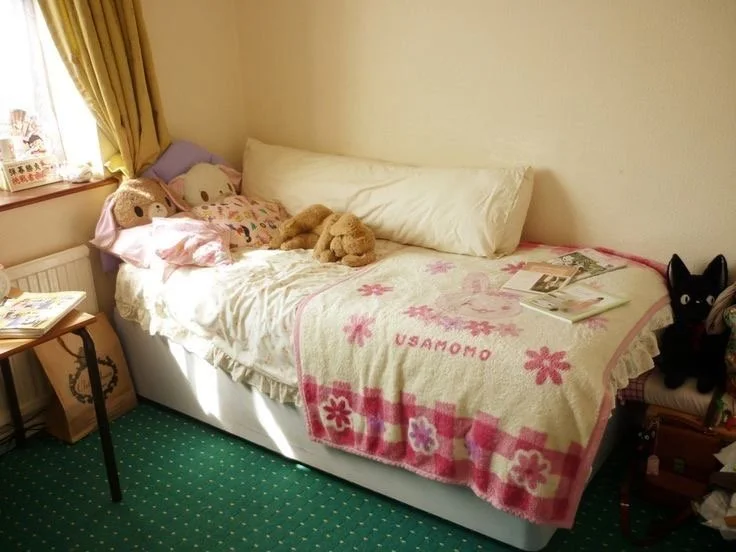
This can be perfectly comfortable. Living at home might mean dinner with your family every evening, fewer financial pressures and the ability to save money that would otherwise disappear into rent. For some, there is no great urgency to leave.
For others, the desire for independence exists alongside the knowledge that pursuing it might actively work against their longer-term goals.
Renting creates an obvious contradiction. Moving out gives you independence now, but the cost can make saving for a deposit considerably harder. Staying home may bring you closer to eventually owning somewhere, but it can mean postponing the very independence you are saving for.
The result is that moving out becomes less of a milestone and more of a calculation.
Can you afford the rent? Is the room worth it? How much could you save by staying another year? Would moving home for six months make buying more realistic? Is it better to spend your twenties living independently or sacrifice some of that freedom in the hope of having more financial security later?
There is no particularly satisfying answer.
And the consequences stretch beyond money. Dating becomes more complicated when one or both people live with their parents. Privacy has to be planned. Staying over can involve family introductions considerably earlier than anyone intended, while bringing someone home after a night out is rather different when your parents are asleep upstairs.
Even relationships that become serious encounter a different timeline. Moving in together might be delayed because neither person can afford it, or accelerated because splitting the cost of a one-bedroom flat suddenly makes more financial sense than two separate rooms. A decision that should primarily be about whether a couple is ready to live together becomes difficult to separate from rent.
Friendship changes too. Having people over is one of those small freedoms that rarely feels important until you don’t have it. Hosting dinner, inviting someone back after the pub or telling a friend they can sleep on the sofa requires a different calculation when the sofa belongs to your parents.
It can leave young adults occupying a peculiar position: socially and professionally independent, but without a private space in which that independence can fully exist.
Then there are those who already left.
Moving home used to carry an uncomfortable suggestion that something had gone wrong. Increasingly, leaving home is not necessarily permanent. College ends. A lease expires. A relationship breaks down. Rent goes up. Someone decides that paying hundreds every month to live with strangers is less appealing than returning home for a year and actually building some savings.
Going back does not undo the years spent living independently, but it can feel like it does. Suddenly your belongings are squeezed back into the bedroom you decorated at sixteen, while the routines you developed elsewhere have to fit around somebody else’s household again.
Perhaps the bigger problem is that our idea of adulthood has not caught up with the economics of becoming one.
There is still a quiet expectation that independence should look a particular way. By your mid-twenties, you should have moved out. Eventually you should stop renting. At some point, you should have enough money for a deposit and buy a place of your own. Each step is treated as evidence that your life is progressing correctly.
But those milestones now arrive in increasingly unpredictable orders.
Someone living at home at 28 may have considerably more savings than someone who moved out at 22. Someone renting with three friends might have complete day-to-day independence but no realistic prospect of buying. A couple may be ready for marriage before they are financially ready for a mortgage. Another person might have lived independently for years before returning to their childhood bedroom.
None is necessarily more or less adult than the other.
Written by: Holly Warren
Edited by: Hazel Hunter
