Temple Bar Gallery + Studios and Rebecca Moccia’s Exhibition, Nostalgism
“Temple Bar Gallery + Studios is a leading artists’ studio complex and contemporary art gallery in Dublin City Centre.
A centre for creativity in the capital, we provide a place for artists to thrive and ways for you to experience contemporary art. For free. For everybody. Founded in 1983 - by artists, for artists.”
This article wishes to present the gallery + studios through two parts: 1) an interview with its communications manager, Sadbh O’Brien, about the history and identity of the space and 2) an interview with recent exhibiting artist, Rebecca Moccia, about her experience as an artist from Naples exhibiting in Dublin (15th May - 28th June) and the emotions, mediums, complexities, and contemplations of her exhibition, Nostalgism:
“Rebecca Moccia’s exhibition is a material, filmic and spatial representation of her research on nostalgia. A new multi-channel video work is integrated within fragmented parts of a monumental sculpture, creating a sprawling, unwieldy form that materialises the sensorial experience of this emotional state. While Moccia focuses on nostalgia as a characteristic of contemporary anxiety shaped by neoliberal socio-economic systems, Nostalgism is grounded in the artist’s personal and familial experiences, and the recent history of her home city of Naples, Southern Italy…”
Without further ado, let’s get to the two interviews and learn a little more about the place of art in the heart of our city.
Part 1: Sadbh O’Brien
Q: So, what is the origin story behind Temple Bar Gallery + Studios and what do you do?
Well…Temple Bar Gallery + Studios began in a disused shirt factory. CIEE had initially bought the factory with plans to transform it into a bus terminal. In the meantime, as the building sat there unused, a group of artists led by Jenny Haughton offered to rent it. The artists transformed the space into a makeshift studio complex with a gallery for exhibitions, with a growing reputation as a creative hub. This is the legacy started by these artists over forty years ago, which we are continuing today.
In 1991, after the success of these artists in transforming a disused area into a vibrant space for artistic expression, came a Government decision to rejuvenate the area. After securing EU funding, Temple Bar Gallery + Studios was recognised as a flagship artist-led project, and was included as one of the first organisations to have a home in the Temple Bar Cultural Quarter regeneration. Today, we’re primarily funded by The Arts Council, which means rents are subsidised for thirty artist studios; this is vital in ensuring that artists have an affordable space in the city centre. We care deeply about making a social and community hub for artists just as much as providing a workspace for them.
We have a limited amount of studio space, so in the interest of fairness, diversity, and the reflection of change, artists apply for a studio space here, and therefore a different roster of artists rotate in and out of the studios— nobody owns a studio space – rather, depending on the strength of your application and the stage of your career, you are awarded a studio and will stay for a certain amount of time.
The other half, and perhaps more well-known part of what we do, is running the street-facing gallery where we present five exhibitions a year, hosting a variety of Irish and International artists, free to access to the public. We often show studio artists too, so in this way there is an opportunity to make the work being created inside the building visible to the public. Here, we are always exchanging cultural ideas and perspectives, sharing them with diverse audiences. We also host various events which often respond to or coincide with the exhibitions. These offer alternative ways to engage with the visual art on show, so that someone who has little or no experience with visual art in Dublin can gain just as much from the organisation as those who do. For example, we often have open access drawing sessions, or writing workshops, as well as artist talks or film screenings. The goal of all our events is to foster openness and a way of engaging with visual art. All our events and exhibitions are free, and the door is always open to anyone and everyone.
A big event in the calendar for us every winter is Dublin Art Book Fair (3-13 December in 2026). In its sixteenth year, it continues to grow in popularity. It's great to see this. It provides a space for broader collaboration between graphic designers, publishers, photographers, or writers. It is also a great opportunity for artists to showcase their work. Artist books can offer so much multiplicity; there’s a lot of freedom for the artist to experiment with the medium; and it presents a more affordable way to purchase art.
Q: On the topic of artist books, can you tell us about the gallery’s new book?
Of course. So the book compiles ten years of commissioned writings inspired by the exhibitions from 2015 to 2024, and we will launch it here at the Gallery on 14 October 2026. It includes some of Ireland’s most accomplished contemporary writers: Sara Baume, Claire-Louise Bennett, Gavin Corbett, Nicole Flattery, Annemarie Ní Churreáin, Doireann Ní Ghríofa, Ian Maleney, Thomas Morris, Padraig Regan, and Nidhi Zak/Aria Eipe. It’s been a really amazing project to work on, in collaboration with designer Alex Synge. Alex has designed the book so beautifully, carefully balancing the writings alongside the images of the exhibitions. It is going to be a really beautiful snapshot into the last ten years of what happens here in our organisation, in both content and form.
Q: And so, what is it that you love about contemporary art? Why not just spend all of our time enjoying the classics? Why does Dublin need a space for new art?
That’s a very difficult question, oh my god (haha)!
Well, for me, contemporary art is a way of, or rather a vehicle in which to understand the world. When you look at an artist's work, there’s often a whole ideology or methodology beneath it which is unique to them, one which might be trying to make sense of circumstances or nuances about the world, presenting different ways of seeing. Each exhibition can speak to a certain viewpoint of a certain topic, and create a shared or collective experience. I think it has always had this power, but it feels ever more important in a time where opinions or really complex situations can be reduced down to headlines, to thirty-second clips, into something ‘simple’ or black and white, when really the world does not work like that. Whereas, within a gallery, you’re forced to slow down and to contemplate what an artist is trying to say, and often it’s not simplified or straightforward. It is full of information and feeling, and often it provokes an emotional response, or a new avenue of interest, or enlightens you to an aspect of a topic of which you might never have come across. Contemporary art can open your eyes to that which you’d usually overlook. It may not land with you at all, or you may not like it, but it also has the power to forever alter or expand your worldview. It can be arresting, exciting, meditative or contemplative. I think another goal of the organisation is to share that experience with audiences, and bring new audiences in who may not have had the chance yet to engage with visual art in this way.
Part 2: Rebecca Moccia
What was it like hosting your exhibition, Nostalgism, in Temple Bar Gallery + Studios and more generally, Dublin for the first time?
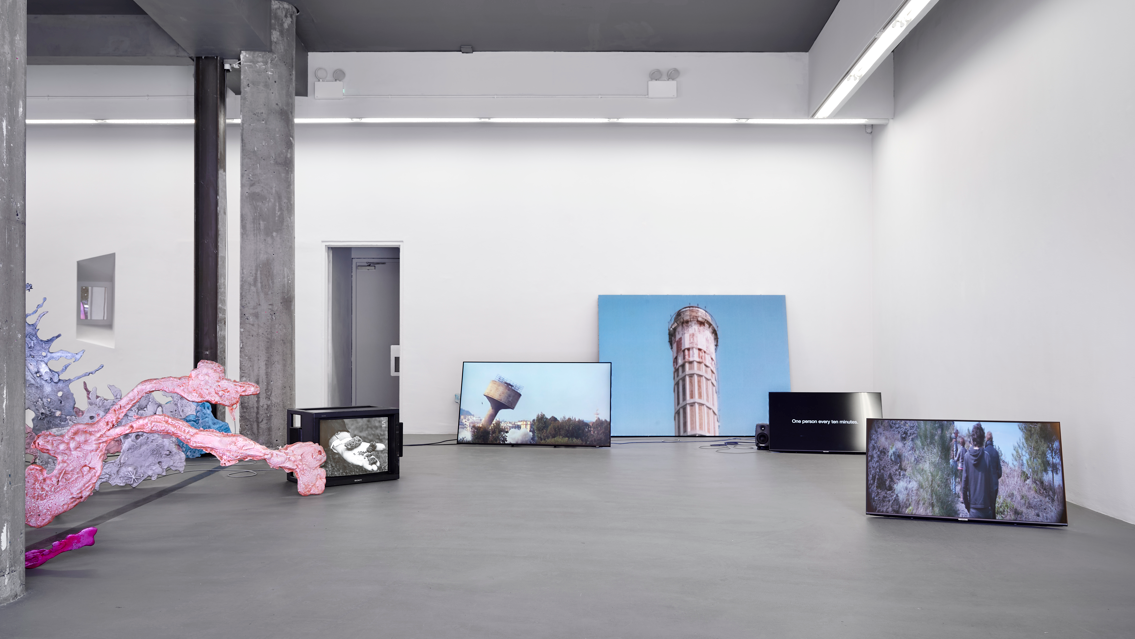
The Temple Bar Gallery + Studios team is amazing, and it was an incredible opportunity to work with them. Michael Hill, the programme curator, was so sensitive and caring throughout. As a space that’s both gallery and studio, I also had the opportunity to truly be in touch with an authentic artistic community within Dublin. I also very much appreciated the public engagement activities that TBG+S organised during the exhibition, such as screening, writing and drawing workshops. Finally, it was great to be right on the street where casual locals and tourists can just walk in, as the exhibition is entry-free!
As an activist for artwork rights, I’m also very interested in the way in which the artworks are produced and distributed. The fact that Temple Bar Gallery + Studios is publicly funded is so precious, as we are seeing the spread of privatisation across Europe, which means, for instance, unregulated working conditions and restrictions upon artistic positioning and freedom. For example, I very highly valued the gallery’s clear stance on Palestine.
Your exhibition, Nostalgism, is described as “materialising the sensorial experience of nostalgia” – as an artist who is also researching emotion and doing a doctorate on nostalgia, do you think nostalgia is more challenging to materialise than other feelings?
Well, when you speak about emotion, it is really hard to speak about materialism both in terms of how emotions are shaped physically and shaped by our surrounding material conditions. We often think of emotions as abstract or completely natural and unhistorical, but, in reality, they are specifically connected to our own space and time, our precise political-economic systems.
Regarding the comparison with other emotions, in both arts and life, some things are more legitimised than others. Nostalgia is often misunderstood as a passive or regressive emotion associated with conservative narratives, so we are somehow ashamed to feel it. Again, this idea didn't come from nowhere, but it is related to how nostalgia emerged throughout the centuries as a “malady” of the subaltern workers, peasants, military and individuals. The negative connotation associated with their bodies’ refusal to adapt to the notion of modern capitalist progress is what we have inherited today; and this profound human resistance is being exploited by nationalistic rhetoric, as are many of our other pains, like how fear is used for the remilitarisation of Europe, for instance. Let's say: both artists and politicians know the power of emotion and how they can move people. This is why capitalist infrastructures (economic, political, etc.) are particularly familiar with intimate governance.
I think nostalgia is a precious emotional state because of how shareable it is. Many of us share the fear of losing our community, or our job or even our entire ecosystem, and a lot of researchers have argued that nostalgia could be important for inspiring a desire for a different future. This does not necessarily mean an idealised past, but rather a future that is alternative to the capitalist one.
So this conflict of manipulation and hope within ‘nostalgia’ makes it very challenging to address.
And to bring it back to the literal materialisation of your exhibition – walk us through the materials you used and why you used them?
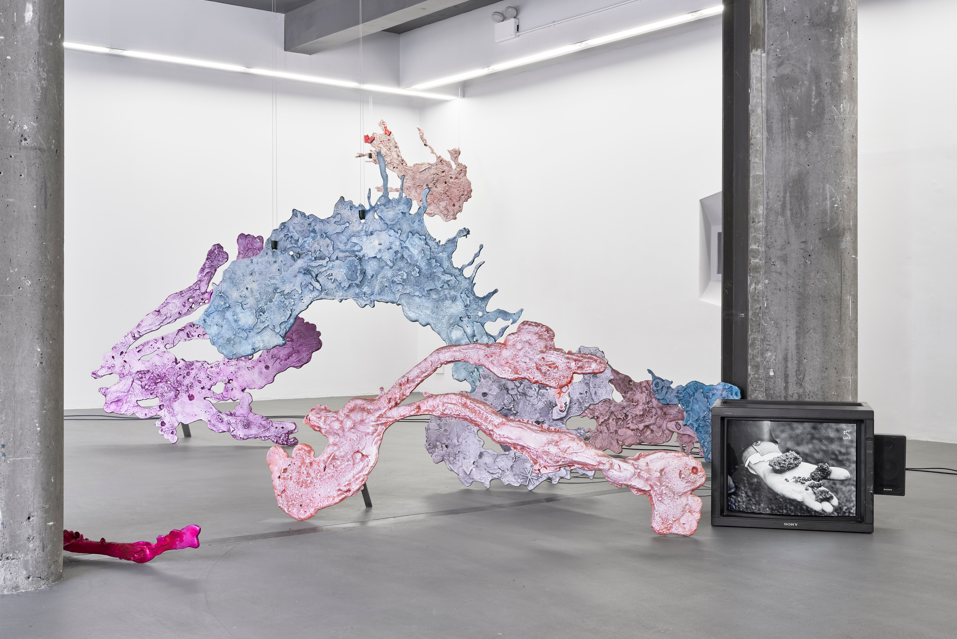
The exhibition includes a multi-channel video work, filmed across Naples and its surroundings, including Mount Vesuvius, the city’s historic alleys, abandoned seafront factories, and a former NATO base. Its fragmented, non-linear structure reflects histories of displacement and instability shaped by geological, militaristic, and economic forces. The film was shot with an anamorphic lens, without applying any desqueeze adjustment in post-production, as well as Video8 90s cameras. This decision allowed the distortions produced by the lens and different devices to remain visible and became an important formal element of the work. The video installation is also co-authored with members of my family who, taking part in planning the shoot, selecting locations, filming scenes through a series of re-enactments, returned to their hometown and recreated gestures drawn from archival photographs and films. The work is presented in the exhibition space across screens of different sizes and formats, both analogue and digital. In this sense, the material form of the installation extends the work’s interest in fragmented memories, unstable perspectives, and the ways in which images are produced and remembered.
The exhibition also includes the large-scale sculpture Ancestors Syndrome. The work is composed of different aluminium casts scattered in space, inspired by the geological map of Mount Vesuvius. The idea of using aluminium for the sculpture only came to my mind when I was – by chance – visiting a foundry and watched the way in which the aluminium melted. I immediately began to think about the relationship between aluminium and the flow of lava, and with the different times in which things and sediments lie. I was particularly interested in the possibility of melting the material directly into the soil and allowing it to cook by the air, while its grey surface shade could then be coated in different colours echoing the chromatic layers of the geological map itself.
As a multi-medium exhibition, how were co-authorship and collaboration applied?
Firstly, there was my family who took part and co-wrote the video work; then, Renato Greco, the sound artist who made the soundscape, which is essential to the exhibition as it links together the works, creating a particular atmosphere and inhabiting visitors to engage with it through different senses.
As the official website describes:
The soundscape is primarily played with a chitarra battente (“strumming guitar”), a traditional rhythmic instrument from Southern Italy that has survived virtually unchanged since the early Baroque period. Grieco’s studio recordings are transduced and transposed through a range of contemporary and obsolete audio formats and systems, to provide a range of sounds that echo processes and technologies across eras. Passages of music are also replayed in reverse, presenting a progressive movement into the past, while the digital distortion of this sound is in conflict with the sense of tradition associated with the acoustic instrument….
When it comes to the different multimedia technologies of sound, sculpture, film and text, I never stick with just one medium because I feel this transmediality engages with different senses and kinds of languages. When it came to film and text, writer and media theorist Vincenzo Stremo was another crucial co-author. So really, this exhibition wouldn’t have been possible without both a collaboration of mediums and a collaboration of people.
And if you could put this exhibition into one quote, what would it be:
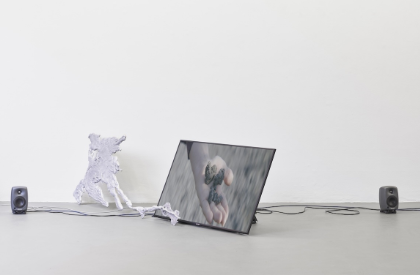
[Nostalgia is] “not the archive but rather the stones in the palm of our hand.”
This is one from the texts of the video installation, paired with an archival image taken during the last Vesuvius eruption in 1944. I choose this quote because it frames nostalgia as less related to the broadly recognised and institutionalised history but rather to the collection of other small stories, something that appears unclear, fragmented, often ugly and precarious; you have to hold it in order to keep it somehow. The unearthed stone is a personal excavation but also represents a basic weapon of protest; it transforms the representation of nostalgia as passive into the active.
Thanks so much for the chat!
For more information on exhibitions, events and involved artists, check out their official website.
And follow @templebargalleryandstudios
Written By:Ben Lynch
Edited By: Kirsten Baldwin
