Standing Ground’s Paris Debut: Where Irish Craft Meets Couture
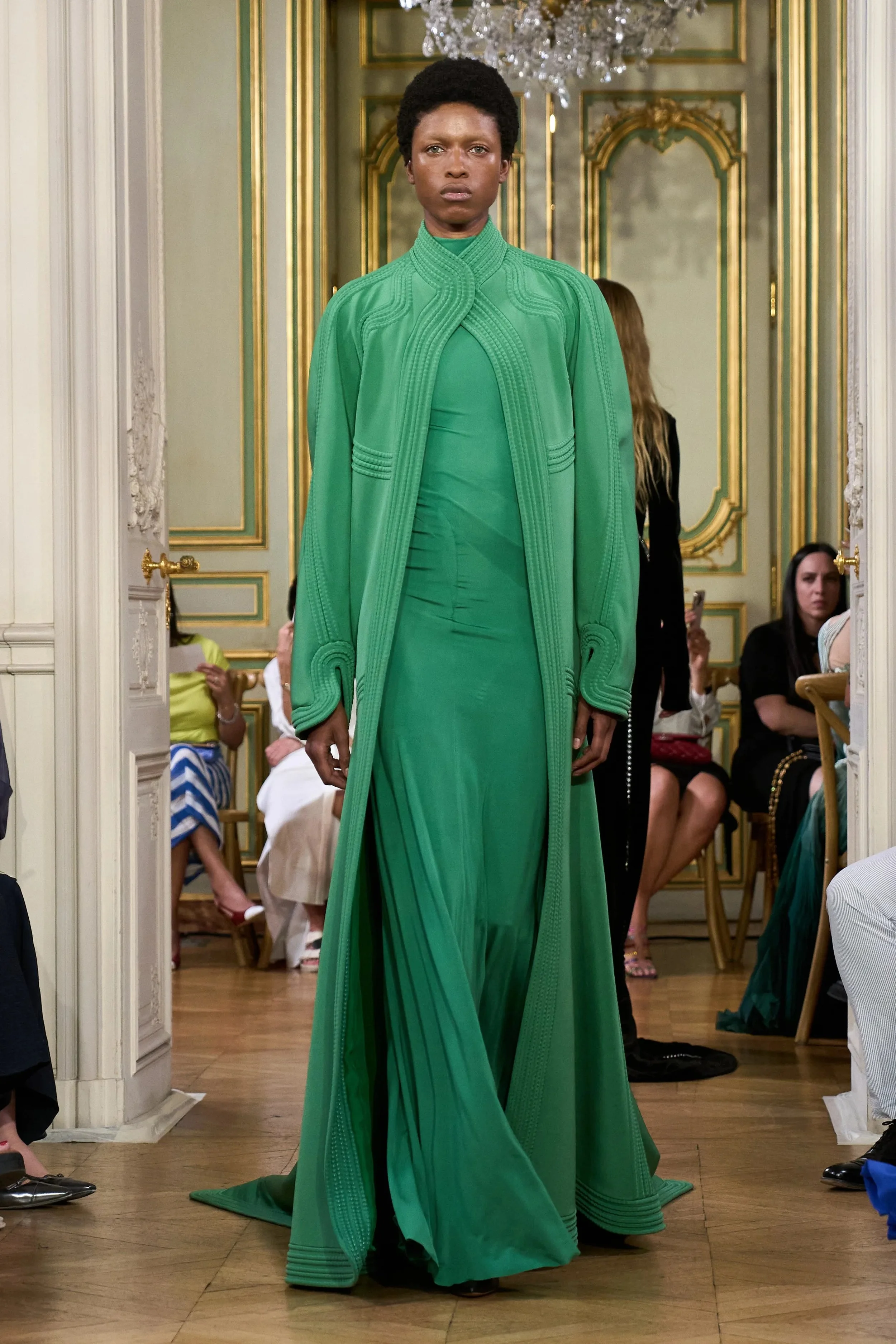
Earlier this month, the fashion world turned its attention to Paris Haute Couture Week. Widely regarded as fashion's highest stage, it is where craftsmanship takes precedence over speed, and garments are shaped over hundreds of hours. It was here that Irish designer Michael Stewart, founder of Standing Ground, made his haute couture debut. Bringing a distinctly Irish perspective to one of fashion's oldest traditions.
For many designers, reaching the haute couture calendar represents the highest expression of fashion. It is a space where technical precision, creativity and craftsmanship are pushed to their absolute limits. Every decision is considered, from the construction of a garment to the hours of labour behind it. In an industry increasingly shaped by speed and constant reinvention, couture remains a reminder of what happens when time is a part of the creative process.
Standing Ground's arrival in Paris felt less like a sudden breakthrough and more like the natural progression of a designer who has spent years developing a distinct creative language.
Born in county Clare, Michael Stewart's relationship with making has always been central to his practice. After studying fashion at Limerick School of Art and Design before continuing his studies at the Royal College of Art in London, Stewart developed the foundations of what would become Standing Ground. A label built around sculptural silhouettes, meticulous construction and a deep respect for the process behind each garment.
Since launching the label, Stewart has steadily established himself as one of Ireland’s most distinctive contemporary designers. His work has gained international recognition, including the 2024 LVMH Savoir-Faire prize, where he was awarded for exceptional craftsmanship and technical excellence. His couture debut was therefore not an introduction, instead, a continuation of the design philosophy that had already been carefully refined.
What makes Standing Ground so compelling is the discipline behind it.
Stewart’s work is not driven by the pressure to constantly create something new. Instead, it is built through refinement; returning to ideas, developing techniques, and allowing them to evolve over time. In a fashion industry where designers are often expected to reinvent themselves each season, this commitment to patience feels increasingly rare.
His signature embedded beading technique appeared across different pieces. Sculptural tailoring, fluid draping and carefully constructed silhouettes were a part of a collection that felt both structured and effortless.
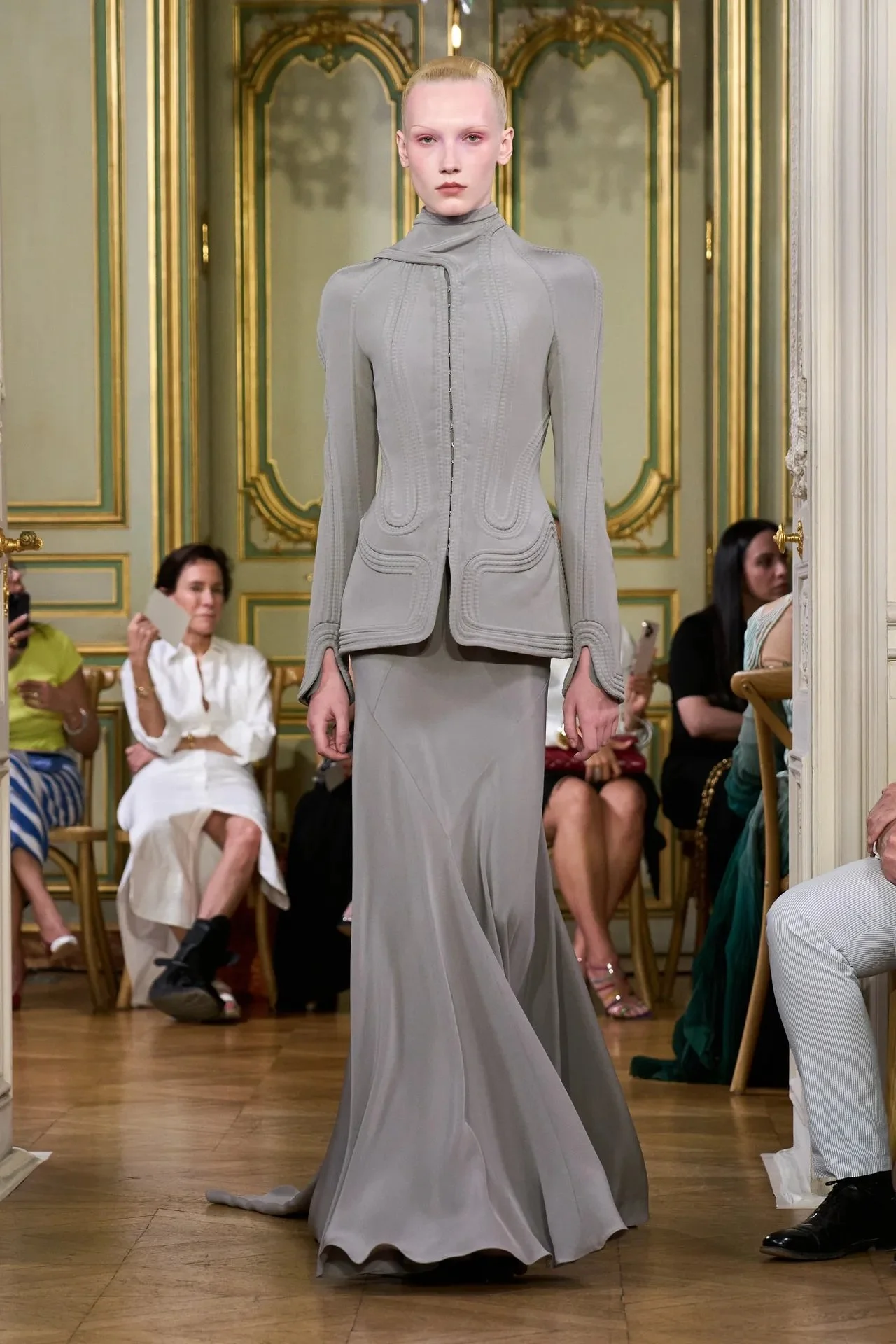
Stewart opened the collection with a sharply tailored smoke-grey jacket, introducing one of the defining details of his practice; intricate embedded beading, worked directly into the garment.
The collection moved between structure and fluidity. Sculptural corsetry contrasted against softer, draped skirts and flowing fabrics. Stewart’s signature is a neutral palette, yet we experienced moments of vivid colour. Rich shades of blue, green, purple and yellow brought a playful energy to the architectural silhouette. This is a collection that feels precise yet expressive. Balancing the discipline of couture craftsmanship with movement and imagination.
Permanence is a central idea to the identity of Standing Ground. The label takes its name from Ireland's ancient standing stones, structures that have remained integral to the landscape for generations. These stones are representative of endurance, strength and the connection between human creativity and the environment around it. Stewart’s inspiration is reflected throughout his work. The designs do not rely on obvious interpretations of Irish identity; instead, they draw on something more subtle: our sense of place, history and craftsmanship. Standing Ground reinterprets tradition, creating a space for Irish heritage existence within a global, contemporary fashion conversation.
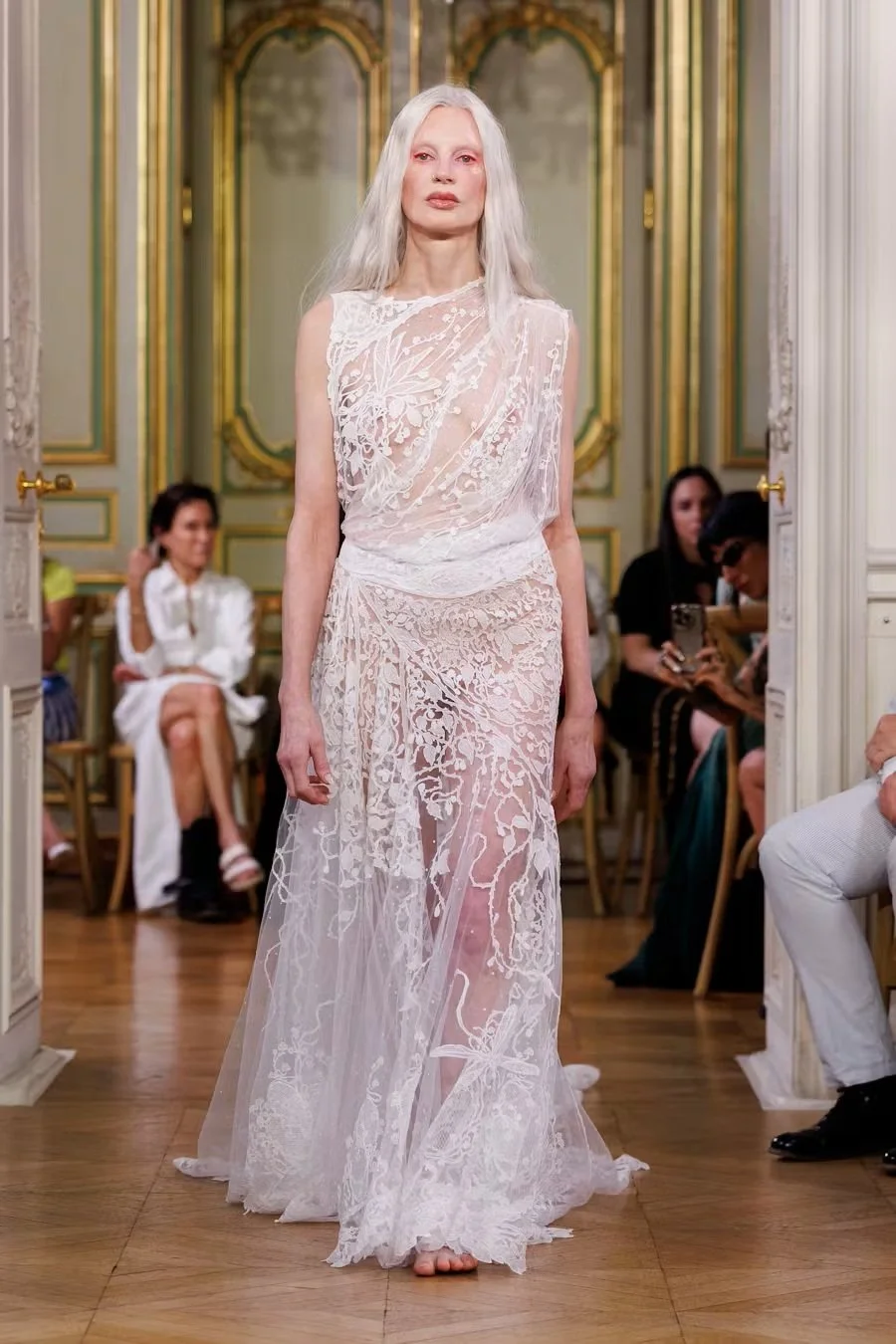
Closing the show was a wedding dress created using Carrickmacross lace, a traditional Irish craft technique that Stewart reinterpreted for the couture stage. The garment was the result of an extraordinary level of collaboration, with 26 pairs of hands and over 4,000 hours of work contributing to its creation.
Rather than treating heritage as something to simply preserve, Stewart presented it as something that continues to evolve. The dress demonstrated that traditional craftsmanship has a place within contemporary fashion, not as a reference to the past, but as a foundation for the future.
For Irish fashion, Standing Ground represents an exciting possibility: that identity can be built through making. Stewart's work shows that heritage does not need to be reduced to symbols or nostalgia. It can exist through technique, material, and the people who carry these skills forward.
In an industry obsessed with what comes next, Standing Ground offers a different perspective; it reminds us that innovation is not always about moving on to the next idea, but possibly it is to understand one creation deeply enough that we take the time to make it extraordinary.
Written By: Leah Carolyn Murphy
Edited By: Hazel Hunter
