Making Things the Hard Way
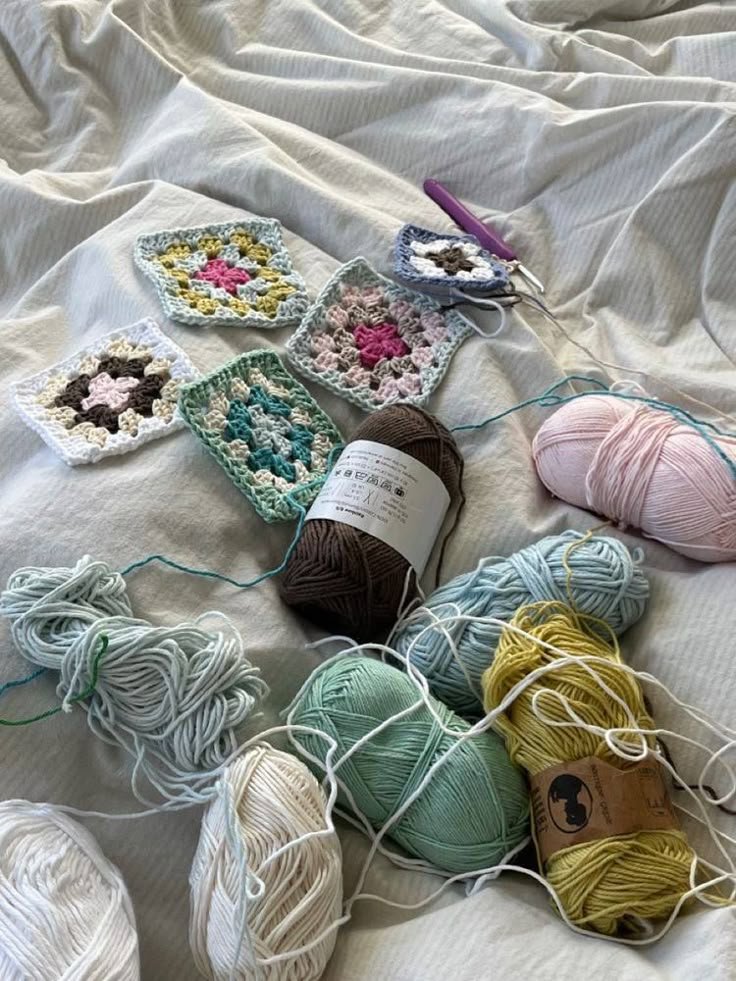
Making something badly takes a surprisingly long time…
A scarf can take weeks. A jumper can take months. Pottery has to be shaped, dried, fired, glazed and fired again before you even know whether you’ve made something worth keeping. Embroidery asks you to repeat the same tiny movement hundreds, or even thousands of times. Sewing requires measuring, cutting, pinning, unpicking and starting again. None of this is particularly efficient.
So what is the appeal?
Knitting, crochet, ceramics, embroidery and sewing have found a new generation of creators. Once easily dismissed as old-fashioned hobbies or the domain of particularly crafty grandmothers; they now fill workshops, studios and craft circles with people in their twenties and thirties. Handmade jumpers appear alongside designer pieces, wonky ceramics are proudly displayed on kitchen shelves and learning how to make something has become as desirable as owning the finished product.
There is something appealing about picking up a skill that has existed for generations. Knitting patterns are passed between family members, sewing machines are inherited and techniques once learned out of necessity are now being rediscovered for pleasure. What might once have been considered domestic work has been reframed as a creative choice.
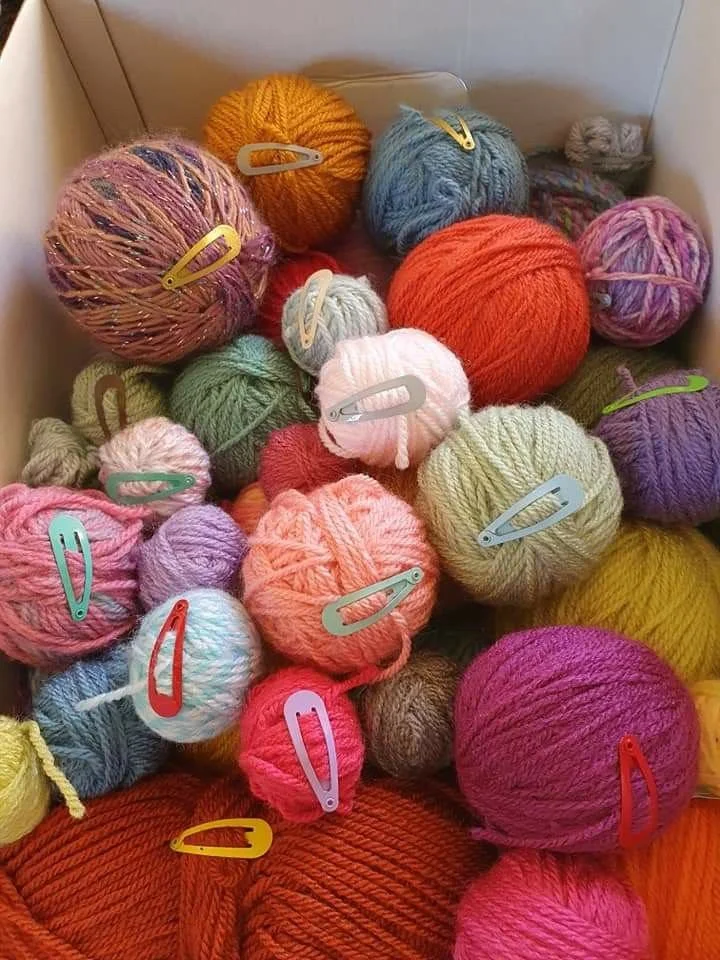
It is an interesting development at a time when almost everything else is moving in the opposite direction. We have spent decades designing technology to remove inconvenience from everyday life. Food arrives without us leaving the house, films begin the second we want to watch them and almost anything we could want can be bought from our phones and delivered the next day. Now, generative AI can produce an image, a piece of writing or a design in seconds.
And yet, people are voluntarily spending six weeks making a scarf they could have bought in six minutes.
The craft revival isn’t necessarily a rejection of technology. Most of the people learning to crochet aren’t about to throw their phones into the sea. In fact, the internet has played a significant role in making these skills accessible again. YouTube tutorials can teach someone to cast on their first row of knitting, while the patterns, techniques and inspiration circulate constantly on social media.
In that sense, the internet hasn’t killed traditional craft so much as changed how it is passed on. You no longer need a relative who knows how to knit or a local sewing class to get started. Skills that once travelled between people in the same room can now be taught by a stranger on the other side of the world.
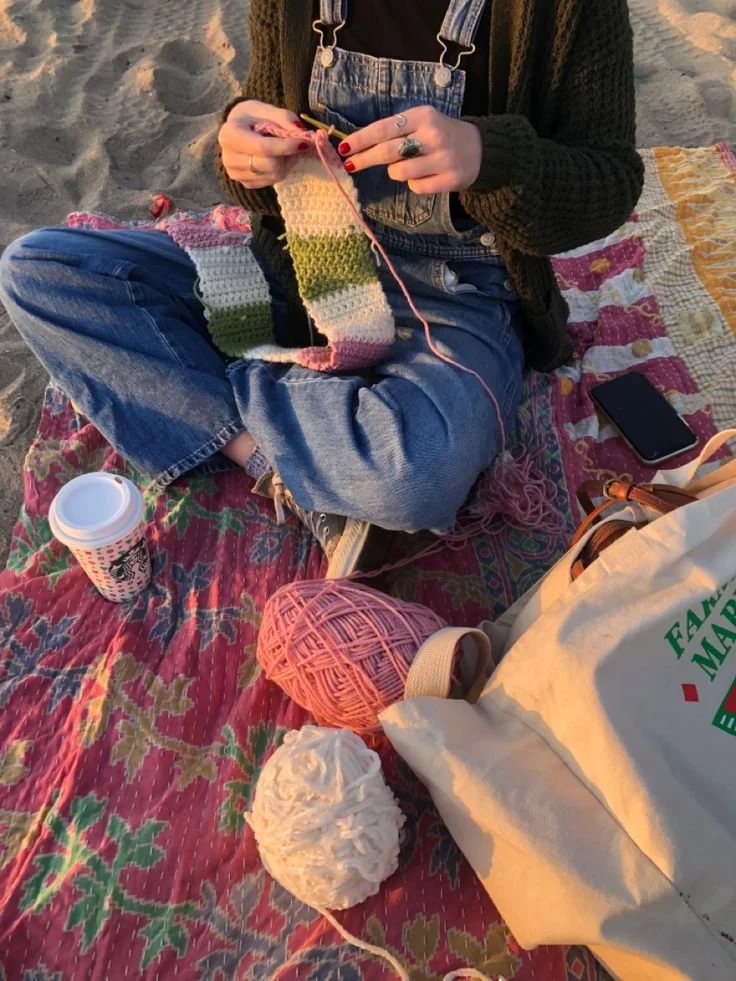
But the experience of making something by hand offers almost everything our digital lives don’t.
Craft is slow. It is repetitive. It requires your hands. There is no refresh button, no shortcut, and usually no instant reward. A mistake twenty rows back has to be accepted or painstakingly undone. Getting better requires doing the same thing over and over again until your hands eventually learn what they’re supposed to be doing.
The finished object is only half of it.
A handmade jumper is unlikely to be cheaper than one bought on the high street. By the time you’ve paid for decent wool and spent dozens of hours knitting it, the economics become almost laughable. The same is true of the pottery class that costs considerably more than simply buying four perfectly symmetrical mugs.
But perfection isn’t really the point. If anything, the small imperfections are part of what makes handmade objects appealing. The uneven glaze, slightly crooked stitch or evidence of the hand that made it, gives an object something that mass production deliberately removes.
It also changes our relationship with the things we own. A jumper that took months to knit is difficult to treat as disposable. A mug made during your first pottery class is unlikely to be thrown away when a newer one catches your eye. The time invested in an object is part of its value, even when the object may be far from perfect.
That distinction is particularly interesting as generative AI becomes embedded in creative life. For the first time, we can produce increasingly convincing images, studio quality music and basic writing without necessarily performing the labour traditionally required to make them. The distance between having an idea and producing something that looks finished is shrinking.
Craft moves stubbornly in the other direction.
There is no prompt that can teach your hands how tightly to hold yarn. You cannot automate the hours required to embroider a piece of fabric and still claim to have embroidered it. In craft, the labour isn’t an inconvenience standing between you and the finished product. The labour is the activity.
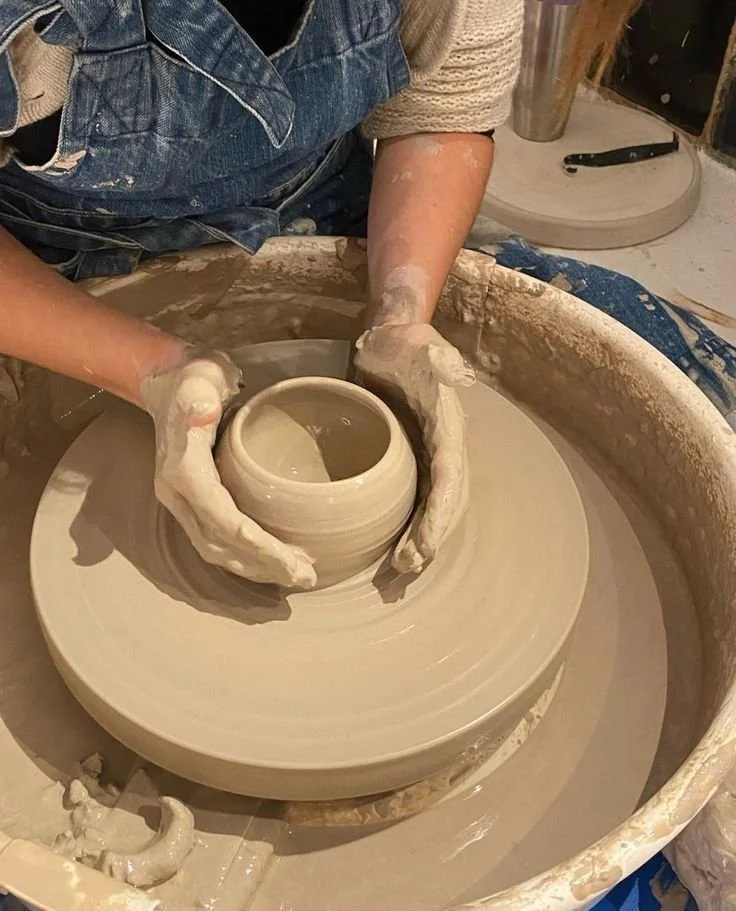
Perhaps this is why visible evidence of human effort has started to feel valuable again. A handmade object carries its own little record of time; somebody picked the material, learned the technique, made mistakes, and chose to correct them to produce something that didn’t exist before.
There is also a social life developing around making. Pottery studios, knitting groups and craft workshops offer something increasingly difficult to find elsewhere: a reason to sit in a room with other people for a few hours without the activity revolving around drinking, eating, or looking at a screen. Conversation can happen without being the entire point. Silences aren’t awkward when everybody’s hands are occupied.
It is a particularly undemanding kind of socialising. There is no pressure to fill every pause, or make the evening exciting. You can spend ten minutes concentrating on a stitch, ask the person beside you for help and return to the conversation when you feel like it. The activity gives everyone a reason to be there beyond simply being social.
For younger generations whose work, entertainment and social lives increasingly happen through the same few devices, that physicality matters. You finish an evening of scrolling with very little evidence of where the time went. You finish an evening of knitting with another few centimetres of a scarf.
The resurgence of craft isn’t evidence that we’re abandoning digital life. If anything, it exists comfortably alongside it. People learn traditional techniques on TikTok, buy patterns online and post photographs of finished projects. Old and new aren’t nearly as opposed as they initially appear.
But there is still something satisfying about having an object at the end of it. Not because it is perfect, or even particularly good, but because you know exactly how much time went into making it.
Written by: Holly Warren,
Edited by: Hazel Hunter
