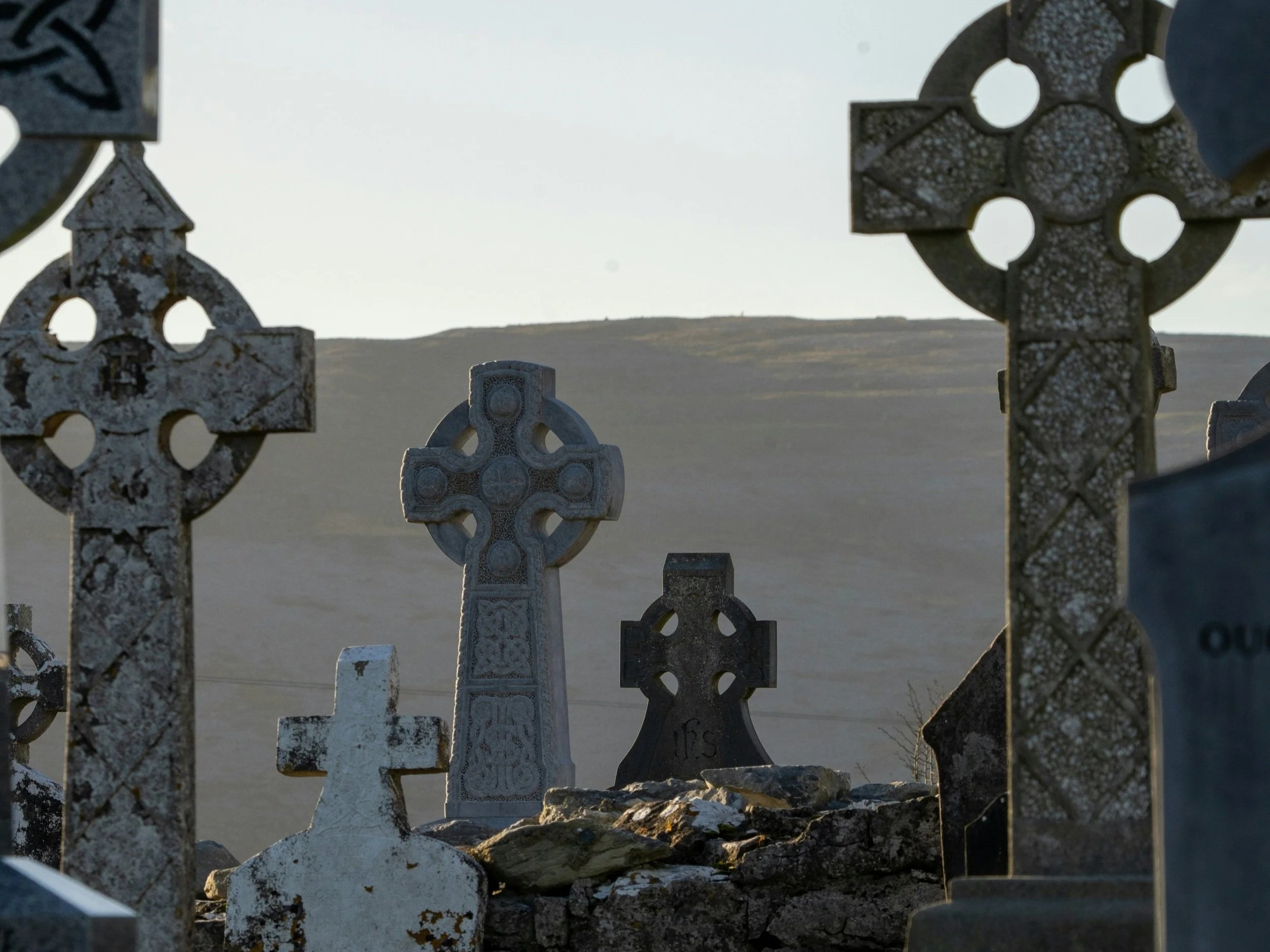
The Irish approach to death is unique.
When someone dies in Ireland, it is rare for their funeral to take place more than three days later. I grew up thinking this was the norm. When I was speaking to a friend from Scotland, she mentioned the time her grandfather passed away, and told me about the funeral two weeks later. I initially assumed that there must have been a reason for the significant delay, an extended post-mortem investigation or something along those lines. Imagine my surprise when I learned this was all normal. Imagine her surprise when I told her how we do it across the water.
Grief is difficult enough to navigate without having to do so alone. Ireland has the right idea when it comes to this; the bereaved receive support not only from family, but from the wider community. It is common to attend the funerals of family and friends, yes, but in Ireland it is not unusual to attend the funerals of acquaintances, a neighbour, a former teacher, a friend’s grandmother, or the lady who worked in the local post office. Many see it as a given to offer their sympathies to the family and provide support where they can.
Death is part of the Irish news cycle. Perhaps due to the time constraints surrounding funeral arrangements, it is critical that the news of a person’s death quickly makes its way around the community, informing those who wish to pay their respects. Newspapers have daily death notice sections, and one can tune in for the death announcements on local radio stations across the country.
One of Ireland’s most popular websites is a death notice platform. Many will be familiar with the cultural phenomenon that is RIP.ie, Ireland’s national death notices website and hobby of Irish mothers and grandmothers everywhere. As one might check social media for updates, they make regular visits to the website, checking for anyone of interest in the listings of those who have died. Others may have received the same type of texts from their grandmother as I have: ‘Weather is fine today. Father John has died. RIP going to funeral tomorrow Xxx.’
RIP.ie makes up a huge part of Ireland’s national psyche, so much so that, when it was announced that The Irish Times was buying the website, a national conversation began surrounding the possibility of paywalls and monetisation becoming a barrier to accessing the essential information. These commentators were in the end proven right; months after the acquisition, the price of posting a death notice rose from €0 to €100, introducing an additional expense to the already costly task of funeral arrangements. The move received widespread backlash from the public and those in the funeral business. The fact that such a significant conversation came about from the purchase of a death notice website shows how Ireland as a country approaches death as a community event rather than a private one.
The Irish wake is another example of this country’s different approach to death. Where in many other countries the wake has died off, in Ireland, the practice is still alive and kicking. Asked once if I’d ever seen a dead body. I said, ‘yes, at a wake,’ an answer that was met with alarm. ‘The body is there?’ They asked. I never knew it could be such a foreign concept.
The wake over the years has become more common in rural areas than in bigger cities like Dublin. While some families do still elect to hold the wake in the family home in line with tradition, many big city arrangements may include a pre-funeral gathering at the funeral home rather than in the house. Regardless of the location, the community shows up. Prodigal sons, daughters and cousins make the journey home from abroad. Tea and coffee are served alongside sandwiches; people give their sympathies, pray over the body of the deceased, and swap stories and anecdotes. Some people bring food for the family, or offer to pop around and clean the house, do the shopping, and walk the dog. Anything to lessen the strain of grief.
In recent years, there have been some changes in how the Irish approach death. Ireland remains, of course, a culturally Catholic country despite the decline in the number of practicing Catholics, but it is no longer a given that a funeral will be held in the Church. While the Irish funeral has always been a celebration of the deceased’s life, it is significant that an increasing number are opting for a ceremony which focuses on the life of the person over the faith to which they belonged. Humanist ceremonies are gaining popularity in a country where the influence and reach of the Church diminishes year on year.
The post-funeral arrangements have also changed for many families. Where once the attendees would have been invited to reconvene at the family home for refreshments, many families now opt to book a function room at the local pub or hotel. One thing that hasn’t changed, however, is the sense of community felt at these gatherings. Stories are traded, laughs are had and, predictably, tears are shed.
While traditions may change, fade, or develop, one thing remains constant: the intrinsic respect for death within Ireland’s culture, and the dedication and support of one’s family, friends, and community in times of grief.
Written By: Kate O’Connor Shivnan
Edited By: Freddie Kagino
