Has “Be Yourself” Become “Be Different”?
I recently saw a TikTok captioned “be yourself,” showing a montage of colourful, unconventional, and unique styles. As someone who leans toward alternative fashion and doesn’t fit into typical ‘normal’ standards, I liked it. But it also made me wonder, what about people whose style isn’t like that? The video seemed to suggest that ‘being yourself’ means being visually unique or standing out, which raises the question: does authenticity now require difference? And where does that leave people who are said to be “basic” in today's standards?
The statement “Be yourself’, to me, means not pretending to be someone you're not or changing the way you act or dress to please others. We’re constantly told to “be ourselves,” but that’s not what’s being rewarded anymore. What’s rewarded is uniqueness, the ability to stand out and how much people would want to compare themselves to you. In a culture shaped by attention, being yourself has quietly turned into a performance. It’s no longer about authenticity, it's about how different you can be.
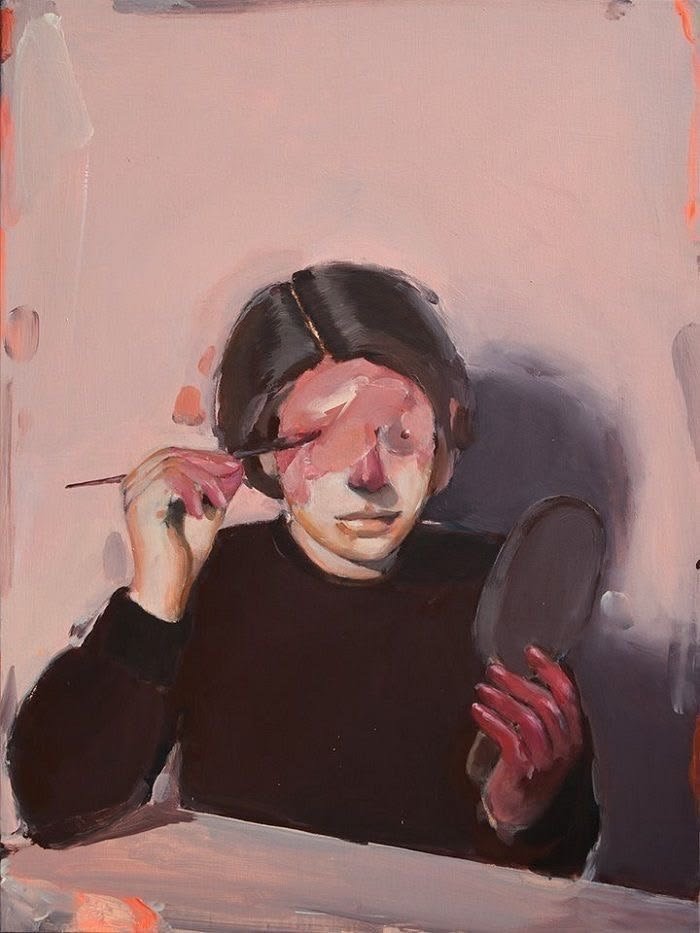
I’ve always felt that personal style is a natural extension of who you are, not something you fabricate. Sure, you can plan a special outfit for an occasion, but true style is the effortless expression of yourself. The part that doesn’t need curation to be genuine, it’s just a byproduct of you living your life.
There was a time when dressing differently was closer to resistance. To look unusual, to reject mainstream fashion, to lean into subcultures like punk, goth, rave or grunge was often a way of signalling distance from the norm. Being visually “different” wasn’t always celebrated, people like that were the underdogs of society, they were often misunderstood, judged, or deliberately excluded. And that was part of the point, it carried friction and rebellion, and those who were discriminated against were well aware of those consequences.
Now that dynamic feels almost reversed. Uniqueness hasn’t disappeared, but it has been absorbed into the mainstream language of “aesthetics”. Styles that once existed outside of approval have been taken inside it, sugar-coated into inspirational Pinterest boards and algorithm friendly content. The same visual language that once resisted attention now often thrives because of it.
I'm not saying that having a different or alternative style shouldn't be accepted and appreciated, and I think a part of the rise in people showing off their personal styles online is a positive result of people becoming more open-minded and nonjudgmental over the years. But if everyone is encouraged to be unique in visible ways, and uniqueness stops functioning as rebellion and starts functioning as another conformity and expectation. In that context, not deliberately trying to stand out can feel more transgressive than trying to.
That shift also leaves an uncomfortable gap for the people who get labelled “basic” in today’s standards. I see people being called “posers” daily in the comments of TikTok's because they talked about a subject like anime or video games while not fitting into the expected look or style of people who consume that kind of content.
Being “basic” often just means not performing differently in a way that reads as abnormal or alternative. It becomes less about who someone is, and more about how easily their identity can be categorised. The label itself is critical. It suggests that there is a correct and incorrect level of uniqueness a person should be aiming for, and falling below it becomes a kind of social failure. But “basic” usually just describes things we are all familiar with; common interests, mainstream tastes. In other words, things that are widely known. Yet the tone used around it turns it into something embarrassing, as if blending in is inherently less admirable than standing out.
It leaves people feel like they need to justify their likes and dislikes. People end up thinking they must prove depth through underground or niche subjects, even though most people are made up of contradictions anyway. Simple and specific is a fluid hierarchy that people flow through regularly.
Sometimes, the people who are labelled basic often end up being closer to what “being yourself” originally implied. They’re not translating their choices or curating their identity into something that reads as distinctive in the way the current online audience expects. That doesn’t make them less authentic; it just makes them less visible within a system that rewards individuality.
At the same time, it’s important not to reduce all individuality to performance. For many people, unconventional style is still deeply genuine and helps them feel more confident in the world, especially when stepping out of comfort zones, knowing who they are and unapologetically portraying that can bring a feeling of comfort and reliability in themselves. It's not a strategy for attention, but a natural extension of who they are. The issue isn’t that unique people are “trying too hard,” but that online culture can blur those lines. Someone dressing differently can be completely sincere, just as someone dressing simply can be too.
So, the question becomes whether “basic” is an identity at all; if authenticity is not about distinction, then “basic” stops being the opposite of individuality and starts being just another way of existing. And in that context, the idea of rebellion itself starts to shift. Maybe it’s no longer about how loudly you stand out or how weird you look. It is about not letting people make you turn everything about yourself into something that can be bought or sold. It is about resisting the assumption that you must prove who you are all the time. Maybe being basic is a way to rebel against people who think we must rebel; maybe the
most radical thing you can do is to stop treating your socially constructed “lack of abnormality” as a measure of who you are. The idea of basic is a way to exist. That is okay. Being basic is a way to be. That is all what matters. You're being yourself.
Written By: Lucy Donnelly
Edited By: Kirsten Baldwin
